Cybersecurity Company Branding: A Strategic Guide

In the rapidly evolving landscape of digital security, cybersecurity company branding has become a critical differentiator that separates industry leaders from the competition. Unlike traditional tech sectors, cybersecurity firms face unique challenges in conveying trust, technical expertise, and innovation simultaneously while avoiding the tired visual tropes that have saturated the market. For presentation design agencies working with cybersecurity clients, understanding these nuanced branding requirements is essential to creating pitch decks and visual communications that resonate with sophisticated investors and enterprise buyers who demand authenticity over theatrics.

The Evolution of Cybersecurity Brand Identity

The cybersecurity industry has witnessed a dramatic shift in how companies present themselves to the market. Traditional approaches relied heavily on fear-based messaging, dark color palettes, and imagery featuring locks, shields, and ominous hooded figures. This outdated methodology has given way to more sophisticated strategies that emphasize partnership, empowerment, and proactive protection.

Branding cybersecurity companies requires a deep understanding of both technical complexity and business objectives. Modern cybersecurity brands recognize that their audience consists of informed decision-makers who prioritize measurable outcomes over dramatic promises. These stakeholders evaluate vendors based on demonstrated expertise, proven methodologies, and cultural fit within their existing security frameworks.

Breaking Free from Industry Stereotypes

Differentiation starts with rejecting conventional visual language:

  • Moving beyond shield and lock iconography
  • Embracing positive, forward-looking messaging
  • Creating approachable visual systems that demystify security
  • Developing unique color palettes that stand out in competitive landscapes
  • Building narrative frameworks that position security as business enablement

The most successful cybersecurity brands understand that effective presentation design translates technical capabilities into business value propositions. When crafting materials for cybersecurity clients, presentation designers must balance technical accuracy with accessibility, ensuring that complex concepts become compelling narratives rather than confusing technical documentation.

Cybersecurity brand evolution

Building Trust Through Visual Storytelling

Cybersecurity company branding fundamentally revolves around establishing credibility in an industry where trust determines purchasing decisions. Visual storytelling serves as the primary mechanism for communicating this trustworthiness, transforming abstract security concepts into tangible value propositions that resonate with target audiences.

Trust-Building Element Traditional Approach Modern Best Practice
Messaging Tone Fear and urgency Confidence and partnership
Visual Language Dark, ominous imagery Clean, professional design
Data Presentation Technical jargon Business-focused metrics
Brand Personality Defensive guardian Proactive enabler

The Role of Consistent Design Systems

Design consistency across all touchpoints reinforces brand recognition and professionalism. Cybersecurity companies must maintain visual coherence from their websites and sales materials through to investor pitch decks and client presentations. This consistency signals organizational maturity and attention to detail-qualities that security buyers specifically evaluate when selecting vendors.

A well-executed design system includes:

  1. Typography hierarchies that guide readers through complex information
  2. Color applications that maintain brand recognition without overwhelming audiences
  3. Iconography standards that communicate concepts quickly and clearly
  4. Layout templates that ensure consistent information architecture
  5. Data visualization frameworks that make metrics accessible and actionable

For presentation design agencies, understanding these systematic requirements enables the creation of materials that not only look professional but also function as effective business tools. The case study showcasing Torq's rebranding demonstrates how challenging traditional industry norms through bold visual identity can establish immediate differentiation in crowded markets.

Communicating Technical Expertise Without Alienation

One of the most significant challenges in cybersecurity company branding involves balancing technical credibility with accessibility. Companies must demonstrate deep expertise while ensuring their messaging remains comprehensible to decision-makers who may not possess specialized security knowledge.

This balance becomes particularly critical in presentation contexts where cybersecurity firms pitch to investors, board members, or C-suite executives. These audiences require confidence in technical capabilities without drowning in implementation details. Creating compelling pitch decks for cybersecurity clients demands careful attention to information hierarchy and progressive disclosure techniques.

Translating Features into Business Outcomes

Effective cybersecurity presentations focus on business impact:

  • Replace technical specifications with risk reduction metrics
  • Frame capabilities as competitive advantages rather than feature lists
  • Use case studies that demonstrate real-world problem resolution
  • Quantify security improvements in financial terms
  • Connect technical solutions to strategic business objectives

The approach cybersecurity companies take toward branding increasingly emphasizes outcome-oriented communication. Rather than leading with product features, successful brands articulate how their solutions enable business growth, protect revenue streams, and facilitate digital transformation initiatives.

Technical translation framework

Differentiation Strategies in Competitive Markets

The cybersecurity market grows increasingly crowded, with thousands of vendors competing for attention across overlapping solution categories. Effective cybersecurity company branding requires clear differentiation strategies that communicate unique value propositions in ways that immediately resonate with target audiences.

Identifying Strategic Positioning Opportunities

Differentiation begins with honest assessment of capabilities, target markets, and competitive landscapes. Companies must identify specific niches where their expertise, technology, or approach provides genuine advantages. This positioning then informs all branding decisions, from visual identity through to messaging frameworks and content strategies.

The rebranding case study for Armis illustrates how established companies can reposition themselves within competitive markets by refining their brand identity to reflect evolved capabilities and expanded market focus. Similar strategic clarity benefits emerging companies seeking initial market traction.

Positioning dimensions to consider:

  • Industry vertical specialization (healthcare, finance, critical infrastructure)
  • Technical approach differentiation (AI-driven, zero-trust, cloud-native)
  • Customer segment focus (enterprise, mid-market, SMB)
  • Geographic or regulatory expertise (GDPR, HIPAA, sector-specific compliance)
  • Delivery model innovation (managed services, platform, consulting)

For presentation designers working with cybersecurity clients, understanding these positioning decisions ensures that pitch decks and sales materials accurately communicate differentiation through strategic visual and narrative choices rather than generic industry templates.

Visual Identity Development for Security Brands

Strong visual identity serves as the foundation for effective cybersecurity company branding. This identity must work across diverse applications while maintaining consistency and reinforcing strategic positioning. The design system developed for Fortuna Identity demonstrates how comprehensive visual frameworks establish professional presence while enabling flexibility across various communication needs.

Core Elements of Cybersecurity Visual Identity

Component Purpose Considerations
Logo System Primary brand recognition Scalability, versatility, memorability
Color Palette Emotional connection and differentiation Industry context, accessibility, uniqueness
Typography Readability and personality Technical credibility, modern aesthetics
Photography Style Humanization and context Authenticity, diversity, relevance
Illustration Approach Concept communication Clarity, consistency, sophistication
Data Visualization Information accessibility Accuracy, comprehension, visual appeal

When recruiting talent to execute sophisticated branding initiatives, cybersecurity companies increasingly leverage specialized platforms like Augmnt to connect with verified AI professionals who can enhance brand development through advanced technical capabilities and creative problem-solving.

Moving Beyond Fear-Based Imagery

The shift away from fear-based visual language represents one of the most significant trends in modern cybersecurity branding. The case study for Qualsecure showcases how companies can develop positive visual language that communicates security without relying on threatening imagery or alarmist messaging.

This approach requires creative teams to develop new visual metaphors that represent protection, vigilance, and resilience without defaulting to defensive or ominous imagery. Successful alternatives include:

  1. Growth and enablement imagery showing business expansion
  2. Partnership visuals emphasizing collaboration and support
  3. Clarity and transparency metaphors representing visibility and control
  4. Innovation symbols connecting security to digital transformation
  5. Human-centered photography showing real teams and authentic work environments
Visual identity components

Content Strategy and Thought Leadership

Beyond visual identity, cybersecurity company branding depends heavily on content strategies that demonstrate expertise and build industry authority. Thought leadership content serves dual purposes-establishing credibility with potential customers while attracting top talent to growing security organizations.

Strategic Content Pillars

Effective cybersecurity content addresses multiple audience needs:

  • Technical deep-dives for security practitioners and engineers
  • Strategic frameworks for C-suite executives and board members
  • Regulatory guidance for compliance officers and legal teams
  • Threat intelligence updates for security operations professionals
  • Case studies demonstrating real-world application and outcomes

When developing presentation materials that support these content initiatives, designers must consider how visual design enhances information retention and message credibility. Professional PowerPoint services help cybersecurity companies transform technical content into engaging presentations that serve both marketing and educational purposes.

The comprehensive guide to cybersecurity branding emphasizes how consistent content strategies reinforce brand positioning while providing ongoing value to target audiences. Companies that invest in substantial, research-backed content establish themselves as industry authorities rather than simple product vendors.

Technology Infrastructure Supporting Brand Expression

Modern cybersecurity company branding requires robust technology infrastructure to deliver consistent brand experiences across digital touchpoints. From websites and customer portals through to investor platforms and partner ecosystems, every interaction must reinforce brand positioning and values.

Security companies face unique requirements when selecting technology partners, as they must ensure that their own infrastructure meets the security standards they advocate for clients. Providers like vBoxx offer secure hosting and cloud solutions that enable cybersecurity firms to maintain brand presence through reliable, protected digital infrastructure aligned with their positioning as security experts.

Digital Brand Touchpoints

  1. Corporate websites serving as primary brand expressions
  2. Customer portals demonstrating product capabilities
  3. Documentation platforms showcasing technical expertise
  4. Sales enablement tools supporting consistent messaging
  5. Partner ecosystems extending brand reach through channel relationships

Each touchpoint requires careful design consideration to ensure visual consistency while accommodating functional requirements specific to different user groups and use cases.

Scaling Brand Identity with Company Growth

As cybersecurity companies grow from startup stages through to market leadership positions, their branding must evolve to reflect increased capabilities, expanded offerings, and broader market positioning. The IDMWORKS rebranding case study demonstrates how established companies refresh their brand identity to align with organizational maturation and market expansion.

Growth-Phase Branding Considerations

Startups (0-50 employees):

  • Establish clear positioning and messaging foundations
  • Develop flexible visual systems that accommodate rapid iteration
  • Create core presentation templates for investor and customer communications
  • Build foundational content libraries demonstrating expertise

Growth Stage (50-500 employees):

  • Refine messaging to reflect expanded capabilities and proven results
  • Develop comprehensive brand guidelines ensuring consistency across growing teams
  • Invest in sophisticated sales enablement materials supporting expanded go-to-market
  • Establish thought leadership programs building industry recognition

Enterprise Scale (500+ employees):

  • Evolve positioning to reflect market leadership and industry influence
  • Implement advanced brand management systems maintaining consistency globally
  • Develop sub-brand architectures for product lines and geographic markets
  • Create executive communication frameworks supporting corporate visibility

For companies at any growth stage, partnering with specialized agencies that understand industry nuances proves valuable. Working with experts in presentation design for tech businesses ensures that critical communications reflect appropriate sophistication for company maturity and audience expectations.

Measuring Brand Performance and Impact

Effective cybersecurity company branding requires ongoing measurement and optimization. Unlike purely aesthetic exercises, strategic branding initiatives drive measurable business outcomes that justify investment and inform continuous improvement.

Metric Category Key Indicators Measurement Approach
Brand Awareness Search volume, social mentions, media coverage Digital analytics, media monitoring
Brand Perception Sentiment analysis, competitive positioning Surveys, market research
Lead Generation Inbound inquiries, content engagement Marketing automation, CRM tracking
Sales Effectiveness Win rates, deal velocity, average contract value Sales analytics, pipeline analysis
Talent Acquisition Application quality, acceptance rates Recruiting metrics, HR analytics

The SecureCircle branding case study highlights how bold brand identity directly impacts market differentiation and customer acquisition in competitive environments. Companies that measure these outcomes can refine their branding strategies based on empirical results rather than subjective preferences.

Continuous Brand Optimization

Brand development never truly concludes. Market conditions shift, competitive landscapes evolve, and customer expectations change. Successful cybersecurity companies implement ongoing brand monitoring and optimization processes that ensure continued relevance and effectiveness.

Optimization practices include:

  • Quarterly brand health assessments measuring awareness and perception
  • Annual competitive positioning reviews identifying differentiation opportunities
  • Regular content performance analysis informing messaging refinement
  • Customer feedback integration improving brand-experience alignment
  • Sales team input gathering frontline market intelligence

Building Internal Brand Alignment

External brand success depends on internal brand alignment. Every employee serves as a brand ambassador, and their understanding of company positioning, values, and messaging directly impacts customer perceptions and market reputation.

Employee Enablement Programs

Cybersecurity companies must invest in comprehensive employee enablement ensuring consistent brand representation across all stakeholder interactions:

  1. Onboarding programs introducing brand foundations to new employees
  2. Sales training equipping customer-facing teams with messaging frameworks
  3. Presentation templates providing brand-compliant communication tools
  4. Content libraries offering approved materials for various use cases
  5. Brand guidelines documenting standards for all communication types

Organizations seeking to enhance their digital presence often benefit from partnerships with specialists like Get To Page One Ltd, whose expertise in SEO and website design helps cybersecurity brands achieve visibility in search results where potential customers research solutions.

For presentation materials specifically, providing employees with professional templates and design resources ensures that internal communications, customer presentations, and external engagements maintain consistent brand standards without requiring individual design expertise.

Partner and Channel Brand Extension

Many cybersecurity companies leverage partner channels to extend market reach. These partnerships require careful brand management to ensure that third-party representations maintain brand standards while accommodating partner needs and regional variations.

Channel Brand Frameworks

Successful partner branding programs include:

  • Co-branding guidelines balancing partner and vendor identities
  • Customizable presentation templates enabling partner personalization
  • Marketing asset libraries providing approved promotional materials
  • Training programs educating partners on brand positioning and messaging
  • Certification systems ensuring partner expertise and brand alignment

Channel partners often represent the primary customer touchpoint, making their brand fluency critical to market perception. Companies that invest in comprehensive partner enablement programs extend their brand reach effectively while maintaining consistency across diverse geographic markets and vertical segments.


Strategic cybersecurity company branding transforms technical capabilities into trusted market positions that drive customer acquisition, talent recruitment, and business growth. By moving beyond fear-based messaging toward positive, partnership-oriented identities supported by consistent visual systems and outcome-focused narratives, security companies differentiate themselves in competitive markets. Whether you're launching a cybersecurity startup, scaling an established firm, or refreshing a mature brand, Prznt Perfect helps translate complex security concepts into compelling visual stories through expert presentation design, pitch deck development, and brand communication services tailored to tech and financial businesses.

We offer free 30-min consultation on the presentation design audit
and hiring the right visual 
comms professional, let’s talk!
Shedule a call
Shedule a call
"I understand" goes a step further into the cognitive dance of persuasion. It's where the audience begins to see the connections between the facts, to grasp the nuances of the problem and the elegance of the solution.
  • This is some text inside of a div block.
    lay out the facts clearly and compellingly. Use data to establish the ground reality, but remember that facts alone are like the individual strands of a tapestry—necessary but not complete.
    lay out the facts clearly and compellingly. Use data to establish the ground reality, but remember that facts alone are like the individual strands of a tapestry—necessary but not complete.
  • This is some text inside of a div block.
    lay out the facts clearly and compellingly. Use data to establish the ground reality, but remember that facts alone are like the individual strands of a tapestry—necessary but not complete.

We offer free 30-min consultation on the presentation design audit

and hiring the right visual 
comms professional, let’s talk!

Shedule a call

"I understand" goes a step further into the cognitive dance of persuasion. It's where the audience begins to see the connections between the facts, to grasp the nuances of the problem and the elegance of the solution.

  • - 1 -
    Consistency at Scale:

    Biotech Market Trends 2024: Tailoring Your Pitch Deck to Current Industry Dynamics.

  • - 2 -
    Efficiency and Speed:

    The traditional process of manually updating presentations is not only slow but also prone to bottlenecks, especially when dealing with large volumes of slides. Automation dramatically accelerates this process, enabling designers to apply changes across hundreds of slides in the time it would take to manually update a single one. This efficiency is a game-changer for agencies working under tight deadlines or managing multiple projects simultaneously.

  • - 3 -
    Enhanced Creativity:

    With the burden of manual updates lifted, designers can allocate more time and energy to the creative aspects of presentation design. This freedom allows for deeper exploration of innovative design concepts, experimentation with new visual storytelling techniques, and the development of more engaging and interactive presentations. Automation doesn't stifle creativity; it amplifies it, enabling designers to push the boundaries of what's possible in corporate presentation design.

  • - 4 -
    Error Reduction:

    Manual updates are inherently prone to inconsistencies and mistakes, from misaligned logos to incorrect font sizes. These errors can detract from the professionalism of a presentation and, by extension, the corporate image. Automation minimizes these risks by ensuring that updates are applied uniformly and accurately across all slides, enhancing the overall quality and integrity of the presentation.

  • - 5 -
    Cost-Effectiveness:

    The time savings afforded by automation directly translate to cost savings for both the design agency and its clients. By reducing the hours spent on manual updates, agencies can optimize their workflows and resources, allowing them to take on more projects without compromising on quality. This efficiency can also make high-quality presentation design services more affordable and accessible to a broader range of businesses.

Cybersecurity Company Branding: A Strategic Guide

Discover how cybersecurity companies build powerful brands that communicate trust, expertise, and innovation through strategic visual design.

In the rapidly evolving landscape of digital security, cybersecurity company branding has become a critical differentiator that separates industry leaders from the competition. Unlike traditional tech sectors, cybersecurity firms face unique challenges in conveying trust, technical expertise, and innovation simultaneously while avoiding the tired visual tropes that have saturated the market. For presentation design agencies working with cybersecurity clients, understanding these nuanced branding requirements is essential to creating pitch decks and visual communications that resonate with sophisticated investors and enterprise buyers who demand authenticity over theatrics.

The Evolution of Cybersecurity Brand Identity

The cybersecurity industry has witnessed a dramatic shift in how companies present themselves to the market. Traditional approaches relied heavily on fear-based messaging, dark color palettes, and imagery featuring locks, shields, and ominous hooded figures. This outdated methodology has given way to more sophisticated strategies that emphasize partnership, empowerment, and proactive protection.

Branding cybersecurity companies requires a deep understanding of both technical complexity and business objectives. Modern cybersecurity brands recognize that their audience consists of informed decision-makers who prioritize measurable outcomes over dramatic promises. These stakeholders evaluate vendors based on demonstrated expertise, proven methodologies, and cultural fit within their existing security frameworks.

Breaking Free from Industry Stereotypes

Differentiation starts with rejecting conventional visual language:

  • Moving beyond shield and lock iconography
  • Embracing positive, forward-looking messaging
  • Creating approachable visual systems that demystify security
  • Developing unique color palettes that stand out in competitive landscapes
  • Building narrative frameworks that position security as business enablement

The most successful cybersecurity brands understand that effective presentation design translates technical capabilities into business value propositions. When crafting materials for cybersecurity clients, presentation designers must balance technical accuracy with accessibility, ensuring that complex concepts become compelling narratives rather than confusing technical documentation.

Cybersecurity brand evolution

Building Trust Through Visual Storytelling

Cybersecurity company branding fundamentally revolves around establishing credibility in an industry where trust determines purchasing decisions. Visual storytelling serves as the primary mechanism for communicating this trustworthiness, transforming abstract security concepts into tangible value propositions that resonate with target audiences.

Trust-Building Element Traditional Approach Modern Best Practice
Messaging Tone Fear and urgency Confidence and partnership
Visual Language Dark, ominous imagery Clean, professional design
Data Presentation Technical jargon Business-focused metrics
Brand Personality Defensive guardian Proactive enabler

The Role of Consistent Design Systems

Design consistency across all touchpoints reinforces brand recognition and professionalism. Cybersecurity companies must maintain visual coherence from their websites and sales materials through to investor pitch decks and client presentations. This consistency signals organizational maturity and attention to detail-qualities that security buyers specifically evaluate when selecting vendors.

A well-executed design system includes:

  1. Typography hierarchies that guide readers through complex information
  2. Color applications that maintain brand recognition without overwhelming audiences
  3. Iconography standards that communicate concepts quickly and clearly
  4. Layout templates that ensure consistent information architecture
  5. Data visualization frameworks that make metrics accessible and actionable

For presentation design agencies, understanding these systematic requirements enables the creation of materials that not only look professional but also function as effective business tools. The case study showcasing Torq's rebranding demonstrates how challenging traditional industry norms through bold visual identity can establish immediate differentiation in crowded markets.

Communicating Technical Expertise Without Alienation

One of the most significant challenges in cybersecurity company branding involves balancing technical credibility with accessibility. Companies must demonstrate deep expertise while ensuring their messaging remains comprehensible to decision-makers who may not possess specialized security knowledge.

This balance becomes particularly critical in presentation contexts where cybersecurity firms pitch to investors, board members, or C-suite executives. These audiences require confidence in technical capabilities without drowning in implementation details. Creating compelling pitch decks for cybersecurity clients demands careful attention to information hierarchy and progressive disclosure techniques.

Translating Features into Business Outcomes

Effective cybersecurity presentations focus on business impact:

  • Replace technical specifications with risk reduction metrics
  • Frame capabilities as competitive advantages rather than feature lists
  • Use case studies that demonstrate real-world problem resolution
  • Quantify security improvements in financial terms
  • Connect technical solutions to strategic business objectives

The approach cybersecurity companies take toward branding increasingly emphasizes outcome-oriented communication. Rather than leading with product features, successful brands articulate how their solutions enable business growth, protect revenue streams, and facilitate digital transformation initiatives.

Technical translation framework

Differentiation Strategies in Competitive Markets

The cybersecurity market grows increasingly crowded, with thousands of vendors competing for attention across overlapping solution categories. Effective cybersecurity company branding requires clear differentiation strategies that communicate unique value propositions in ways that immediately resonate with target audiences.

Identifying Strategic Positioning Opportunities

Differentiation begins with honest assessment of capabilities, target markets, and competitive landscapes. Companies must identify specific niches where their expertise, technology, or approach provides genuine advantages. This positioning then informs all branding decisions, from visual identity through to messaging frameworks and content strategies.

The rebranding case study for Armis illustrates how established companies can reposition themselves within competitive markets by refining their brand identity to reflect evolved capabilities and expanded market focus. Similar strategic clarity benefits emerging companies seeking initial market traction.

Positioning dimensions to consider:

  • Industry vertical specialization (healthcare, finance, critical infrastructure)
  • Technical approach differentiation (AI-driven, zero-trust, cloud-native)
  • Customer segment focus (enterprise, mid-market, SMB)
  • Geographic or regulatory expertise (GDPR, HIPAA, sector-specific compliance)
  • Delivery model innovation (managed services, platform, consulting)

For presentation designers working with cybersecurity clients, understanding these positioning decisions ensures that pitch decks and sales materials accurately communicate differentiation through strategic visual and narrative choices rather than generic industry templates.

Visual Identity Development for Security Brands

Strong visual identity serves as the foundation for effective cybersecurity company branding. This identity must work across diverse applications while maintaining consistency and reinforcing strategic positioning. The design system developed for Fortuna Identity demonstrates how comprehensive visual frameworks establish professional presence while enabling flexibility across various communication needs.

Core Elements of Cybersecurity Visual Identity

Component Purpose Considerations
Logo System Primary brand recognition Scalability, versatility, memorability
Color Palette Emotional connection and differentiation Industry context, accessibility, uniqueness
Typography Readability and personality Technical credibility, modern aesthetics
Photography Style Humanization and context Authenticity, diversity, relevance
Illustration Approach Concept communication Clarity, consistency, sophistication
Data Visualization Information accessibility Accuracy, comprehension, visual appeal

When recruiting talent to execute sophisticated branding initiatives, cybersecurity companies increasingly leverage specialized platforms like Augmnt to connect with verified AI professionals who can enhance brand development through advanced technical capabilities and creative problem-solving.

Moving Beyond Fear-Based Imagery

The shift away from fear-based visual language represents one of the most significant trends in modern cybersecurity branding. The case study for Qualsecure showcases how companies can develop positive visual language that communicates security without relying on threatening imagery or alarmist messaging.

This approach requires creative teams to develop new visual metaphors that represent protection, vigilance, and resilience without defaulting to defensive or ominous imagery. Successful alternatives include:

  1. Growth and enablement imagery showing business expansion
  2. Partnership visuals emphasizing collaboration and support
  3. Clarity and transparency metaphors representing visibility and control
  4. Innovation symbols connecting security to digital transformation
  5. Human-centered photography showing real teams and authentic work environments
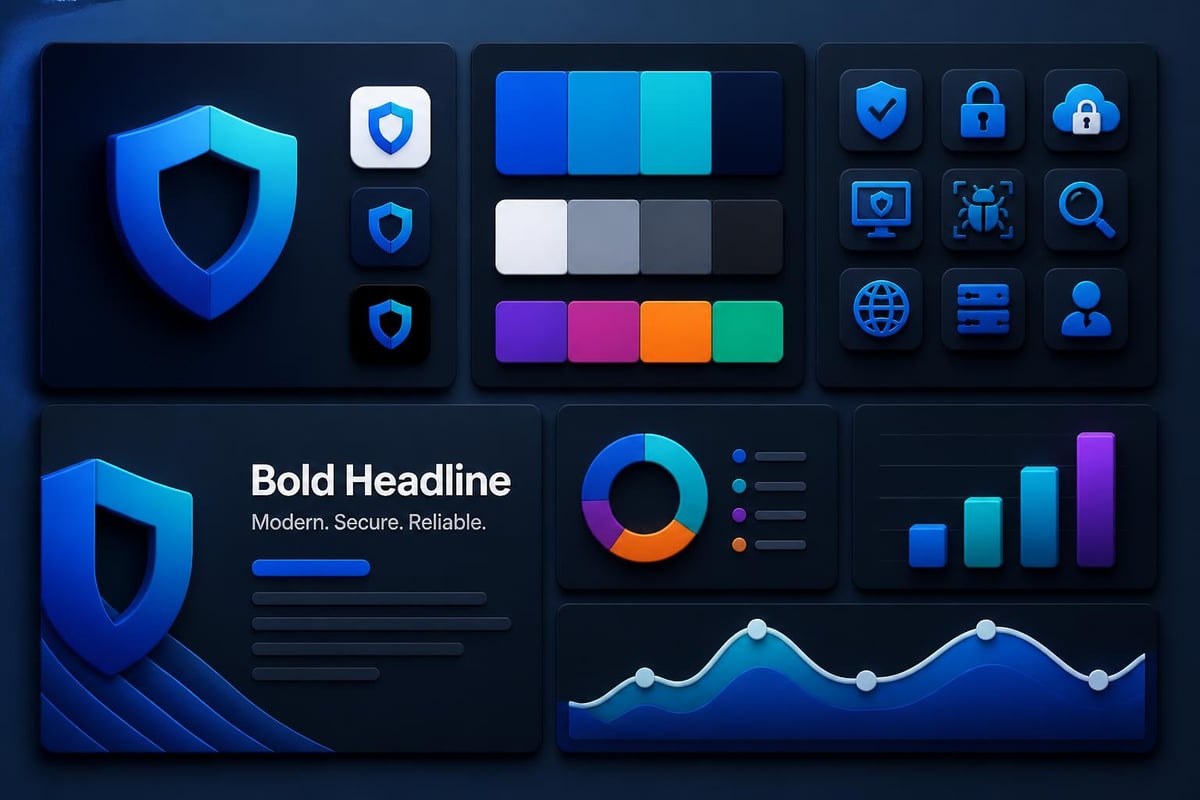
Visual identity components

Content Strategy and Thought Leadership

Beyond visual identity, cybersecurity company branding depends heavily on content strategies that demonstrate expertise and build industry authority. Thought leadership content serves dual purposes-establishing credibility with potential customers while attracting top talent to growing security organizations.

Strategic Content Pillars

Effective cybersecurity content addresses multiple audience needs:

  • Technical deep-dives for security practitioners and engineers
  • Strategic frameworks for C-suite executives and board members
  • Regulatory guidance for compliance officers and legal teams
  • Threat intelligence updates for security operations professionals
  • Case studies demonstrating real-world application and outcomes

When developing presentation materials that support these content initiatives, designers must consider how visual design enhances information retention and message credibility. Professional PowerPoint services help cybersecurity companies transform technical content into engaging presentations that serve both marketing and educational purposes.

The comprehensive guide to cybersecurity branding emphasizes how consistent content strategies reinforce brand positioning while providing ongoing value to target audiences. Companies that invest in substantial, research-backed content establish themselves as industry authorities rather than simple product vendors.

Technology Infrastructure Supporting Brand Expression

Modern cybersecurity company branding requires robust technology infrastructure to deliver consistent brand experiences across digital touchpoints. From websites and customer portals through to investor platforms and partner ecosystems, every interaction must reinforce brand positioning and values.

Security companies face unique requirements when selecting technology partners, as they must ensure that their own infrastructure meets the security standards they advocate for clients. Providers like vBoxx offer secure hosting and cloud solutions that enable cybersecurity firms to maintain brand presence through reliable, protected digital infrastructure aligned with their positioning as security experts.

Digital Brand Touchpoints

  1. Corporate websites serving as primary brand expressions
  2. Customer portals demonstrating product capabilities
  3. Documentation platforms showcasing technical expertise
  4. Sales enablement tools supporting consistent messaging
  5. Partner ecosystems extending brand reach through channel relationships

Each touchpoint requires careful design consideration to ensure visual consistency while accommodating functional requirements specific to different user groups and use cases.

Scaling Brand Identity with Company Growth

As cybersecurity companies grow from startup stages through to market leadership positions, their branding must evolve to reflect increased capabilities, expanded offerings, and broader market positioning. The IDMWORKS rebranding case study demonstrates how established companies refresh their brand identity to align with organizational maturation and market expansion.

Growth-Phase Branding Considerations

Startups (0-50 employees):

  • Establish clear positioning and messaging foundations
  • Develop flexible visual systems that accommodate rapid iteration
  • Create core presentation templates for investor and customer communications
  • Build foundational content libraries demonstrating expertise

Growth Stage (50-500 employees):

  • Refine messaging to reflect expanded capabilities and proven results
  • Develop comprehensive brand guidelines ensuring consistency across growing teams
  • Invest in sophisticated sales enablement materials supporting expanded go-to-market
  • Establish thought leadership programs building industry recognition

Enterprise Scale (500+ employees):

  • Evolve positioning to reflect market leadership and industry influence
  • Implement advanced brand management systems maintaining consistency globally
  • Develop sub-brand architectures for product lines and geographic markets
  • Create executive communication frameworks supporting corporate visibility

For companies at any growth stage, partnering with specialized agencies that understand industry nuances proves valuable. Working with experts in presentation design for tech businesses ensures that critical communications reflect appropriate sophistication for company maturity and audience expectations.

Measuring Brand Performance and Impact

Effective cybersecurity company branding requires ongoing measurement and optimization. Unlike purely aesthetic exercises, strategic branding initiatives drive measurable business outcomes that justify investment and inform continuous improvement.

Metric Category Key Indicators Measurement Approach
Brand Awareness Search volume, social mentions, media coverage Digital analytics, media monitoring
Brand Perception Sentiment analysis, competitive positioning Surveys, market research
Lead Generation Inbound inquiries, content engagement Marketing automation, CRM tracking
Sales Effectiveness Win rates, deal velocity, average contract value Sales analytics, pipeline analysis
Talent Acquisition Application quality, acceptance rates Recruiting metrics, HR analytics

The SecureCircle branding case study highlights how bold brand identity directly impacts market differentiation and customer acquisition in competitive environments. Companies that measure these outcomes can refine their branding strategies based on empirical results rather than subjective preferences.

Continuous Brand Optimization

Brand development never truly concludes. Market conditions shift, competitive landscapes evolve, and customer expectations change. Successful cybersecurity companies implement ongoing brand monitoring and optimization processes that ensure continued relevance and effectiveness.

Optimization practices include:

  • Quarterly brand health assessments measuring awareness and perception
  • Annual competitive positioning reviews identifying differentiation opportunities
  • Regular content performance analysis informing messaging refinement
  • Customer feedback integration improving brand-experience alignment
  • Sales team input gathering frontline market intelligence

Building Internal Brand Alignment

External brand success depends on internal brand alignment. Every employee serves as a brand ambassador, and their understanding of company positioning, values, and messaging directly impacts customer perceptions and market reputation.

Employee Enablement Programs

Cybersecurity companies must invest in comprehensive employee enablement ensuring consistent brand representation across all stakeholder interactions:

  1. Onboarding programs introducing brand foundations to new employees
  2. Sales training equipping customer-facing teams with messaging frameworks
  3. Presentation templates providing brand-compliant communication tools
  4. Content libraries offering approved materials for various use cases
  5. Brand guidelines documenting standards for all communication types

Organizations seeking to enhance their digital presence often benefit from partnerships with specialists like Get To Page One Ltd, whose expertise in SEO and website design helps cybersecurity brands achieve visibility in search results where potential customers research solutions.

For presentation materials specifically, providing employees with professional templates and design resources ensures that internal communications, customer presentations, and external engagements maintain consistent brand standards without requiring individual design expertise.

Partner and Channel Brand Extension

Many cybersecurity companies leverage partner channels to extend market reach. These partnerships require careful brand management to ensure that third-party representations maintain brand standards while accommodating partner needs and regional variations.

Channel Brand Frameworks

Successful partner branding programs include:

  • Co-branding guidelines balancing partner and vendor identities
  • Customizable presentation templates enabling partner personalization
  • Marketing asset libraries providing approved promotional materials
  • Training programs educating partners on brand positioning and messaging
  • Certification systems ensuring partner expertise and brand alignment

Channel partners often represent the primary customer touchpoint, making their brand fluency critical to market perception. Companies that invest in comprehensive partner enablement programs extend their brand reach effectively while maintaining consistency across diverse geographic markets and vertical segments.


Strategic cybersecurity company branding transforms technical capabilities into trusted market positions that drive customer acquisition, talent recruitment, and business growth. By moving beyond fear-based messaging toward positive, partnership-oriented identities supported by consistent visual systems and outcome-focused narratives, security companies differentiate themselves in competitive markets. Whether you're launching a cybersecurity startup, scaling an established firm, or refreshing a mature brand, Prznt Perfect helps translate complex security concepts into compelling visual stories through expert presentation design, pitch deck development, and brand communication services tailored to tech and financial businesses.


News & Updates...

Discover how a cybersecurity design agency transforms complex security concepts into compelling visuals that drive business results in 2026.

Semiconductor design agencies face complex communication challenges. Learn how visual storytelling transforms technical data into compelling narratives.