


Semiconductor Logo and Visual Identity Design Guide
Semiconductor logo and visual identity design: geometry, color, type, brand architecture, co-branding and rollout, with Intel, AMD and Graphcore examples.
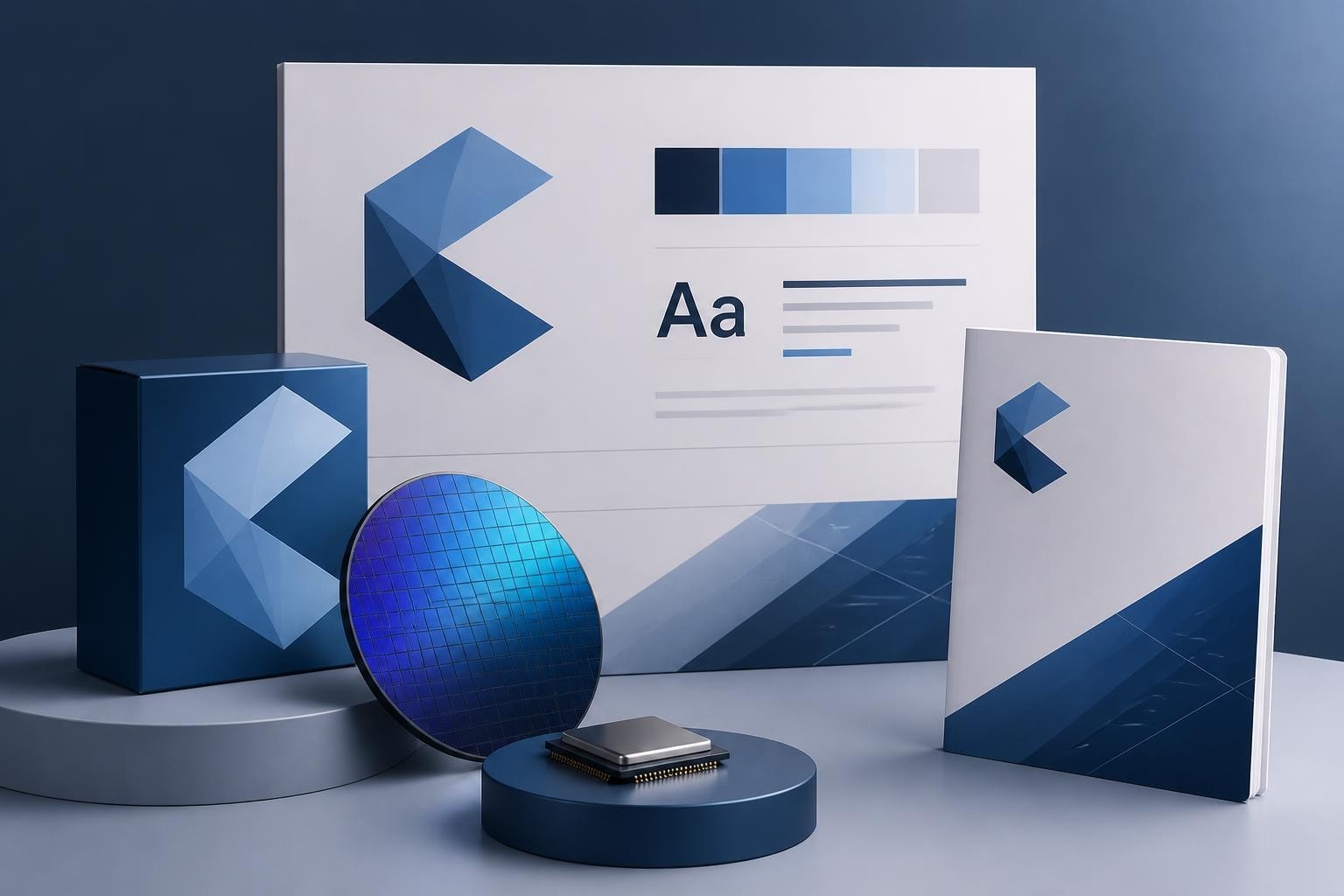
The semiconductor industry operates at the intersection of cutting-edge technology and global commerce, where companies must communicate both technical excellence and visionary innovation. A strong semiconductor logo and visual identity design serves as the foundation for how these companies present themselves to investors, partners, customers, and talent. Unlike consumer brands that can rely on emotional appeals or lifestyle associations, semiconductor firms face the unique challenge of translating highly technical capabilities into visual systems that inspire confidence, demonstrate precision, and signal leadership in one of the world's most competitive industries.
The Unique Challenges of Semiconductor Branding
Semiconductor companies operate in an ecosystem where credibility and technical authority matter more than flashy aesthetics. The visual identity must bridge the gap between complex engineering processes and the broader business narrative that resonates with stakeholders who may not understand chip architecture or nanometer fabrication processes.
Technical Precision Meets Brand Expression
When developing semiconductor logo and visual identity design, designers must balance two competing demands: the need to appear technically sophisticated and the requirement to remain accessible to diverse audiences. A chip manufacturer's mark needs to work equally well on a microscopic die photograph, a massive trade show banner at CES, and a quarterly earnings presentation to Wall Street analysts.
The best semiconductor identities achieve this balance through geometric precision and systematic thinking. Consider how NVIDIA approaches its brand usage with detailed specifications that ensure consistency across every touchpoint. This level of rigor reflects the precision required in semiconductor manufacturing itself.

Core Design Principles for Semiconductor Visual Identities
Building an effective visual system for semiconductor companies requires understanding the industry's specific communication needs and audience expectations.
Geometry and Structure
Semiconductor logos frequently employ geometric shapes that echo the precision of chip design and fabrication. These visual elements serve multiple purposes:
- Hexagons and grids reference molecular structures and circuit patterns
- Perfect circles suggest precision manufacturing and optical systems
- Angular forms communicate speed, efficiency, and technological advancement
- Modular systems allow flexibility across product lines while maintaining brand unity
The geometry must be mathematically precise, often built on strict grid systems that ensure pixel-perfect rendering at any scale. This technical foundation mirrors the manufacturing precision that defines the industry itself.
Color Strategy in Technical Contexts
Color choices in semiconductor logo and visual identity design carry specific connotations within the tech ecosystem. While consumer brands might choose colors based on emotional associations, semiconductor companies select palettes that signal specific attributes.
| Color Family | Industry Association | Strategic Message |
|---|---|---|
| Deep Blue | Reliability, processing power | IBM, Intel heritage, enterprise trust |
| Vibrant Green | Energy efficiency, innovation | NVIDIA, graphics performance |
| Red/Orange | Speed, performance | AMD, competitive positioning |
| Black/Silver | Premium engineering, precision | High-end manufacturing, materials science |
The detailed color specifications in NVIDIA's brand guidelines demonstrate how semiconductor companies codify these choices with exact Pantone, CMYK, RGB, and HEX values to ensure perfect reproduction across digital displays, print materials, and physical signage.
Typography That Communicates Technical Authority
Typeface selection reinforces the brand's position in the technology landscape. Semiconductor companies typically favor sans-serif fonts that project modernity and clarity. The typography must perform across challenging contexts: on densely packed technical diagrams, in presentations with complex data visualizations, and on products where space is extremely limited.
Custom typography often includes extended character sets for mathematical notation, subscript numerals for chemical formulas, and special ligatures for product naming conventions that include numbers and technical suffixes.
Case Studies: Semiconductor Identity Evolution
Examining how leading companies have approached their visual identity reveals patterns and lessons applicable across the industry.
Intel's 2020 Rebrand: Modernizing a Legacy
The UnderConsideration analysis of Intel's rebrand highlights how even the most established semiconductor brands must evolve. Intel simplified its iconic dropped "e" while preserving brand equity built over decades. The refresh demonstrated how semiconductor logo and visual identity design can modernize without abandoning recognition.
Key decisions included:
- Streamlined geometry reducing visual complexity for digital applications
- Updated color palette shifting slightly cooler to feel more contemporary
- Flexible system architecture allowing product sub-brands more expression
- Motion design language bringing the static mark to life in video and digital experiences
AMD's Visual Evolution: Competitive Differentiation
AMD's approach, visible through their official media resources, shows how challenger brands use visual identity to communicate performance and innovation. The arrow integrated into the logo became a powerful symbol of forward momentum and competitive advancement, directly supporting their "Together We Advance" positioning.
Emerging Player Strategies: Graphcore
The Pentagram case study for Graphcore illustrates how newer semiconductor companies approach identity. Rather than trying to match the established visual language of industry giants, Graphcore developed a distinctive system that reflected their unique position in AI processing. The identity extended beyond a simple logo to include data visualization styles, photography treatment, and communication patterns that expressed their technical differentiation.
Building a Complete Visual Identity System
A logo is merely the cornerstone of a complete visual identity. Semiconductor companies require comprehensive systems that extend across dozens of applications and use cases.
Identity Architecture and Product Branding
Semiconductor firms typically manage complex brand architectures with multiple layers:
- Corporate master brand for investor relations and overall company reputation
- Technology platform brands for major innovations (like NVIDIA CUDA or AMD Ryzen)
- Product family brands for specific chip lines and SKUs
- Partnership co-branding for collaborations with OEMs and ecosystem partners
The system must clearly define relationships between these layers while maintaining visual cohesion. This requires detailed documentation covering logo hierarchies, approved combinations, and usage restrictions.
Responsive Mark Design
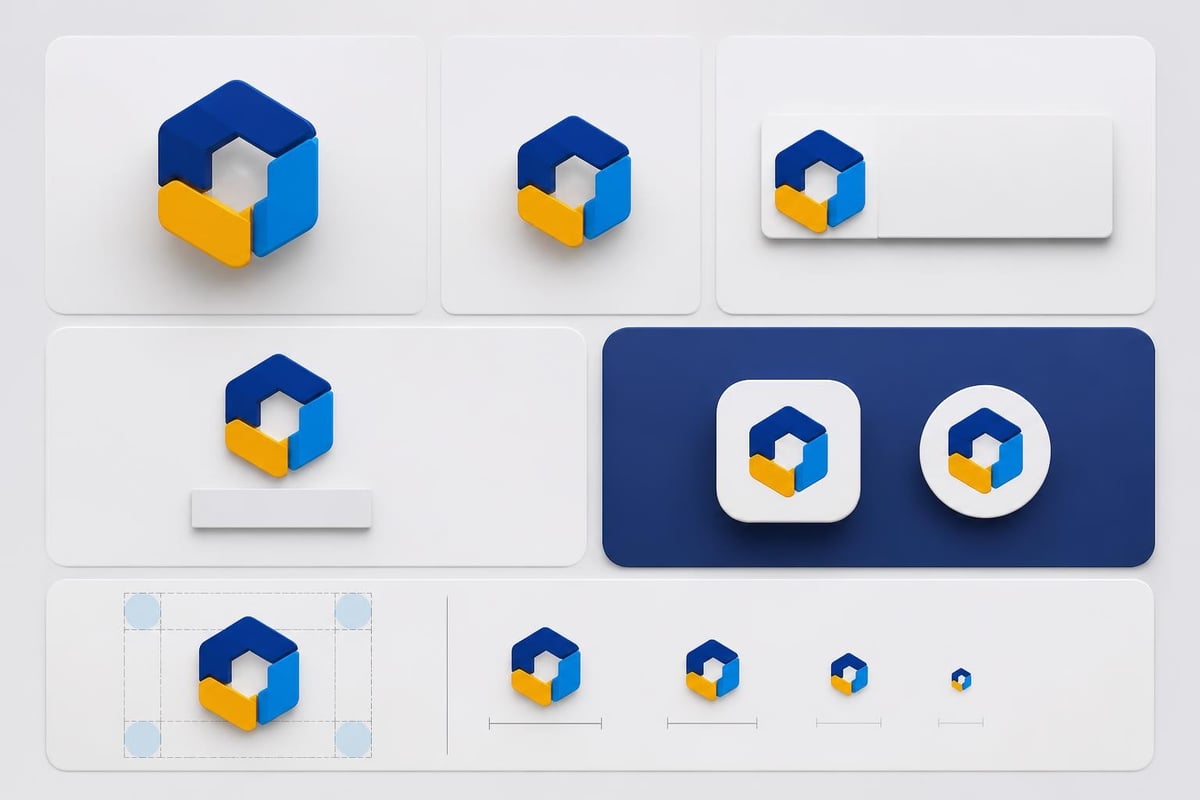
Modern semiconductor logo and visual identity design must account for responsive applications. A mark that works beautifully on a keynote slide may fail when displayed on a smartwatch face or embedded in a mobile app icon.
Responsive identity systems include:
- Full logo with complete wordmark for large-format applications
- Simplified version with reduced detail for mid-range sizes
- Icon mark standalone symbol for small-scale use
- Monochrome variations for single-color printing or engraving
- Inverted treatments for dark backgrounds common in technical presentations
The Figma guide on logo design provides practical approaches for creating these responsive variations during the design process, ensuring the identity system remains functional across all contexts.
Applications Specific to Semiconductor Communications
Understanding where and how semiconductor identities appear shapes design decisions from the beginning.
Technical Documentation and Datasheets
Semiconductor companies produce massive volumes of technical documentation. The visual identity must support clarity and readability in these materials, often appearing alongside dense circuit diagrams, performance graphs, and specification tables. Designers must ensure the logo and brand elements enhance rather than compete with this technical content.
Presentation Design and Investor Communications
For semiconductor companies, presentations serve as critical business tools. Pitch decks for funding rounds, quarterly earnings presentations, and technology showcase keynotes all require the visual identity to work alongside complex data visualizations, product roadmap timelines, and competitive positioning charts.
The identity system should include:
- Approved slide templates with precise layouts for different content types
- Chart and graph styling that aligns with brand colors and typography
- Icon libraries for representing technical concepts consistently
- Diagram standards for illustrating architectures and processes
- Photography and imagery guidelines for product shots and team representation
Trade Show and Physical Applications
Semiconductor companies invest heavily in trade show presence at events like Computex, CES, and industry-specific conferences. The identity must scale dramatically, from badge-sized logos to building-sized banners, while maintaining perfect fidelity.
Physical applications include:
- Booth graphics and environmental design
- Product packaging for development kits and evaluation boards
- Wafer-level branding and chip markings
- Uniform and credential applications
- Vehicle wraps for mobile demonstrations

Legal and Partnership Considerations
Semiconductor logo and visual identity design operates within a complex legal and partnership ecosystem that creates unique requirements.
Trademark Protection and Usage Guidelines
Semiconductor companies typically maintain strict control over their visual assets due to the high value of their intellectual property. Comprehensive usage guidelines specify exactly how partners, retailers, and media can use brand elements. These guidelines protect brand equity while enabling the ecosystem of partners to promote products effectively.
The AIGA teaching resource on identity systems offers a framework for thinking about how identity guidelines should be structured and documented, applicable to semiconductor branding contexts.
Co-Branding with OEMs and Partners
Semiconductor companies rarely sell directly to end consumers. Instead, their chips power products from countless manufacturers. This creates complex co-branding scenarios where the semiconductor logo must appear alongside OEM brands on packaging, marketing materials, and products themselves.
Design systems must address:
| Co-Branding Scenario | Identity Requirement | Example Application |
|---|---|---|
| "Intel Inside" style endorsement | Standardized badge system | Laptop palmrest placement |
| Technology partnership | Balanced dual-logo lockup | Joint press releases |
| Powered-by relationship | Subordinate logo treatment | Product specification sheets |
| Exclusive partnership | Co-equal presentation | Marketing campaign materials |
Strategic Considerations for New Identity Development
When a semiconductor company embarks on creating or refreshing their visual identity, several strategic factors should guide the process.
Audience Analysis and Stakeholder Mapping
Different audiences interact with semiconductor brands in distinct ways. Engineers evaluating chips for designs need different information than CFOs assessing acquisition targets or journalists covering industry trends. The visual identity must work across these contexts while maintaining coherence.
Primary audience segments include:
- Design engineers who select components for products
- Purchasing and procurement professionals negotiating contracts
- Investors and analysts evaluating company performance
- Media and industry influencers shaping perception
- Potential employees considering career opportunities
- Partners and distributors representing the brand
Competitive Differentiation Through Design
In a crowded semiconductor landscape, visual identity provides opportunities for differentiation. While certain industry conventions make sense to follow, strategic departures can help a company stand out and communicate unique value propositions.
A company focused on energy efficiency might embrace sustainable design principles in their identity. A firm emphasizing AI capabilities could incorporate dynamic, adaptive elements that suggest machine learning. A manufacturer prioritizing reliability might use visual stability and classical proportions.
Future-Proofing and Scalability
Semiconductor technology evolves rapidly, but rebranding carries significant costs and risks. Effective semiconductor logo and visual identity design anticipates future needs without trying to predict specific technologies. The system should flex to accommodate new product lines, emerging market segments, and evolving communication channels without requiring fundamental redesign.
Implementation and Rollout Strategy
Even the most brilliant identity design fails if poorly implemented. Semiconductor companies must plan comprehensive rollouts that update hundreds of touchpoints while maintaining business continuity.
Phased Transition Planning
Large semiconductor companies cannot simply switch identities overnight. A strategic rollout might span 12-24 months, prioritizing high-impact applications first:
- Phase One: Digital properties, investor materials, and public-facing communications
- Phase Two: Product documentation, datasheets, and technical resources
- Phase Three: Packaging, physical signage, and manufactured goods
- Phase Four: Legacy materials, archived content, and long-lifecycle applications
Internal Education and Adoption
For the identity to succeed, employees must understand and embrace it. This requires training programs that explain not just how to use the new system, but why it matters. Marketing teams, sales professionals, engineers creating presentations, and executives delivering keynotes all need appropriate guidance.
Measurement and Refinement
Post-launch, companies should track how the new identity performs. Metrics might include brand recognition studies, partnership feedback, media sentiment analysis, and internal adoption rates. This data informs ongoing refinement and ensures the investment delivers expected returns.
Industry-Specific Design Tools and Resources
The technical nature of semiconductor work influences even the tools used to create and manage visual identities.
Design teams working on semiconductor identities often use:
- Vector-based design software ensuring infinite scalability
- Version control systems managing identity assets across global teams
- Digital asset management platforms distributing approved materials to stakeholders
- Template automation tools enabling consistent presentations and documents
- Brand compliance monitoring tracking usage across digital and physical channels
Modern platforms enable semiconductor companies to maintain tighter control over their visual identity while making it easier for authorized users to access and apply brand elements correctly. This balance between governance and accessibility proves especially important in global organizations with thousands of employees and partners.
Building a powerful semiconductor logo and visual identity design requires balancing technical precision with strategic brand thinking. The principles outlined here apply whether you're a Fortune 500 chip manufacturer or an emerging fabless semiconductor startup. When your company needs to translate these identity principles into compelling presentations that resonate with investors, partners, or customers, Prznt Perfect specializes in creating visually stunning communications for tech businesses. Our team understands how to showcase complex technical innovations through clear, impactful visual storytelling that drives business results.
