


How to Raise Venture Capital for Hardware Startups
A practical guide to raising venture capital for hardware startups, covering funding stages, pitch deck essentials, and investor due diligence.
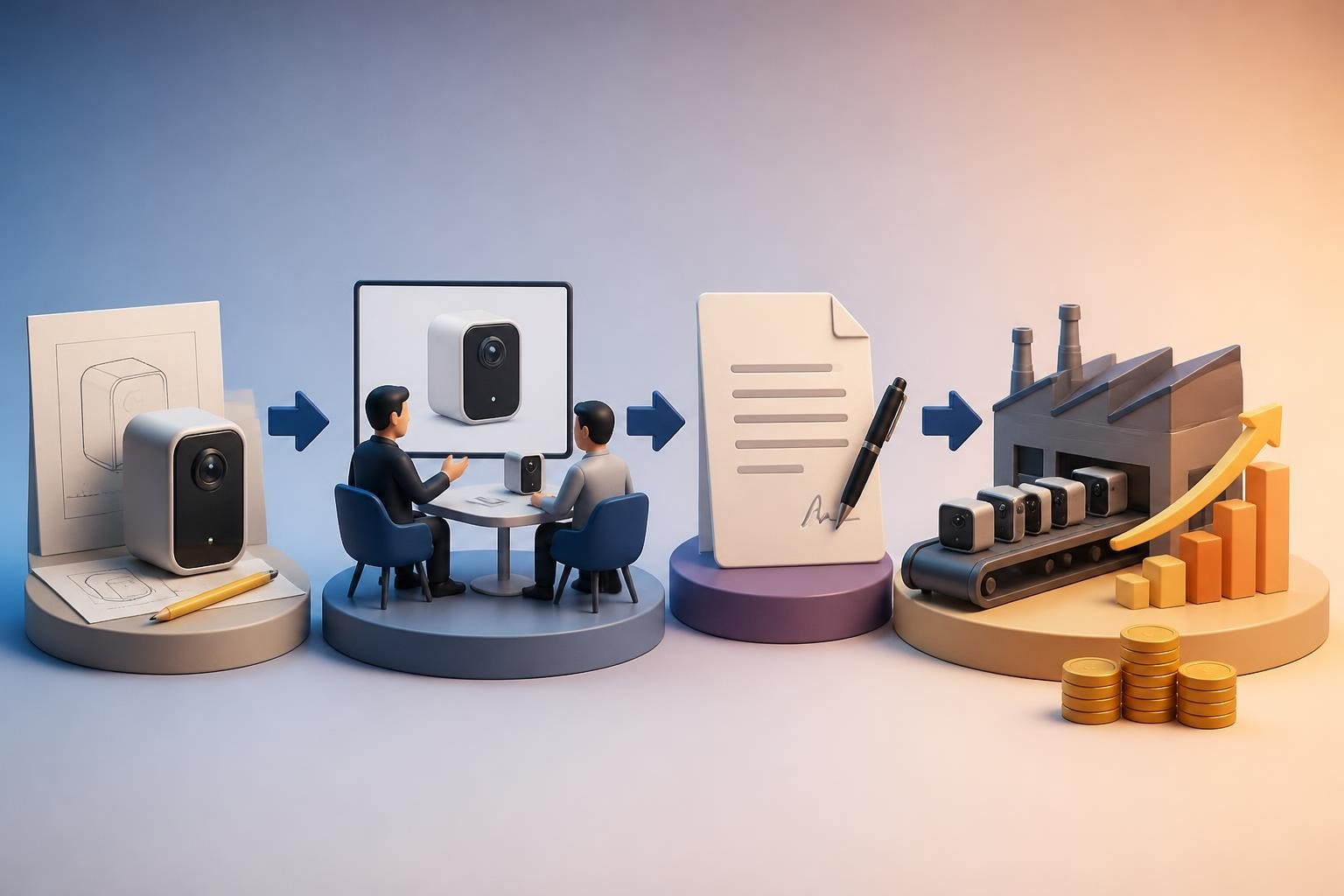
Hardware startups face unique challenges when seeking venture capital, from longer development cycles to higher upfront costs and complex supply chain management. Unlike software companies that can iterate quickly with minimal capital, hardware ventures require significant investment before generating revenue. Understanding how to raise venture capital for hardware means recognizing these differences and positioning your company to meet investor expectations while demonstrating tangible progress. Whether you're developing IoT devices, robotics, or consumer electronics, the right funding strategy combined with compelling visual storytelling can make the difference between closing a round and running out of runway.
Understanding the Hardware Venture Capital Landscape
The venture capital landscape for hardware has evolved considerably over the past decade. While software continues to dominate VC portfolios, investors are increasingly recognizing opportunities in the physical world and hard tech sectors, particularly as artificial intelligence and machine learning create new applications for hardware innovation.
Hardware startups typically require 2-3 times more capital than comparable software companies at similar stages. This fundamental reality shapes every aspect of your fundraising strategy. Investors evaluating hardware deals look for different milestones and risk factors compared to software investments.
Key investor concerns include:
- Manufacturing scalability and unit economics
- Supply chain resilience and vendor relationships
- Intellectual property protection and defensibility
- Time to market and capital efficiency
- Customer acquisition costs relative to hardware margins
Understanding these priorities helps you craft a narrative that addresses investor skepticism head-on. Many hardware founders make the mistake of focusing solely on technology innovation while underestimating the importance of demonstrating operational excellence and market validation.

Timing Your Fundraising Efforts
Knowing when to raise venture capital for hardware requires careful assessment of your development stage and runway. Unlike software startups that can raise on a compelling prototype, hardware investors want to see functioning units and early customer validation before committing significant capital.
According to Y Combinator's advice for early-stage hardware startups, founders should aim to have working prototypes and ideally some pre-orders or pilot customers before approaching institutional investors. This demonstrates both technical feasibility and market demand.
| Funding Stage | Typical Milestones | Capital Range | Investor Types |
|---|---|---|---|
| Pre-seed | Concept validation, early prototype | $100K-$500K | Angels, accelerators, grants |
| Seed | Working prototype, initial users | $500K-$2M | Seed funds, angels, strategic |
| Series A | Manufacturing pilot, revenue traction | $2M-$10M | VC firms, corporate venture |
| Series B | Scaled production, market expansion | $10M-$30M+ | Growth VCs, institutional |
Building a Compelling Hardware Pitch Deck
Your pitch deck serves as the cornerstone of how to raise venture capital for hardware. For hardware startups, visual communication becomes even more critical because you need to convey complex technical concepts, manufacturing processes, and physical product benefits within a limited number of slides.
Creative pitch deck design transforms dense technical information into digestible narratives that resonate with investors who may not have deep domain expertise. The goal is demonstrating both innovation and execution capability.
Essential Slides for Hardware Investors
Your hardware pitch deck should include standard VC slides but with hardware-specific emphasis. The product slide needs to showcase not just what your device does, but how it's manufactured, what makes it defensible, and why it's superior to existing solutions.
Critical components include:
- Problem and market size with specific hardware pain points
- Solution demonstration with product imagery and specifications
- Technology and IP highlighting proprietary innovations
- Business model showing unit economics and margin structure
- Go-to-market strategy addressing distribution and sales channels
- Manufacturing and supply chain demonstrating operational planning
- Competition and sustainable competitive advantages
- Team emphasizing hardware development and operations experience
- Financials with realistic hardware cost projections
- Funding ask with clear capital deployment milestones
The manufacturing and supply chain slide distinguishes hardware decks from software pitches. Investors want confidence that you understand Bill of Materials (BOM) costs, have identified contract manufacturers, and have strategies for scaling production without quality deterioration.
Balancing aesthetics with information density becomes particularly important when presenting technical specifications and financial projections. Dense data tables can overwhelm investors, while oversimplified slides may raise questions about your operational sophistication.
Demonstrating Traction and Product-Market Fit
Traction metrics for hardware differ significantly from software KPIs. When learning how to raise venture capital for hardware, recognize that investors need evidence of demand beyond enthusiastic early adopters. Research shows that many consumer hardware startups fail due to manufacturing challenges or inadequate product-market fit validation.
Pre-orders and crowdfunding campaigns provide valuable validation signals. A successful Kickstarter or Indiegogo campaign demonstrates market interest and de-risks customer acquisition assumptions. However, investors have become more sophisticated about interpreting crowdfunding success, recognizing that campaign backers differ from mainstream customers.
Meaningful traction indicators for hardware:
- Letter of intent (LOI) from enterprise customers or distributors
- Pilot deployments with measurable usage metrics
- Repeat purchase rates from early customers
- Customer acquisition cost (CAC) data from initial sales
- Net Promoter Score (NPS) and product satisfaction metrics
- Strategic partnership agreements with established players

Leveraging Pilot Programs and Beta Testing
Structured pilot programs create compelling evidence for investors while generating valuable product feedback. Unlike software betas that cost little to distribute, hardware pilots require significant investment in manufacturing and logistics.
Design pilot programs that generate quantitative data investors can evaluate. Track device performance, user engagement, failure rates, and support requirements. This operational data builds confidence in your ability to scale while identifying potential issues before mass production.
Exploring Non-Dilutive Funding Options
Before or alongside traditional venture capital, hardware founders should investigate non-dilutive funding sources. Government grants through programs like NSF's America's Seed Fund provide crucial development capital without equity dilution. These SBIR/STTR grants can fund research, prototype development, and commercialization activities.
The Small Business Administration offers additional resources including manufacturing-focused loans and support programs. While these may not replace venture capital for rapid scaling, they extend runway and allow you to reach more compelling milestones before institutional fundraising.
| Funding Source | Advantages | Considerations | Typical Amount |
|---|---|---|---|
| SBIR/STTR Grants | Non-dilutive, validation signal | Time-intensive application, reporting requirements | $50K-$1.5M |
| Revenue-based financing | No equity dilution, flexible | Higher effective cost, revenue dependent | $100K-$5M |
| Strategic partnerships | Market access, expertise | Potential exclusivity constraints | Varies widely |
| Equipment financing | Preserves capital for operations | Requires purchase commitments | $50K-$2M |
Strategic corporate partnerships deserve special consideration for hardware startups. Large corporations often invest in or provide development funding for innovative hardware companies that complement their product lines or strategic initiatives. These relationships can provide both capital and market access.
Negotiating Terms and Protecting Your Interests
Once you've attracted investor interest in how to raise venture capital for hardware, understanding and negotiating term sheets becomes critical. Hardware deals often include unique provisions related to inventory financing, manufacturing milestones, and liquidation preferences tied to asset values.
Pay particular attention to milestone-based funding structures. Investors may structure hardware investments as tranched capital releases contingent on achieving specific development or sales milestones. While this protects investors from over-funding failed initiatives, it can create cash flow challenges if milestones prove more difficult or time-consuming than anticipated.
Key Terms for Hardware Founders
Valuation and dilution require careful consideration in hardware contexts. Because hardware companies need more capital across longer timelines, founders often experience greater dilution through multiple funding rounds. Negotiate valuations that reflect your progress while preserving enough ownership to maintain motivation through potential down rounds or difficult periods.
Board composition matters particularly for hardware startups where operational expertise proves as valuable as strategic guidance. Consider investor board members' experience with hardware operations, manufacturing, and supply chain management.
Liquidation preferences can significantly impact founder returns, especially in hardware companies with tangible asset values. Multiple liquidation preferences or participating preferred structures can leave founders with minimal returns even in moderately successful exit scenarios.
Protective provisions may include specific hardware-related controls such as approval rights for major supply agreements, manufacturing partnerships, or significant inventory purchases. Understand which operational decisions require investor approval versus founder autonomy.
Preparing for Investor Due Diligence
Hardware due diligence extends beyond typical financial and legal review to include technical validation, supply chain assessment, and intellectual property verification. Investors will scrutinize your BOM costs, manufacturing quotes, supplier relationships, and product certifications.
Organize due diligence materials proactively, including detailed financial models with unit economics, supplier agreements and quotes, intellectual property documentation, product specifications and testing results, and regulatory compliance roadmaps. Professional presentation of these materials demonstrates operational maturity.
Technical due diligence often includes:
- Independent engineering assessment of product design
- Manufacturing feasibility evaluation by operations experts
- Bill of Materials cost validation
- Supply chain risk analysis
- Intellectual property freedom-to-operate review
- Regulatory pathway assessment for relevant certifications
Using infographics in presentations helps communicate complex supply chain relationships, manufacturing processes, and technical architectures during due diligence presentations. Visual clarity accelerates investor understanding and builds confidence in your operational planning.

Positioning Your Hardware Startup for Success
Successfully raising venture capital for hardware requires strategic positioning that emphasizes both innovation and execution. Investors back teams that understand the operational complexities of hardware development while demonstrating clear paths to sustainable competitive advantages.
Industry reports on IoT and hardware startups show that successful fundraising correlates strongly with demonstrable intellectual property, manufacturing partnerships, and early customer commitments. These tangible milestones reduce perceived risk and justify premium valuations.
Building the Right Team
Investor confidence stems largely from team composition. Hardware startups need diverse expertise spanning product development, manufacturing operations, supply chain management, and go-to-market execution. Highlight team members with relevant hardware experience, successful product launches, or deep domain expertise.
Consider bringing on strategic advisors with specific hardware operations experience, even if they don't join full-time. Board advisors from successful hardware companies or experienced manufacturing executives signal operational sophistication to potential investors.
Addressing Common Hardware Fundraising Challenges
Learning how to raise venture capital for hardware means anticipating and proactively addressing common objections. Investors often cite longer time to market, higher capital intensity, lower margins, and greater execution risk as reasons to pass on hardware deals.
Counter these concerns by demonstrating:
- Capital efficiency through strategic use of contract manufacturing versus building internal facilities
- Speed to market via parallel development tracks and strategic partnerships
- Margin protection through proprietary technology, strong branding, or subscription/service revenue models
- Risk mitigation with experienced team members, validated supply chains, and customer commitments
The presentation of these mitigating factors matters enormously. Deciding whether to rebrand before or after raising capital can impact investor perception of your market positioning and professional maturity.
Managing Investor Expectations
Set realistic timelines and capital requirements from the outset. Under-promising and over-delivering builds investor confidence, while optimistic projections that you subsequently miss erode trust and complicate future fundraising.
Hardware development inevitably encounters unexpected challenges from component availability to certification delays. Communicate these proactively with investors, demonstrating problem-solving capability rather than allowing surprises to emerge in board meetings.
Leveraging Current Market Trends
Stay informed about hardware investment trends through resources like TechCrunch's hardware startup coverage, which highlights recent funding rounds and emerging categories attracting capital. Understanding which hardware sectors are hot versus cold helps you position your startup within favorable investment themes.
In 2026, investors show particular interest in sustainability-focused hardware, health and wellness devices, industrial automation, and AI-enabled physical products. If your hardware aligns with these trends, emphasize the connection in your positioning and pitch materials.
Successfully raising venture capital for hardware demands meticulous planning, compelling storytelling, and demonstrable execution across technology, operations, and market validation. Hardware founders who master these elements while presenting their vision through professional, data-driven materials significantly improve their fundraising outcomes. When you're ready to transform your hardware story into investor-ready presentations that communicate technical complexity with visual clarity, Prznt Perfect specializes in helping technology startups craft pitch decks that resonate with venture capitalists and accelerate fundraising success.
