


How to Raise Money for a Fintech Startup in 2026
A guide to raising capital for a fintech startup, covering investor types, regulatory risk, due diligence, term sheets and funding timing.

Securing capital for a financial technology venture requires far more than a compelling idea. The fintech sector presents unique challenges that demand specialized knowledge of both financial services regulation and technology scaling. Investors scrutinize fintech startups with particular intensity, evaluating everything from compliance frameworks to unit economics. Understanding how to raise money for a fintech startup means mastering the distinct expectations of this highly regulated, capital-intensive industry while crafting a narrative that demonstrates both innovation and risk mitigation.
Understanding the Fintech Funding Landscape
The financial technology sector has evolved dramatically over the past decade. According to the World Economic Forum's analysis of fintech funding gaps, traditional capital sources have become more selective while new funding pathways continue to emerge.
Fintech startups face three fundamental capital challenges:
- Longer regulatory approval timelines that extend runway requirements
- Higher customer acquisition costs due to trust barriers in financial services
- Complex unit economics that require deeper investor due diligence
The market has matured significantly. Investors now expect proven traction, clear compliance strategies, and defensible competitive moats before committing substantial capital. This shift means founders must approach fundraising with more preparation and sophistication than ever before.
The Regulatory Dimension
Financial services regulation fundamentally changes how to raise money for a fintech startup. Investors evaluate regulatory risk as carefully as market opportunity. Your funding strategy must account for licensing costs, compliance infrastructure, and potential regulatory delays.
Different fintech verticals face varying regulatory burdens. Payment processors navigate different requirements than lending platforms or wealth management solutions. Understanding your specific regulatory pathway helps you articulate realistic capital needs and timelines to investors.

Identifying the Right Funding Sources
Not all capital sources align equally well with fintech business models. Strategic fundraising requires matching your startup's stage, geography, and vertical to appropriate investor types.
| Funding Source | Best For | Typical Range | Key Advantages |
|---|---|---|---|
| Angel Investors | Pre-seed validation | $25K-$500K | Speed, mentorship, flexible terms |
| Venture Capital | Growth scaling | $1M-$50M+ | Network, expertise, follow-on capital |
| Strategic Corporates | Partnership-driven growth | $500K-$10M | Distribution, credibility, integration |
| Venture Debt | Extending runway | $500K-$5M | Non-dilutive, operational leverage |
Venture Capital Considerations
Venture capital remains the primary growth capital source for fintech startups. However, VC firms increasingly specialize by fintech vertical. Payments-focused funds understand different metrics than lending or insurtech investors.
When targeting VCs, prioritize firms that:
- Have demonstrated fintech expertise in your specific vertical
- Maintain relationships with relevant regulators and strategic partners
- Offer portfolio support for compliance and risk management
- Can lead subsequent funding rounds as you scale
The FinTechtris guide to early-stage fintech funding provides detailed investor mapping strategies specific to different fintech categories.
Exploring Venture Debt
Venture debt offers a strategic complement to equity financing. The Andreessen Horowitz fintech debt guide outlines how debt structures can extend runway without additional dilution, particularly valuable when approaching key milestones.
Debt works best when you have predictable revenue, clear path to profitability, and need capital to bridge between equity rounds. For fintech companies with recurring revenue models, debt can provide 12-18 months of additional runway at critical scaling junctures.
Building a Compelling Investment Case
Understanding how to raise money for a fintech startup hinges on constructing an investment narrative that addresses both opportunity and risk. Your pitch must demonstrate market insight, technical capability, and regulatory competence simultaneously.
Market Opportunity and Timing
Investors evaluate whether your solution addresses a genuine pain point in financial services. Generic claims about "disrupting banking" no longer suffice. You need specific evidence of market dysfunction, quantified customer pain, and clear willingness to pay.
Your market analysis should include:
- Total addressable market with bottom-up validation
- Current solutions and their specific deficiencies
- Regulatory tailwinds or changes enabling your approach
- Customer acquisition channels with proven unit economics
Timing matters enormously in fintech. Regulatory changes, technology infrastructure improvements, or behavioral shifts can create windows of opportunity. Articulating why now matters helps investors understand your strategic positioning.
Unit Economics and Financial Projections
Fintech investors scrutinize unit economics with exceptional rigor. Customer acquisition cost (CAC), lifetime value (LTV), payback period, and gross margins determine whether your business can scale profitably.
Present your financial model with transparency. Show your assumptions, sensitivity analyses, and path to contribution margin positivity. Investors expect detailed cohort analyses demonstrating improving economics over time.
Crafting Your Pitch Materials
Your fundraising materials communicate sophistication and preparedness. The quality of your pitch deck, financial models, and data room reflects your operational capabilities.
The Pitch Deck Foundation
A fintech pitch deck must balance innovation with risk mitigation. The Harvard Business School primer on pitching business ideas emphasizes aligning your narrative with investor decision-making frameworks.
Essential fintech pitch deck components include:
- Problem statement with quantified market dysfunction
- Solution overview emphasizing regulatory compliance
- Business model with transparent unit economics
- Go-to-market strategy showing proven acquisition channels
- Competitive landscape highlighting defensible advantages
- Team credentials emphasizing relevant financial services or regulatory experience
- Traction metrics demonstrating product-market fit
- Financial projections with clear assumptions
- Funding ask with specific use of proceeds
The visual presentation of complex financial data matters enormously. Professional creative pitch deck design helps investors quickly grasp your business model while maintaining credibility through polished execution.

Visual Communication of Financial Data
Fintech startups deal with inherently complex data. Converting transaction volumes, approval rates, default curves, and cohort behaviors into clear visual narratives separates compelling pitches from confusing ones.
Effective infographics in presentations transform dense financial metrics into accessible insights. Investors should grasp your key performance indicators within seconds of viewing each slide.
Consider professional support for critical fundraising materials. The difference between amateur and professional presentation design significantly impacts investor perception, particularly when competing against well-funded alternatives.
Navigating the Fundraising Process
Successfully executing a fundraising process requires strategic planning and disciplined execution. How to raise money for a fintech startup involves orchestrating multiple parallel conversations while maintaining business momentum.
Building Your Investor Pipeline
Start building investor relationships months before you need capital. Warm introductions from portfolio founders, advisors, or other investors dramatically improve meeting quality and conversion rates.
Create a systematic investor outreach plan:
- Tier potential investors by strategic value and fit
- Map mutual connections for warm introductions
- Develop customized outreach highlighting relevant portfolio alignment
- Schedule meetings in concentrated timeframes to create momentum
Track all investor interactions in a CRM system. Document feedback, questions, and concerns to refine your pitch iteratively.
Managing Due Diligence
Fintech due diligence extends beyond typical startup scrutiny. Investors examine regulatory compliance, data security, financial controls, and partnership agreements with exceptional detail.
| Due Diligence Category | Key Investor Questions | Preparation Requirements |
|---|---|---|
| Regulatory Compliance | Licensing status, legal opinions, compliance infrastructure | Legal memos, licenses, compliance policies |
| Technology & Security | Architecture, data protection, penetration testing | Security audits, SOC 2, technology documentation |
| Financial Controls | Accounting systems, treasury management, reconciliation | Audited statements, internal control documentation |
| Partnerships | Banking relationships, processor agreements, data providers | Material contracts, partner references |
Prepare a comprehensive data room before starting investor conversations. The NVCA's model legal documents provide standard templates for organizing your financing documentation.
Understanding Term Sheets and Valuation
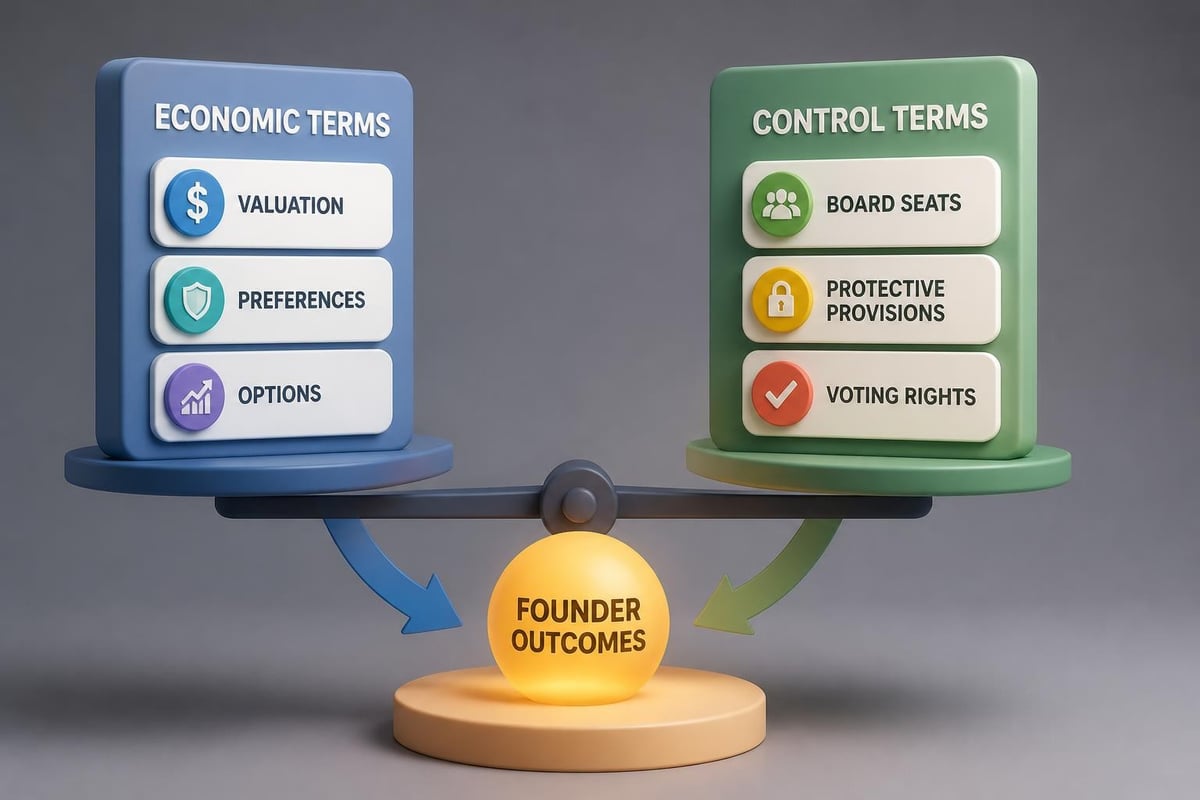
Term sheets codify the economic and control terms of your financing. Understanding these documents protects founder interests while enabling productive negotiations.
Key Economic Terms
Valuation represents just one component of financing terms. Pre-money valuation, liquidation preferences, participation rights, and anti-dilution provisions collectively determine your economic outcome.
Critical term sheet elements include:
- Pre-money valuation and option pool size
- Liquidation preference multiples and participation
- Board composition and protective provisions
- Anti-dilution protection (weighted average vs. full ratchet)
- Redemption rights and drag-along provisions
The Cooley GO convertible note templates offer practical frameworks for early-stage financing instruments that defer valuation discussions until later rounds.
Negotiation Strategy
Negotiate terms holistically rather than fixating on valuation alone. A higher valuation with onerous terms often proves less favorable than modest valuation with founder-friendly provisions.
Focus on alignment. Investors who understand your market, provide strategic value beyond capital, and commit to supporting subsequent rounds matter more than marginal valuation differences.
Timing Your Fundraise Strategically
When you raise capital matters as much as how you raise it. Strategic timing maximizes valuation while ensuring adequate runway for achieving next milestones.
Milestone-Based Fundraising
Raise capital when you can demonstrate meaningful progress that justifies higher valuation. For fintech startups, key inflection points include regulatory approvals, partnership launches, or crossing profitability thresholds on cohort bases.
Plan your fundraising calendar around:
- Completion of significant product development milestones
- Achievement of regulatory approvals or licenses
- Demonstration of improving unit economics across cohorts
- Securing strategic partnerships that validate your approach
Starting fundraising conversations 6-9 months before capital needs become urgent allows relationship development without desperation. Investors detect and discount urgency-driven fundraising.
Market Timing Considerations
Broader market conditions significantly impact fintech fundraising. During market downturns, investors scrutinize profitability paths more carefully and demand stronger traction before committing capital.
Monitor fintech funding trends quarterly. Understand whether your vertical is experiencing capital abundance or constraint. Adjust your fundraising strategy, timeline, and expectations accordingly.
Building Credibility Through Branding
Your brand communicates professionalism and inspires confidence. In financial services, where trust determines customer acquisition, brand perception directly impacts investor assessment of growth potential.
Strategic rebranding before raising capital can significantly improve investor perception. A polished brand suggests operational maturity and market sophistication that translates to higher valuations.
Brand elements that influence investor perception:
- Visual identity quality and consistency
- Website professionalism and messaging clarity
- Presentation materials and sales collateral
- Product interface design and user experience
Professional presentation design extends beyond pitch decks. Every customer-facing material, from product demos to partnership proposals, reinforces your market positioning. Maintaining balance between slide aesthetics and information density ensures your materials communicate both sophistication and substance.
Preparing for Multiple Funding Rounds
Understanding how to raise money for a fintech startup requires thinking beyond your immediate round. Successful founders plan three rounds ahead, ensuring current financing sets up favorable subsequent rounds.
Round Construction Strategy
Each funding round should finance specific milestones that enable the next round at higher valuation. Avoid raising too little capital and missing milestones, or raising too much at excessive dilution.
Structure rounds to achieve:
- Regulatory milestones that remove key risks
- Customer traction proving product-market fit
- Unit economics improvements demonstrating scalability
- Team expansion enabling operational leverage
Build relationships with investors who can participate in multiple rounds. Lead investors who reserve capital for follow-on investments provide valuable continuity and signaling to new investors.
Maintaining Investor Relationships
Your relationship with investors extends far beyond closing documents. Regular communication, transparent problem-solving, and appropriate asks for support build social capital that facilitates future fundraising.
Provide monthly or quarterly updates even when not actively fundraising. Share wins, challenges, and key metrics consistently. Investors who understand your trajectory become advocates for subsequent rounds.
Leveraging Strategic Alternatives
Traditional venture capital represents just one path for financing fintech growth. Alternative structures can provide capital while preserving equity or aligning incentives differently.
Revenue-Based Financing
For fintech companies with recurring revenue, revenue-based financing offers non-dilutive capital repaid as percentage of monthly revenue. This structure works particularly well for companies approaching profitability but needing growth capital.
Strategic Corporate Investment
Financial institutions increasingly invest in fintech startups as innovation channels. Corporate venture arms offer capital plus distribution, credibility, and partnership opportunities.
Evaluate strategic investors carefully. Ensure investment terms don't constrain future strategic flexibility or create conflicts with other potential partners or customers.
Raising capital for a fintech startup demands mastery of financial services nuances, regulatory complexity, and investor expectations while maintaining operational excellence. Success requires strategic planning, compelling storytelling, and professional execution across every investor interaction. When you're ready to transform your fundraising narrative into a visually compelling pitch deck that resonates with investors, Prznt Perfect specializes in creating presentation materials that communicate both the innovation and credibility essential for fintech fundraising success.
