


Cybersecurity Branding: Build Trust in Financial & Tech
Learn how financial and tech companies turn cybersecurity into a brand asset that builds client trust, investor confidence, and market differentiation.

In 2026, cybersecurity is no longer just an IT concern buried in technical documentation and infrastructure budgets. It has evolved into a strategic brand differentiator that shapes customer trust, investor confidence, and competitive positioning. For financial services firms and technology companies, cybersecurity branding represents the intersection of security capability and public perception, where technical excellence must be translated into clear, compelling narratives that stakeholders can understand and value. As data breaches and cyber incidents continue to dominate headlines, organizations that proactively communicate their security posture gain measurable advantages in client acquisition, talent recruitment, and market valuation.
Why Cybersecurity Has Become a Brand Asset
The traditional view positioned cybersecurity as a defensive cost center focused on preventing attacks and maintaining compliance. Today's reality is fundamentally different. Security capabilities now directly influence brand equity, particularly in industries handling sensitive financial data or proprietary technology. Research from Deloitte demonstrates how consumer trust, data privacy, and cybersecurity investments translate into brand value and competitive advantage.
Financial institutions and technology firms face unique scrutiny. A single breach can trigger immediate stock price declines, client defections, and regulatory investigations. Conversely, organizations that establish strong cybersecurity branding create protective barriers during incidents and accelerate recovery.
The Trust Economy Connection
Modern business relationships depend on trust signals. When selecting banking partners, investment platforms, or technology vendors, decision-makers evaluate security posture as a primary criterion. Cybersecurity branding makes invisible technical capabilities visible and comprehensible.
Key trust factors that security branding addresses:
- Transparent disclosure of security practices and certifications
- Rapid, honest communication during incidents
- Demonstrated investment in emerging threat protection
- Third-party validation through audits and compliance frameworks
- Executive accountability for security outcomes

Organizations that excel at cybersecurity branding transform technical achievements into business language. Instead of listing firewall configurations, they communicate outcomes: protecting client assets, ensuring transaction integrity, safeguarding intellectual property. This translation requires collaboration between security teams, marketing departments, and design professionals who can craft compelling visual narratives that resonate with non-technical audiences.
Building a Cybersecurity Brand Identity
Creating a distinct security brand requires intentional strategy, not merely publishing an annual compliance report. The most effective programs integrate security messaging across all customer touchpoints, from pitch decks to product interfaces.
Visual Consistency and Credibility
Brand management extends to how security information is presented. Financial institutions pitching to enterprise clients or technology companies seeking Series B funding must demonstrate security sophistication through professional design. Poorly formatted security documentation signals organizational weakness, while polished materials reinforce competence.
| Brand Element | Weak Execution | Strong Execution |
|---|---|---|
| Security Certifications | Listed in footer text | Visually highlighted with badge design |
| Incident Response | Generic policy PDF | Interactive timeline with clear protocols |
| Data Protection | Technical jargon | Client-benefit focused messaging |
| Team Expertise | Resume bullets | Narrative showcasing problem-solving |
Professional presentation design agencies like Prznt Perfect understand how to transform complex security concepts into clear visual stories. When considering a rebrand before major funding rounds or market expansion, integrating cybersecurity messaging ensures investors see both innovation and prudent risk management.
Defining Your Security Position
Cybersecurity branding requires answering fundamental questions about organizational identity:
- What security capabilities differentiate you from competitors?
- How do your security practices support client business objectives?
- What security guarantees can you credibly make?
- How do you balance transparency with operational security?
- What security narratives resonate with your target market?
These answers become the foundation for consistent messaging across sales presentations, marketing materials, investor decks, and crisis communications. The World Economic Forum's Global Cybersecurity Outlook emphasizes how cyber resilience and transparent reporting protect reputation at the board level, reinforcing the strategic importance of clear security narratives.
Communicating Security to Different Audiences
Effective cybersecurity branding recognizes that different stakeholders require tailored messages. The technical depth appropriate for a CISO differs dramatically from what resonates with a CFO or retail customer.
Executive and Board Communications
When presenting cybersecurity to decision-makers, focus shifts from technical controls to business impact. Board presentations should emphasize risk quantification, competitive positioning, and return on security investment.
Effective board-level security narratives include:
- Financial impact modeling of potential incidents
- Industry benchmarking against peer organizations
- Strategic alignment with business growth initiatives
- Regulatory landscape changes and compliance roadmaps
- Talent retention advantages from security culture
The challenge lies in balancing technical accuracy with accessible language. Professional presentation services can help translate dense security reports into executive-friendly formats that drive informed decision-making without oversimplification.
Client-Facing Communications
Customer-facing cybersecurity branding emphasizes protection of client interests rather than organizational capabilities. Financial services firms must communicate how security investments protect client assets, enable transaction confidence, and ensure privacy compliance.
Technology companies face different dynamics. Security becomes part of the product value proposition, particularly for B2B offerings. A fintech platform's encryption standards or a healthcare technology vendor's HIPAA compliance aren't merely checkboxes but fundamental product features deserving prominent placement in sales materials.
Analysis from the CMO Council on collaboration between marketing and security teams reveals that organizations protecting brand value through integrated security messaging achieve higher customer retention and acquisition rates. This collaboration ensures security strengths are effectively communicated without creating legal exposure or operational vulnerabilities.

Internal Brand Building
Employee perception significantly impacts external cybersecurity branding. Organizations promoting security awareness internally create authentic brand ambassadors while reducing insider threat risks. However, the Harvard Business Review warns that surveillance-heavy security approaches erode trust and damage both workforce morale and external reputation.
Progressive cybersecurity branding frames security as enabling employees rather than restricting them. Training programs, phishing simulations, and security policies become opportunities to demonstrate organizational investment in protection rather than manifestations of distrust.
Crisis Communication and Incident Response Branding
The true test of cybersecurity branding arrives during incidents. Organizations that previously invested in transparent security communication recover faster and suffer less reputational damage than those caught unprepared.
Pre-Crisis Positioning
Strong cybersecurity brands establish credibility before incidents occur. This foundation includes:
- Published incident response frameworks
- Clear escalation procedures with defined responsibilities
- Pre-approved messaging templates for various scenario types
- Established relationships with media and stakeholder groups
- Regular tabletop exercises testing communication protocols
CISA's Incident Response Communications Guide provides practical federal guidance on planning public communications and stakeholder messaging during cyber incidents, offering templates adaptable to private sector needs.
Transparency as Competitive Advantage
When breaches occur, organizations face competing pressures: legal counsel advising minimal disclosure versus brand managers recognizing that transparency builds trust. Leading cybersecurity brands have resolved this tension by establishing predetermined disclosure thresholds and communication timelines.
Rapid, honest acknowledgment of incidents, paired with clear remediation steps, often strengthens brand perception despite the underlying security failure. Stakeholders distinguish between organizations that experience attacks (inevitable) and those that respond professionally (chosen).
| Response Approach | Brand Impact | Stakeholder Perception |
|---|---|---|
| Delayed disclosure | Negative, long-lasting | Deceptive, untrustworthy |
| Defensive minimization | Negative, moderate | Incompetent, unreliable |
| Transparent acknowledgment | Neutral to positive | Honest, accountable |
| Proactive education | Positive | Industry leader, trustworthy |
The financial services industry provides clear examples. KPMG's analysis of cybersecurity priorities for banks demonstrates how security has become a strategic capability for protecting brand trust, with incident response quality directly correlating to customer retention rates.
Sector-Specific Branding Strategies
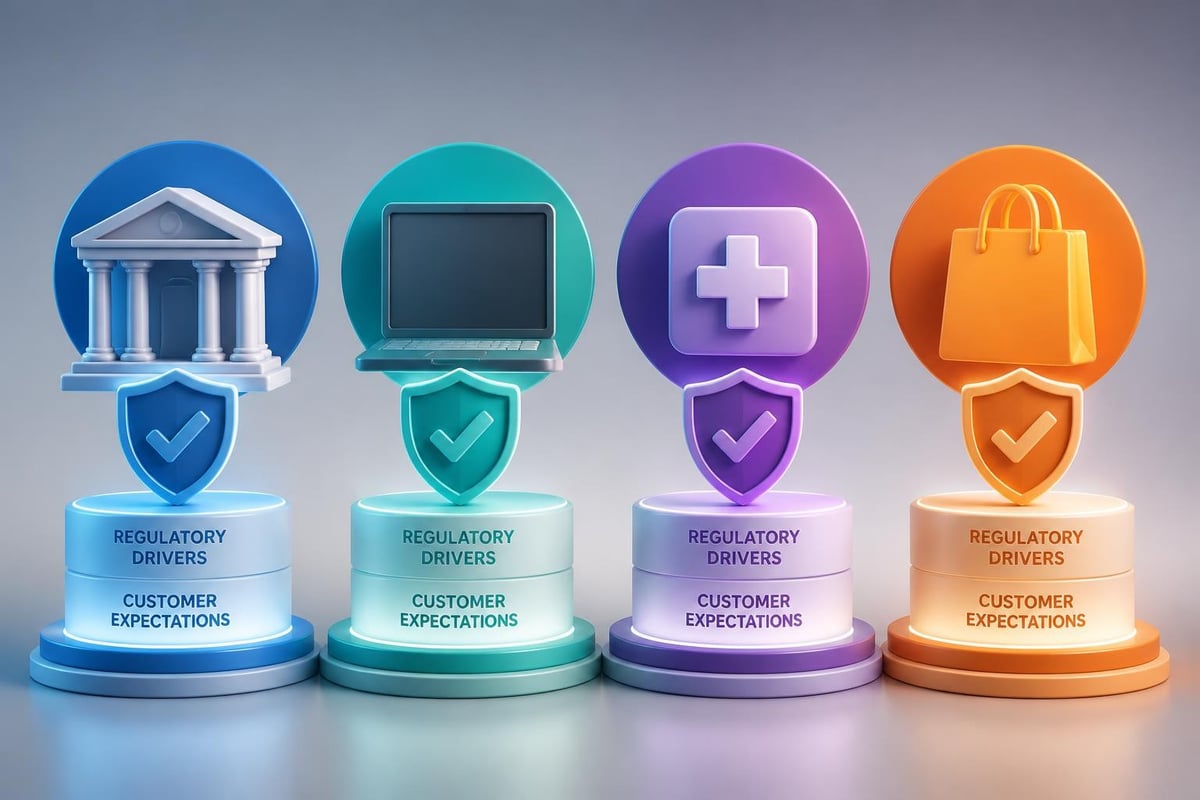
Different industries require tailored cybersecurity branding approaches aligned with regulatory environments, customer expectations, and competitive dynamics.
Financial Services Differentiation
Banks, investment firms, and insurance companies operate in highly regulated environments where security compliance is mandatory. Effective cybersecurity branding in finance transcends mere compliance, highlighting security innovations that enable new services or improved customer experiences.
Progressive financial institutions brand their security capabilities around:
- Zero-trust architecture enabling secure remote banking
- Biometric authentication balancing convenience with protection
- Real-time fraud detection protecting customer accounts
- Quantum-resistant encryption future-proofing client assets
These technical capabilities become brand differentiators when communicated through compelling narratives that connect security investments to tangible customer benefits. Creating infographics for presentations can transform abstract security concepts into visual stories that clients intuitively understand.
Technology Sector Positioning
Technology companies face unique cybersecurity branding challenges. Their products often become attack vectors, making security both a product feature and corporate responsibility. Software-as-a-service providers, cloud platforms, and enterprise technology vendors must demonstrate security throughout development lifecycles, not merely at deployment.
Effective tech sector cybersecurity branding emphasizes:
- Security by design methodologies integrated from conception
- Continuous vulnerability management with transparent disclosure
- Compliance certifications spanning multiple frameworks (SOC 2, ISO 27001, FedRAMP)
- Bug bounty programs demonstrating openness to external scrutiny
- Open-source contributions to security tool ecosystems
MarqVision's analysis of brand protection reveals that phishing, impersonation, and brand abuse have made brand protection a cybersecurity priority, particularly for technology companies with valuable brand equity vulnerable to digital exploitation.
Measuring Cybersecurity Brand Impact
Quantifying brand value from security investments challenges many organizations. Traditional security metrics like patch rates or penetration test results don't directly measure brand perception. Effective measurement requires blending security KPIs with brand health indicators.
Integrated Metrics Framework
Security performance indicators:
- Incident detection and response times
- Vulnerability remediation velocity
- Security certification achievement
- Third-party audit results
- Compliance adherence rates
Brand perception indicators:
- Customer trust survey scores
- Security-attributed win rates in competitive deals
- Media sentiment analysis on security topics
- Investor confidence metrics
- Employee security culture assessments
Organizations leading in cybersecurity branding establish dashboards connecting these dimensions, demonstrating how security improvements correlate with brand strength.
Competitive Intelligence
Understanding competitor security positioning informs differentiation strategies. Financial institutions and technology companies regularly assess:
- Competitor security messaging in sales materials
- Certifications and compliance frameworks emphasized
- Incident response transparency and quality
- Security thought leadership and industry engagement
- Customer feedback on competitor security perceptions
This intelligence identifies opportunities to establish leadership in underserved security domains or communicate existing strengths more effectively.
Operationalizing Security Brand Management
Transforming cybersecurity from technical function to brand asset requires organizational alignment, cross-functional collaboration, and sustained executive commitment.
Building the Right Team Structure
Successful cybersecurity branding programs create formal partnerships between traditionally separate departments:
- Security leadership provides technical expertise and validates messaging accuracy
- Marketing teams craft compelling narratives and manage external communications
- Legal counsel ensures compliance with disclosure requirements
- Product management integrates security features into value propositions
- Design professionals create visual materials that communicate complex concepts
Organizations might consider hiring fractional CMO expertise to bridge security and marketing functions without requiring full-time C-suite additions. This approach brings strategic branding experience while maintaining flexibility.
Content Strategy and Thought Leadership
Consistent content production establishes security thought leadership and reinforces brand positioning. Effective programs produce:
- Quarterly threat landscape reports with sector-specific insights
- Case studies demonstrating security problem-solving
- Executive perspectives on emerging security challenges
- Educational content helping clients improve their security posture
- Participation in industry conferences and security forums
Best practices for research presentations apply equally to security content, ensuring technical depth is communicated with clarity and visual appeal. When developing materials, choosing perfect images for presentations helps reinforce key security messages without resorting to cliché stock photography of hooded figures or binary code.
Visual Standards and Templates
Brand consistency requires standardized templates for security communications. Organizations should develop:
| Template Type | Purpose | Key Elements |
|---|---|---|
| Executive Security Brief | Board and C-suite updates | Risk dashboard, investment recommendations |
| Client Security Overview | Sales enablement | Certification badges, protection guarantees |
| Incident Communication | Crisis response | Timeline, impact scope, remediation steps |
| Security Roadmap | Strategic planning | Initiatives, milestones, resource allocation |
Professional design ensures these materials reflect organizational quality standards. Services specializing in PowerPoint presentation design can create templates that maintain brand consistency while accommodating evolving security content.
Future Trends in Cybersecurity Branding
The cybersecurity branding landscape continues evolving as new threats emerge and stakeholder expectations shift. Forward-looking organizations anticipate these trends:
AI and Automation Messaging
Artificial intelligence transforms both cybersecurity capabilities and communication strategies. Organizations must brand their AI-powered security tools while addressing stakeholder concerns about AI risks. Commentary from Tenable on how CISOs frame cybersecurity as a driver of business value highlights the leadership perspective necessary for positioning AI security investments.
Emerging AI security brand themes:
- Responsible AI governance frameworks
- Automated threat detection and response
- AI-powered privacy protection
- Adversarial AI defense capabilities
- Transparent AI decision-making in security contexts
Regulatory Transparency Requirements
Expanding disclosure regulations reshape cybersecurity branding. The SEC's cybersecurity rules require public companies to disclose material incidents within four business days, transforming voluntary transparency into mandatory practice. Organizations that previously established transparent communication cultures adapt more easily to these requirements.
Progressive brands view regulatory compliance as a floor, not a ceiling, voluntarily exceeding minimum standards to demonstrate security commitment.
Ecosystem and Supply Chain Security
Modern business operations depend on complex vendor ecosystems, making supply chain security a brand imperative. Organizations increasingly communicate their vendor risk management programs, third-party security requirements, and ecosystem monitoring capabilities.
This trend particularly affects technology companies whose products integrate multiple components and financial services firms relying on fintech partnerships. Cybersecurity branding must extend beyond organizational boundaries to encompass the entire value chain.
Cybersecurity branding represents the essential intersection of technical capability and strategic communication, transforming security from cost center to competitive advantage. For financial services and technology firms, investing in clear, compelling security narratives builds stakeholder trust, differentiates market positioning, and creates resilience during inevitable incidents. When you're ready to translate your cybersecurity strengths into presentations that resonate with investors, clients, and partners, Prznt Perfect specializes in creating visual narratives that communicate complex technical concepts with clarity and impact, helping you build the brand trust that drives business success.
