Corporate PowerPoint Presentation Templates Guide 2026

The modern business landscape demands consistent, professional communication across every touchpoint. For financial and tech organizations, presentations serve as critical tools for investor pitches, client engagements, and internal communications. Corporate powerpoint presentation templates have emerged as essential assets that enable organizations to maintain brand integrity while empowering teams to create compelling content efficiently. These structured frameworks transform the presentation creation process from a time-consuming design challenge into a streamlined workflow that ensures every slide reflects organizational standards.

The Strategic Value of Template Systems

Corporate powerpoint presentation templates represent far more than pre-formatted slides. They function as strategic brand assets that codify visual language, establish communication hierarchies, and protect brand equity across distributed teams. Organizations investing in robust template systems typically experience 40-60% reduction in presentation development time while simultaneously improving brand consistency metrics.

Financial institutions and technology companies face unique presentation challenges. Complex data visualizations, regulatory compliance requirements, and sophisticated stakeholder expectations demand templates that balance aesthetic appeal with functional clarity. A well-designed template system addresses these needs by providing pre-built components for financial charts, product roadmaps, competitive analyses, and technical architecture diagrams.

Core Components of Effective Templates

Professional template systems incorporate several critical elements that distinguish them from basic formatting tools:

  • Master slide architecture that controls global design elements and ensures consistency
  • Brand-compliant color palettes with specific applications for primary, secondary, and accent colors
  • Typography systems that establish clear hierarchies for headings, body text, and annotations
  • Layout variations optimized for different content types and communication objectives
  • Data visualization frameworks with pre-styled charts, graphs, and infographic elements
  • Image treatment guidelines that maintain visual consistency across photography and graphics

Understanding the fundamentals of corporate presentation design helps organizations build templates that serve real user needs rather than imposing restrictive design constraints.

Template component system

Building Templates That Teams Actually Use

Many organizations invest significant resources developing corporate powerpoint presentation templates only to find teams circumventing them or creating off-brand presentations. This failure typically stems from templates that prioritize design aesthetics over user functionality. Common template failures often result from insufficient layout variety, overly restrictive formatting, or inadequate guidance on proper implementation.

Successful template adoption requires understanding how different roles within an organization create presentations. Sales teams need templates optimized for client-facing pitch decks, while product teams require layouts that accommodate technical specifications and development roadmaps. Finance departments benefit from templates with sophisticated data visualization capabilities, whereas executive communications demand layouts that convey strategic narratives with minimal clutter.

User-Centered Template Development

The most effective corporate powerpoint presentation templates emerge from collaborative design processes that incorporate feedback from actual users. This approach typically follows several key phases:

  1. Audit existing presentations to identify common content patterns and pain points
  2. Interview stakeholders across departments to understand specific use cases and requirements
  3. Prototype template variations with different layout options and component libraries
  4. Conduct user testing with representative team members creating real presentations
  5. Iterate based on feedback to refine layouts, add missing components, and improve usability
  6. Develop implementation guides that explain proper template usage and customization boundaries

Organizations that invest time in this discovery phase create templates that genuinely serve user needs. Building PowerPoint templates colleagues will love requires balancing design consistency with practical flexibility.

Design Principles for Professional Templates

Creating corporate powerpoint presentation templates that maintain visual impact while supporting diverse content types requires adherence to fundamental design principles. These guidelines ensure templates remain functional across various presentation contexts without sacrificing aesthetic quality.

Visual Hierarchy and Information Architecture

Professional templates establish clear visual hierarchies that guide audience attention through content. This involves strategic use of scale, contrast, and spatial relationships. Primary messages receive prominent placement and visual weight, while supporting details occupy secondary positions with appropriate typographic treatment.

Design Element Primary Application Secondary Application Supporting Details
Typography 32-36pt bold headlines 18-24pt section headers 14-16pt body text
Color Usage Key metrics and CTAs Section differentiators Background elements
Spatial Weight Hero statements Supporting arguments Footnotes and citations
Visual Contrast Main data points Comparative information Contextual details

Effective templates provide multiple layout options that accommodate different content densities. Text-heavy slides require generous white space and clear reading lines, while data visualization slides need frameworks that support complex charts without visual crowding.

Consistency Across Presentation Types

Corporate powerpoint presentation templates must maintain brand consistency while adapting to different presentation formats. Investor presentations demand layouts that emphasize financial performance and growth trajectories. Client proposals require templates that showcase case studies and implementation roadmaps. Internal communications benefit from layouts optimized for strategic planning and operational updates.

Creating professional PowerPoint presentations involves understanding how template systems scale across these different contexts. The most versatile templates include:

  • Executive summary layouts with high-level messaging and key takeaways
  • Data-driven slides with chart placeholders and annotation frameworks
  • Process visualization templates for workflows and methodologies
  • Team and organizational slides for introductions and credentials
  • Case study layouts that balance imagery with supporting metrics
  • Appendix templates for detailed technical specifications
Layout variation system

Implementation and Governance Strategies

Deploying corporate powerpoint presentation templates across an organization requires more than distributing files. Successful implementation involves establishing governance frameworks, providing training resources, and creating feedback mechanisms that ensure templates evolve with organizational needs.

Distribution and Access Management

Organizations employ various approaches to template distribution, each with distinct advantages. Cloud-based template management systems enable version control and ensure teams always access current templates. These platforms typically integrate with enterprise software ecosystems, providing seamless access through existing workflows.

Alternative approaches include centralized repositories on corporate intranets or template management through Microsoft Office's built-in features. Comprehensive template guides explain technical implementation options and best practices for ensuring accessibility across distributed teams.

Training and Enablement Programs

Even the most thoughtfully designed templates fail without adequate user education. Effective training programs address both technical implementation and strategic application. Users need to understand not just how to apply templates, but when to use specific layouts and how to customize within brand guidelines.

Successful enablement initiatives typically include:

  1. Live training sessions demonstrating template features and proper usage
  2. Video tutorials covering common presentation scenarios and solutions
  3. Quick reference guides for accessing specific layouts and components
  4. Design office hours where users can get real-time support
  5. Template showcases highlighting excellent examples from across the organization

For specialized applications, organizations may develop focused training modules. Tech companies creating cybersecurity presentations benefit from templates and training specifically addressing security architecture diagrams, threat landscapes, and compliance frameworks.

Advanced Template Features and Customization

Modern corporate powerpoint presentation templates incorporate sophisticated features that extend beyond basic formatting. These advanced capabilities enable dynamic content integration, automated data visualization, and seamless brand compliance without restricting creative expression.

Dynamic Content Integration

Professional template systems increasingly incorporate dynamic elements that respond to content changes. Linked data tables automatically update charts when source information changes. Smart graphics adjust proportionally as users add or remove elements. These intelligent components reduce manual formatting while maintaining visual consistency.

Feature Type Functionality Business Impact
Linked Charts Auto-update from Excel data sources Ensures accuracy, reduces manual updates
Smart Diagrams Scale automatically with content additions Maintains design integrity
Variable Images Swap based on product or category Enables rapid customization
Dynamic Footers Auto-populate with metadata Improves version control

Organizations working with complex financial data particularly benefit from these capabilities. Templates supporting fintech pitch decks often include sophisticated chart templates that automatically format financial projections, market sizing analyses, and competitive positioning frameworks.

Balancing Standardization with Flexibility

The most persistent challenge in corporate powerpoint presentation template design involves balancing brand consistency with creative flexibility. Overly restrictive templates frustrate users and encourage workarounds, while excessively flexible systems fail to maintain brand standards.

Effective branding in PowerPoint templates requires establishing clear boundaries between fixed elements and customizable components. Fixed elements typically include logos, color palettes, typography systems, and master layout grids. Customizable areas allow users to adjust content placement, select from approved imagery, and choose appropriate layout variations.

Professional template systems document these boundaries through comprehensive style guides that explain the reasoning behind design decisions. This educational approach helps users understand not just what they can customize, but why certain elements remain standardized.

Template governance framework

Measuring Template Performance and ROI

Organizations investing in corporate powerpoint presentation templates should establish metrics that demonstrate value and identify improvement opportunities. Quantitative and qualitative measurements provide insights into template adoption, efficiency gains, and brand consistency improvements.

Key Performance Indicators

Effective template measurement programs track multiple dimensions of performance:

  • Adoption rates measuring percentage of presentations using official templates
  • Time savings quantifying reduction in presentation development hours
  • Brand compliance scores assessing adherence to visual identity standards
  • User satisfaction metrics gathering feedback on template usability and functionality
  • Presentation effectiveness tracking outcomes from template-based presentations

Financial services firms often link template performance to business outcomes. Tracking win rates on professional PowerPoint presentations created with standardized templates versus custom designs provides valuable ROI data.

Continuous Improvement Processes

Template systems require ongoing refinement to remain relevant as organizational needs evolve. Successful programs establish regular review cycles that incorporate user feedback, assess emerging design trends, and adapt to changing business requirements.

Quarterly template audits typically examine:

  1. Usage analytics identifying most and least utilized layouts
  2. Support requests highlighting common user challenges
  3. Brand evolution requiring template updates
  4. New content types demanding additional layouts
  5. Competitive benchmarking against industry presentation standards

Organizations may supplement templates with basic presentation guidelines that address fundamental principles applicable across all corporate communications.

Technology Integration and Future Considerations

The landscape of corporate powerpoint presentation templates continues evolving with technological advancement. Cloud collaboration, artificial intelligence, and cross-platform compatibility reshape how organizations approach template development and deployment.

Emerging Technologies

Several technological trends influence template design and implementation:

Cloud-based template management enables real-time updates, version control, and seamless collaboration across distributed teams. Organizations no longer need to redistribute template files manually when making updates. Cloud systems ensure every user accesses the current version automatically.

AI-powered design assistance helps users select appropriate layouts based on content analysis. These systems suggest optimal visualizations for specific data types and recommend layout variations matching presentation objectives. While still emerging, AI integration promises to make templates more intelligent and adaptive.

Cross-platform compatibility addresses the growing diversity of presentation tools. While PowerPoint remains dominant in corporate environments, alternative platforms like Figma gain traction for specific use cases. Organizations increasingly need template systems that maintain brand consistency across multiple presentation platforms.

Planning for Template Longevity

Effective corporate powerpoint presentation templates balance current needs with future adaptability. Organizations should design template systems with scalability in mind, anticipating business growth, brand evolution, and technological change.

Strategic template planning considers:

  • Modular architecture allowing component updates without full system redesigns
  • Flexible color systems accommodating potential brand refreshes
  • Scalable layout frameworks supporting new content types
  • Technology-agnostic design principles applicable across platforms
  • Documentation practices enabling knowledge transfer as teams change

Seven design principles for better PowerPoint templates provide foundational guidance applicable regardless of technological platform.

Sector-Specific Template Considerations

Different industries face unique presentation challenges requiring specialized template approaches. Financial services, technology companies, healthcare organizations, and professional services firms each benefit from templates optimized for their specific communication needs.

Financial Services Requirements

Financial institutions creating corporate powerpoint presentation templates must accommodate complex data visualization, regulatory compliance requirements, and sophisticated stakeholder expectations. Templates for this sector typically include extensive chart libraries supporting financial modeling, pre-built layouts for investment theses, and frameworks for risk disclosure.

Compliance considerations often dictate specific footer requirements, disclosure language positioning, and archival notation. Templates must balance these regulatory necessities with visual appeal that engages audiences and communicates strategic narratives effectively.

Technology Sector Adaptations

Tech companies require templates supporting technical architecture diagrams, product roadmaps, development timelines, and complex feature comparisons. Their presentations often integrate more visual storytelling elements, leveraging illustration and iconography to communicate abstract concepts.

Presentation work for technology companies demonstrates how specialized templates address sector-specific needs while maintaining professional polish. Technology sector templates benefit from:

  • Process flow frameworks for user journeys and system architectures
  • Comparison matrices for competitive positioning and feature differentiation
  • Timeline layouts for product development and market entry strategies
  • Technical specification templates balancing detail with accessibility
  • Integration diagrams showing ecosystem relationships and partnerships

Organizations should select PowerPoint templates based on their specific content requirements and audience expectations rather than adopting generic solutions.

Template Maintenance and Evolution

Corporate powerpoint presentation templates require ongoing maintenance to remain effective as brands evolve, design trends shift, and business needs change. Establishing systematic maintenance processes ensures templates continue serving organizational objectives without becoming outdated or restrictive.

Version Control and Update Management

Professional template management includes robust version control systems that track changes, maintain historical versions, and manage rollout of updates across organizations. This prevents situations where multiple template versions circulate simultaneously, creating brand inconsistency.

Effective update processes typically include:

  • Scheduled review cycles assessing template performance and relevance
  • Change request systems allowing users to suggest improvements
  • Beta testing protocols validating updates before broad deployment
  • Communication plans ensuring stakeholders understand template changes
  • Archival systems preserving historical versions for legacy presentations

Adaptation to Brand Evolution

Organizations periodically refresh brand identities, requiring corresponding template updates. Well-designed template systems accommodate these evolutions through modular architecture that isolates brand-specific elements. Color palettes, typography specifications, and logo treatments can update independently from underlying layout structures.

Planning for brand evolution involves documenting design rationale, maintaining component libraries, and establishing clear ownership for different template elements. This preparation enables efficient updates when brand refreshes occur.


Corporate powerpoint presentation templates serve as critical brand infrastructure that enables consistent, efficient communication across modern organizations. By investing in thoughtfully designed template systems that balance standardization with flexibility, companies empower teams to create professional presentations that reinforce brand identity and communicate strategic messages effectively. Prznt Perfect specializes in developing custom template systems for financial and technology companies, combining visual design expertise with deep understanding of sector-specific presentation requirements to create solutions that teams actually use and stakeholders genuinely appreciate.

We offer free 30-min consultation on the presentation design audit
and hiring the right visual 
comms professional, let’s talk!
Shedule a call
Shedule a call
"I understand" goes a step further into the cognitive dance of persuasion. It's where the audience begins to see the connections between the facts, to grasp the nuances of the problem and the elegance of the solution.
  • This is some text inside of a div block.
    lay out the facts clearly and compellingly. Use data to establish the ground reality, but remember that facts alone are like the individual strands of a tapestry—necessary but not complete.
    lay out the facts clearly and compellingly. Use data to establish the ground reality, but remember that facts alone are like the individual strands of a tapestry—necessary but not complete.
  • This is some text inside of a div block.
    lay out the facts clearly and compellingly. Use data to establish the ground reality, but remember that facts alone are like the individual strands of a tapestry—necessary but not complete.

We offer free 30-min consultation on the presentation design audit

and hiring the right visual 
comms professional, let’s talk!

Shedule a call

"I understand" goes a step further into the cognitive dance of persuasion. It's where the audience begins to see the connections between the facts, to grasp the nuances of the problem and the elegance of the solution.

  • - 1 -
    Consistency at Scale:

    Biotech Market Trends 2024: Tailoring Your Pitch Deck to Current Industry Dynamics.

  • - 2 -
    Efficiency and Speed:

    The traditional process of manually updating presentations is not only slow but also prone to bottlenecks, especially when dealing with large volumes of slides. Automation dramatically accelerates this process, enabling designers to apply changes across hundreds of slides in the time it would take to manually update a single one. This efficiency is a game-changer for agencies working under tight deadlines or managing multiple projects simultaneously.

  • - 3 -
    Enhanced Creativity:

    With the burden of manual updates lifted, designers can allocate more time and energy to the creative aspects of presentation design. This freedom allows for deeper exploration of innovative design concepts, experimentation with new visual storytelling techniques, and the development of more engaging and interactive presentations. Automation doesn't stifle creativity; it amplifies it, enabling designers to push the boundaries of what's possible in corporate presentation design.

  • - 4 -
    Error Reduction:

    Manual updates are inherently prone to inconsistencies and mistakes, from misaligned logos to incorrect font sizes. These errors can detract from the professionalism of a presentation and, by extension, the corporate image. Automation minimizes these risks by ensuring that updates are applied uniformly and accurately across all slides, enhancing the overall quality and integrity of the presentation.

  • - 5 -
    Cost-Effectiveness:

    The time savings afforded by automation directly translate to cost savings for both the design agency and its clients. By reducing the hours spent on manual updates, agencies can optimize their workflows and resources, allowing them to take on more projects without compromising on quality. This efficiency can also make high-quality presentation design services more affordable and accessible to a broader range of businesses.

Corporate PowerPoint Presentation Templates Guide 2026

Discover how corporate PowerPoint presentation templates streamline brand consistency, save time, and elevate professional communications.

The modern business landscape demands consistent, professional communication across every touchpoint. For financial and tech organizations, presentations serve as critical tools for investor pitches, client engagements, and internal communications. Corporate powerpoint presentation templates have emerged as essential assets that enable organizations to maintain brand integrity while empowering teams to create compelling content efficiently. These structured frameworks transform the presentation creation process from a time-consuming design challenge into a streamlined workflow that ensures every slide reflects organizational standards.

The Strategic Value of Template Systems

Corporate powerpoint presentation templates represent far more than pre-formatted slides. They function as strategic brand assets that codify visual language, establish communication hierarchies, and protect brand equity across distributed teams. Organizations investing in robust template systems typically experience 40-60% reduction in presentation development time while simultaneously improving brand consistency metrics.

Financial institutions and technology companies face unique presentation challenges. Complex data visualizations, regulatory compliance requirements, and sophisticated stakeholder expectations demand templates that balance aesthetic appeal with functional clarity. A well-designed template system addresses these needs by providing pre-built components for financial charts, product roadmaps, competitive analyses, and technical architecture diagrams.

Core Components of Effective Templates

Professional template systems incorporate several critical elements that distinguish them from basic formatting tools:

  • Master slide architecture that controls global design elements and ensures consistency
  • Brand-compliant color palettes with specific applications for primary, secondary, and accent colors
  • Typography systems that establish clear hierarchies for headings, body text, and annotations
  • Layout variations optimized for different content types and communication objectives
  • Data visualization frameworks with pre-styled charts, graphs, and infographic elements
  • Image treatment guidelines that maintain visual consistency across photography and graphics

Understanding the fundamentals of corporate presentation design helps organizations build templates that serve real user needs rather than imposing restrictive design constraints.
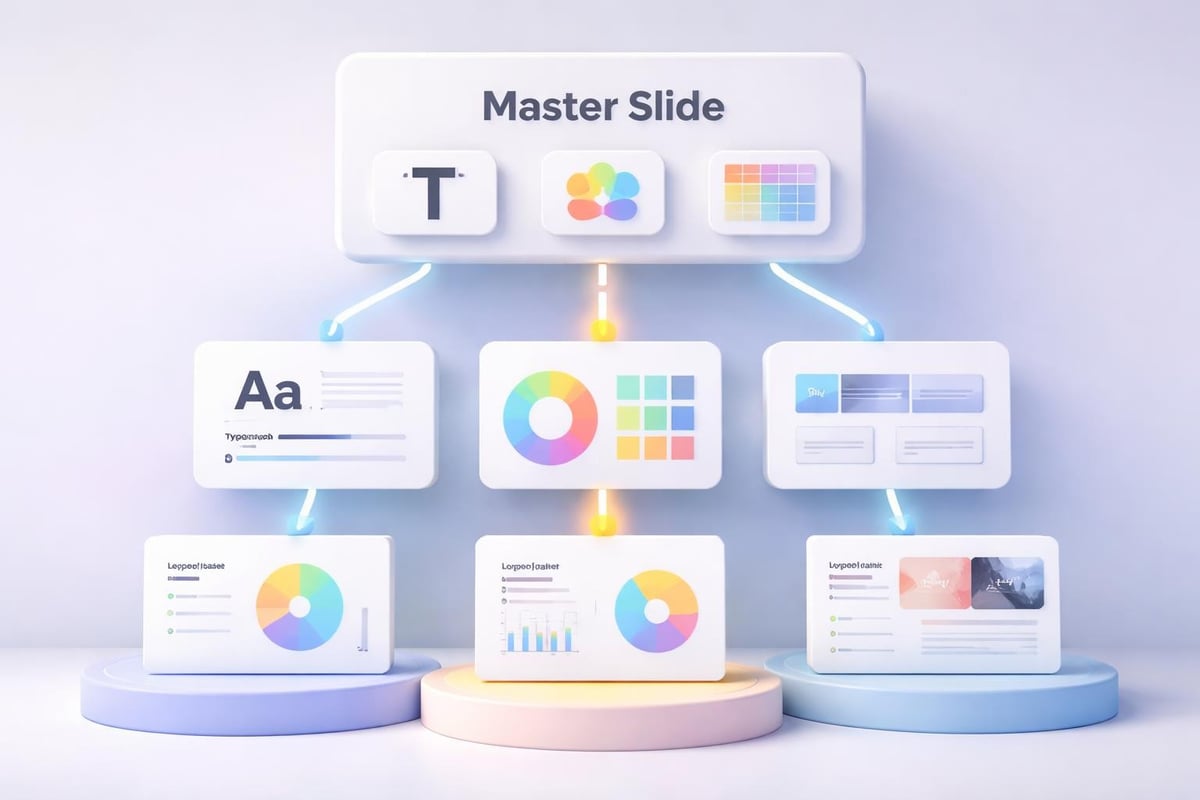
Template component system

Building Templates That Teams Actually Use

Many organizations invest significant resources developing corporate powerpoint presentation templates only to find teams circumventing them or creating off-brand presentations. This failure typically stems from templates that prioritize design aesthetics over user functionality. Common template failures often result from insufficient layout variety, overly restrictive formatting, or inadequate guidance on proper implementation.

Successful template adoption requires understanding how different roles within an organization create presentations. Sales teams need templates optimized for client-facing pitch decks, while product teams require layouts that accommodate technical specifications and development roadmaps. Finance departments benefit from templates with sophisticated data visualization capabilities, whereas executive communications demand layouts that convey strategic narratives with minimal clutter.

User-Centered Template Development

The most effective corporate powerpoint presentation templates emerge from collaborative design processes that incorporate feedback from actual users. This approach typically follows several key phases:

  1. Audit existing presentations to identify common content patterns and pain points
  2. Interview stakeholders across departments to understand specific use cases and requirements
  3. Prototype template variations with different layout options and component libraries
  4. Conduct user testing with representative team members creating real presentations
  5. Iterate based on feedback to refine layouts, add missing components, and improve usability
  6. Develop implementation guides that explain proper template usage and customization boundaries

Organizations that invest time in this discovery phase create templates that genuinely serve user needs. Building PowerPoint templates colleagues will love requires balancing design consistency with practical flexibility.

Design Principles for Professional Templates

Creating corporate powerpoint presentation templates that maintain visual impact while supporting diverse content types requires adherence to fundamental design principles. These guidelines ensure templates remain functional across various presentation contexts without sacrificing aesthetic quality.

Visual Hierarchy and Information Architecture

Professional templates establish clear visual hierarchies that guide audience attention through content. This involves strategic use of scale, contrast, and spatial relationships. Primary messages receive prominent placement and visual weight, while supporting details occupy secondary positions with appropriate typographic treatment.

Design Element Primary Application Secondary Application Supporting Details
Typography 32-36pt bold headlines 18-24pt section headers 14-16pt body text
Color Usage Key metrics and CTAs Section differentiators Background elements
Spatial Weight Hero statements Supporting arguments Footnotes and citations
Visual Contrast Main data points Comparative information Contextual details

Effective templates provide multiple layout options that accommodate different content densities. Text-heavy slides require generous white space and clear reading lines, while data visualization slides need frameworks that support complex charts without visual crowding.

Consistency Across Presentation Types

Corporate powerpoint presentation templates must maintain brand consistency while adapting to different presentation formats. Investor presentations demand layouts that emphasize financial performance and growth trajectories. Client proposals require templates that showcase case studies and implementation roadmaps. Internal communications benefit from layouts optimized for strategic planning and operational updates.

Creating professional PowerPoint presentations involves understanding how template systems scale across these different contexts. The most versatile templates include:

  • Executive summary layouts with high-level messaging and key takeaways
  • Data-driven slides with chart placeholders and annotation frameworks
  • Process visualization templates for workflows and methodologies
  • Team and organizational slides for introductions and credentials
  • Case study layouts that balance imagery with supporting metrics
  • Appendix templates for detailed technical specifications
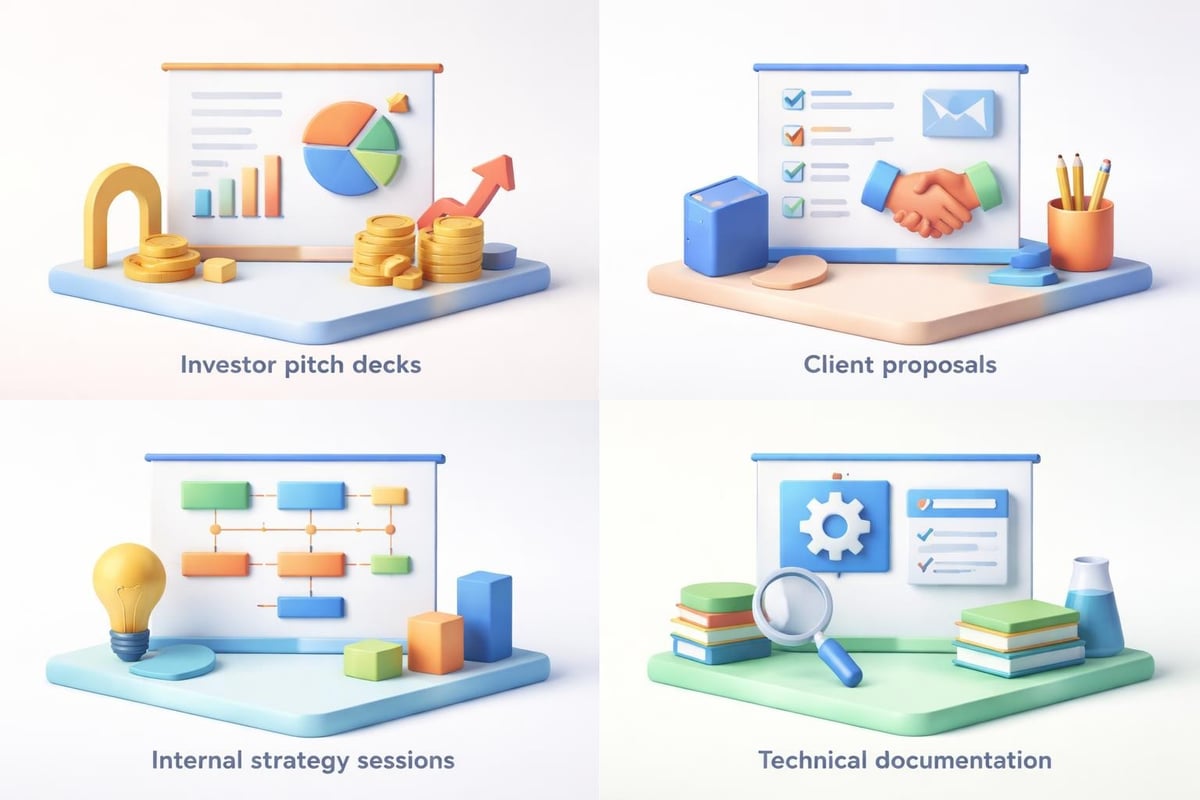
Layout variation system

Implementation and Governance Strategies

Deploying corporate powerpoint presentation templates across an organization requires more than distributing files. Successful implementation involves establishing governance frameworks, providing training resources, and creating feedback mechanisms that ensure templates evolve with organizational needs.

Distribution and Access Management

Organizations employ various approaches to template distribution, each with distinct advantages. Cloud-based template management systems enable version control and ensure teams always access current templates. These platforms typically integrate with enterprise software ecosystems, providing seamless access through existing workflows.

Alternative approaches include centralized repositories on corporate intranets or template management through Microsoft Office's built-in features. Comprehensive template guides explain technical implementation options and best practices for ensuring accessibility across distributed teams.

Training and Enablement Programs

Even the most thoughtfully designed templates fail without adequate user education. Effective training programs address both technical implementation and strategic application. Users need to understand not just how to apply templates, but when to use specific layouts and how to customize within brand guidelines.

Successful enablement initiatives typically include:

  1. Live training sessions demonstrating template features and proper usage
  2. Video tutorials covering common presentation scenarios and solutions
  3. Quick reference guides for accessing specific layouts and components
  4. Design office hours where users can get real-time support
  5. Template showcases highlighting excellent examples from across the organization

For specialized applications, organizations may develop focused training modules. Tech companies creating cybersecurity presentations benefit from templates and training specifically addressing security architecture diagrams, threat landscapes, and compliance frameworks.

Advanced Template Features and Customization

Modern corporate powerpoint presentation templates incorporate sophisticated features that extend beyond basic formatting. These advanced capabilities enable dynamic content integration, automated data visualization, and seamless brand compliance without restricting creative expression.

Dynamic Content Integration

Professional template systems increasingly incorporate dynamic elements that respond to content changes. Linked data tables automatically update charts when source information changes. Smart graphics adjust proportionally as users add or remove elements. These intelligent components reduce manual formatting while maintaining visual consistency.

Feature Type Functionality Business Impact
Linked Charts Auto-update from Excel data sources Ensures accuracy, reduces manual updates
Smart Diagrams Scale automatically with content additions Maintains design integrity
Variable Images Swap based on product or category Enables rapid customization
Dynamic Footers Auto-populate with metadata Improves version control

Organizations working with complex financial data particularly benefit from these capabilities. Templates supporting fintech pitch decks often include sophisticated chart templates that automatically format financial projections, market sizing analyses, and competitive positioning frameworks.

Balancing Standardization with Flexibility

The most persistent challenge in corporate powerpoint presentation template design involves balancing brand consistency with creative flexibility. Overly restrictive templates frustrate users and encourage workarounds, while excessively flexible systems fail to maintain brand standards.

Effective branding in PowerPoint templates requires establishing clear boundaries between fixed elements and customizable components. Fixed elements typically include logos, color palettes, typography systems, and master layout grids. Customizable areas allow users to adjust content placement, select from approved imagery, and choose appropriate layout variations.

Professional template systems document these boundaries through comprehensive style guides that explain the reasoning behind design decisions. This educational approach helps users understand not just what they can customize, but why certain elements remain standardized.

Template governance framework

Measuring Template Performance and ROI

Organizations investing in corporate powerpoint presentation templates should establish metrics that demonstrate value and identify improvement opportunities. Quantitative and qualitative measurements provide insights into template adoption, efficiency gains, and brand consistency improvements.

Key Performance Indicators

Effective template measurement programs track multiple dimensions of performance:

  • Adoption rates measuring percentage of presentations using official templates
  • Time savings quantifying reduction in presentation development hours
  • Brand compliance scores assessing adherence to visual identity standards
  • User satisfaction metrics gathering feedback on template usability and functionality
  • Presentation effectiveness tracking outcomes from template-based presentations

Financial services firms often link template performance to business outcomes. Tracking win rates on professional PowerPoint presentations created with standardized templates versus custom designs provides valuable ROI data.

Continuous Improvement Processes

Template systems require ongoing refinement to remain relevant as organizational needs evolve. Successful programs establish regular review cycles that incorporate user feedback, assess emerging design trends, and adapt to changing business requirements.

Quarterly template audits typically examine:

  1. Usage analytics identifying most and least utilized layouts
  2. Support requests highlighting common user challenges
  3. Brand evolution requiring template updates
  4. New content types demanding additional layouts
  5. Competitive benchmarking against industry presentation standards

Organizations may supplement templates with basic presentation guidelines that address fundamental principles applicable across all corporate communications.

Technology Integration and Future Considerations

The landscape of corporate powerpoint presentation templates continues evolving with technological advancement. Cloud collaboration, artificial intelligence, and cross-platform compatibility reshape how organizations approach template development and deployment.

Emerging Technologies

Several technological trends influence template design and implementation:

Cloud-based template management enables real-time updates, version control, and seamless collaboration across distributed teams. Organizations no longer need to redistribute template files manually when making updates. Cloud systems ensure every user accesses the current version automatically.

AI-powered design assistance helps users select appropriate layouts based on content analysis. These systems suggest optimal visualizations for specific data types and recommend layout variations matching presentation objectives. While still emerging, AI integration promises to make templates more intelligent and adaptive.

Cross-platform compatibility addresses the growing diversity of presentation tools. While PowerPoint remains dominant in corporate environments, alternative platforms like Figma gain traction for specific use cases. Organizations increasingly need template systems that maintain brand consistency across multiple presentation platforms.

Planning for Template Longevity

Effective corporate powerpoint presentation templates balance current needs with future adaptability. Organizations should design template systems with scalability in mind, anticipating business growth, brand evolution, and technological change.

Strategic template planning considers:

  • Modular architecture allowing component updates without full system redesigns
  • Flexible color systems accommodating potential brand refreshes
  • Scalable layout frameworks supporting new content types
  • Technology-agnostic design principles applicable across platforms
  • Documentation practices enabling knowledge transfer as teams change

Seven design principles for better PowerPoint templates provide foundational guidance applicable regardless of technological platform.

Sector-Specific Template Considerations

Different industries face unique presentation challenges requiring specialized template approaches. Financial services, technology companies, healthcare organizations, and professional services firms each benefit from templates optimized for their specific communication needs.

Financial Services Requirements

Financial institutions creating corporate powerpoint presentation templates must accommodate complex data visualization, regulatory compliance requirements, and sophisticated stakeholder expectations. Templates for this sector typically include extensive chart libraries supporting financial modeling, pre-built layouts for investment theses, and frameworks for risk disclosure.

Compliance considerations often dictate specific footer requirements, disclosure language positioning, and archival notation. Templates must balance these regulatory necessities with visual appeal that engages audiences and communicates strategic narratives effectively.

Technology Sector Adaptations

Tech companies require templates supporting technical architecture diagrams, product roadmaps, development timelines, and complex feature comparisons. Their presentations often integrate more visual storytelling elements, leveraging illustration and iconography to communicate abstract concepts.

Presentation work for technology companies demonstrates how specialized templates address sector-specific needs while maintaining professional polish. Technology sector templates benefit from:

  • Process flow frameworks for user journeys and system architectures
  • Comparison matrices for competitive positioning and feature differentiation
  • Timeline layouts for product development and market entry strategies
  • Technical specification templates balancing detail with accessibility
  • Integration diagrams showing ecosystem relationships and partnerships

Organizations should select PowerPoint templates based on their specific content requirements and audience expectations rather than adopting generic solutions.

Template Maintenance and Evolution

Corporate powerpoint presentation templates require ongoing maintenance to remain effective as brands evolve, design trends shift, and business needs change. Establishing systematic maintenance processes ensures templates continue serving organizational objectives without becoming outdated or restrictive.

Version Control and Update Management

Professional template management includes robust version control systems that track changes, maintain historical versions, and manage rollout of updates across organizations. This prevents situations where multiple template versions circulate simultaneously, creating brand inconsistency.

Effective update processes typically include:

  • Scheduled review cycles assessing template performance and relevance
  • Change request systems allowing users to suggest improvements
  • Beta testing protocols validating updates before broad deployment
  • Communication plans ensuring stakeholders understand template changes
  • Archival systems preserving historical versions for legacy presentations

Adaptation to Brand Evolution

Organizations periodically refresh brand identities, requiring corresponding template updates. Well-designed template systems accommodate these evolutions through modular architecture that isolates brand-specific elements. Color palettes, typography specifications, and logo treatments can update independently from underlying layout structures.

Planning for brand evolution involves documenting design rationale, maintaining component libraries, and establishing clear ownership for different template elements. This preparation enables efficient updates when brand refreshes occur.


Corporate powerpoint presentation templates serve as critical brand infrastructure that enables consistent, efficient communication across modern organizations. By investing in thoughtfully designed template systems that balance standardization with flexibility, companies empower teams to create professional presentations that reinforce brand identity and communicate strategic messages effectively. Prznt Perfect specializes in developing custom template systems for financial and technology companies, combining visual design expertise with deep understanding of sector-specific presentation requirements to create solutions that teams actually use and stakeholders genuinely appreciate.


News & Updates...

Master technical PowerPoint presentations with expert strategies for data visualization, audience engagement, and clear communication.

Master the art of creating a beautiful presentation PowerPoint with expert design tips, layout strategies, and visual techniques for 2026.