


B2B Cybersecurity Marketing: A Strategic Guide
A strategic guide to B2B cybersecurity marketing covering buyer personas, content formats, ABM tactics, and metrics that build vendor trust.
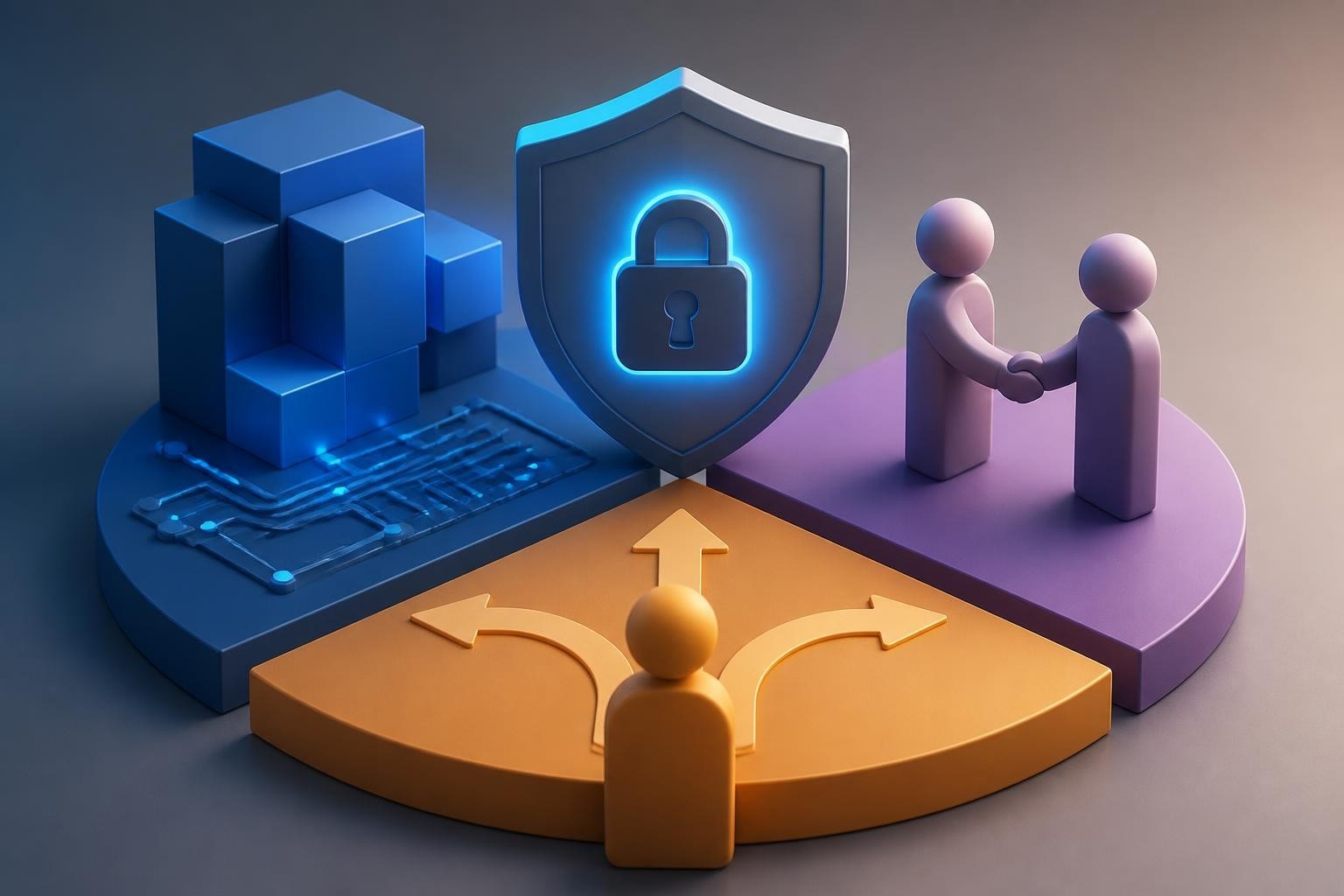
The cybersecurity industry presents unique challenges for marketers trying to reach discerning, technical audiences who demand both expertise and transparency. Unlike traditional B2B sectors, b2b cybersecurity marketing requires a delicate balance between demonstrating technical credibility and translating complex security concepts into business value propositions that resonate with C-suite decision-makers. For presentation design agencies working with cybersecurity clients, understanding this specialized marketing landscape is essential to crafting visual narratives that cut through the noise and build authentic trust.
Understanding the B2B Cybersecurity Buyer Journey
The cybersecurity buying process differs significantly from other B2B sectors due to heightened risk awareness and technical complexity. According to recent Forrester research on B2B buying behavior, trust has become the critical differentiator in vendor selection, particularly in security purchases where a single wrong decision can expose an organization to catastrophic risk.
Key characteristics of cybersecurity buyers include:
- Extended evaluation periods often spanning 6-18 months
- Multiple stakeholders from technical teams to board members
- Rigorous vendor vetting including security audits and compliance verification
- Preference for self-directed research before engaging sales teams
The modern cybersecurity buyer conducts extensive independent research, consuming an average of 13 pieces of content before reaching out to vendors. This self-serve mentality means your marketing materials must be comprehensive, technically accurate, and accessible across multiple formats.
The Multi-Stakeholder Challenge
B2b cybersecurity marketing must address diverse audience personas simultaneously. Your content needs to satisfy the CISO's technical requirements, the CFO's budget concerns, and the CEO's strategic vision. According to ISMG's CISO Engagement and Decision Drivers Study, security leaders prioritize vendors who demonstrate understanding of their specific industry challenges and regulatory landscape.
This creates a presentation design challenge: how do you balance slide aesthetics with information density when addressing both technical practitioners and executive decision-makers?

Content Strategy for Cybersecurity Marketing
Effective b2b cybersecurity marketing relies on thought leadership that demonstrates genuine expertise without resorting to fear-mongering or empty promises. The Content Marketing Institute's 2024 playbook emphasizes authenticity and measurable value as the foundation of successful B2B content programs.
Content Formats That Resonate
Different content formats serve distinct purposes throughout the buyer journey:
| Content Type | Primary Audience | Best Use Case | Production Complexity |
|---|---|---|---|
| Technical whitepapers | Security practitioners | Deep-dive technical evaluation | High |
| Executive briefings | C-suite | Strategic business case | Medium |
| Case studies | Multi-stakeholder | Social proof and outcomes | Medium |
| Video demos | Technical evaluators | Product functionality | High |
| Webinars | Mixed audience | Thought leadership and engagement | Medium |
| Infographics | Social sharing | Brand awareness | Low-Medium |
Your content calendar should maintain a strategic mix across these formats, ensuring you meet buyers wherever they are in their research process.
Positioning Framework Compliance and Standards
Cybersecurity buyers increasingly reference established frameworks when evaluating solutions. The NIST Cybersecurity Framework 2.0 provides a standardized vocabulary that resonates with both technical and business stakeholders. Mapping your solution to recognized frameworks like NIST CSF, ISO 27001, or SOC 2 strengthens your credibility and simplifies buyer evaluation.
When creating presentation materials for cybersecurity clients, explicitly showing how your solution aligns with these frameworks can accelerate decision-making. This is where creative pitch deck design becomes critical-you need to make compliance positioning visually compelling rather than merely checking boxes.
Visual Communication in Cybersecurity Marketing
The cybersecurity industry grapples with inherent abstraction. Threats are invisible, solutions are intangible, and outcomes are often defined by absence (no breach occurred) rather than presence. This makes visual storytelling particularly valuable for b2b cybersecurity marketing initiatives.
Effective visual strategies include:
- Threat visualization: Translating complex attack vectors into understandable visual narratives
- Architecture diagrams: Showing how solutions integrate into existing infrastructure
- Data visualization: Presenting security metrics and ROI calculations clearly
- Customer journey maps: Illustrating before-and-after scenarios with your solution
The challenge lies in avoiding clichéd imagery-hooded hackers, binary code backgrounds, and generic padlock icons have become visual noise. Instead, focus on specific, relevant scenarios that reflect your buyer's actual environment and challenges.
Data-Driven Storytelling
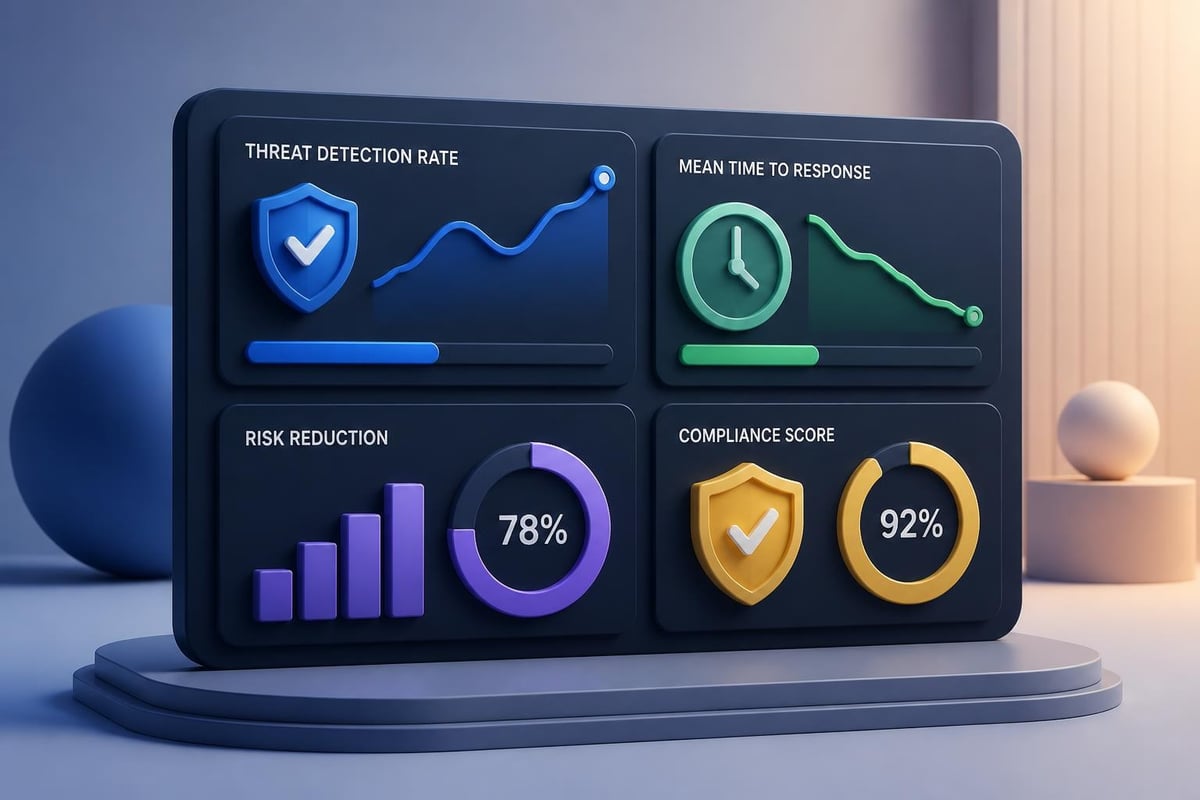
Cybersecurity decisions are increasingly data-driven. The SANS Institute's research on cybersecurity budgets and spending trends reveals that practitioners demand quantifiable evidence of effectiveness. Your marketing materials should present data through clear, actionable visualizations that support decision-making rather than overwhelming viewers.
When working with financial presentations, choosing the best charts for financial data becomes crucial. Security ROI calculations, cost-benefit analyses, and risk quantification all require precise visual treatment to maintain credibility with financially sophisticated buyers.
Messaging and Positioning Strategies
Successful b2b cybersecurity marketing avoids two common pitfalls: excessive fear-based messaging and overly technical jargon that alienates business decision-makers. Your positioning should acknowledge real threats while focusing on empowerment and capability building.
Building Trust Through Transparency
The cybersecurity industry has a trust problem. Vendors frequently overpromise, use misleading statistics, and fail to deliver on security commitments. Differentiate your marketing by embracing radical transparency:
- Clearly state what your solution does and doesn't protect against
- Share honest case studies including implementation challenges
- Acknowledge industry-wide limitations and your approach to addressing them
- Provide unvarnished third-party assessments and certifications
This transparency extends to pricing and packaging. Hidden costs and complex licensing structures erode trust precisely when buyers need confidence most. Consider how you present pricing structures in sales presentations-clarity beats cleverness.
Industry-Specific Messaging
Generic cybersecurity messaging fails in 2026's sophisticated market. Buyers expect vendors to understand their specific regulatory requirements, threat landscapes, and operational constraints. A healthcare CISO faces fundamentally different challenges than a financial services security leader.
Segment your marketing materials by industry vertical, addressing:
- Specific compliance frameworks (HIPAA, PCI-DSS, GDPR, etc.)
- Industry-typical attack vectors and threat actors
- Operational constraints unique to that sector
- Relevant case studies and references
For agencies serving cybersecurity clients, this means developing multiple presentation templates and content libraries tailored to each vertical. While this requires upfront investment, the resonance with target buyers justifies the effort.
Demand Generation Tactics for Cybersecurity
Traditional demand generation approaches often underperform in cybersecurity marketing due to the technical sophistication and skepticism of the target audience. High-value content and community engagement typically outperform interruptive advertising.
Account-Based Marketing (ABM)
Given the high deal values and complex sales cycles typical in b2b cybersecurity marketing, account-based strategies deliver superior ROI compared to broad-based lead generation. ABM allows you to:
- Create customized presentations for specific target accounts
- Address the unique security challenges of individual prospects
- Coordinate multi-channel touchpoints across buying committees
- Demonstrate deep understanding of the prospect's environment
The presentation requirements for ABM campaigns are intensive. Each target account may require custom pitch deck design that incorporates account-specific research, competitive landscape analysis, and tailored solution architectures.
Community and Thought Leadership
Cybersecurity professionals trust peer recommendations and industry thought leaders more than vendor claims. Invest in genuine community participation:
- Speaking engagements at security conferences (RSA, Black Hat, BSides)
- Contributing research to industry publications
- Participating in open-source security projects
- Hosting practitioner-focused workshops and roundtables
These activities build authentic credibility that paid advertising cannot replicate. When you do present at industry events, your slides become marketing assets-ensure they meet the visual standards expected in professional settings through professional presentation design.

Measuring Marketing Effectiveness
Cybersecurity marketing metrics must align with the realities of long sales cycles and complex buying committees. Vanity metrics like website traffic or social media followers provide limited insight into actual pipeline impact.
Focus on these meaningful metrics:
- Pipeline velocity: How quickly qualified opportunities progress through stages
- Deal size and win rate: Quality of opportunities generated
- Sales cycle length: Time from first touch to closed deal
- Customer acquisition cost (CAC) by channel and campaign
- Content engagement depth: Time spent with technical content
- Stakeholder coverage: Percentage of buying committee reached
Advanced attribution modeling helps identify which content pieces and channels actually influence cybersecurity buying decisions. Given the multi-touch nature of these journeys, single-touch attribution models misrepresent marketing contribution.
Analyst Relations and Third-Party Validation
Cybersecurity buyers heavily weight third-party validation from industry analysts (Gartner, Forrester, IDC) and independent testing organizations (NSS Labs, AV-TEST). Your marketing strategy should include dedicated analyst relations programs that:
- Brief analysts on product capabilities and roadmap
- Facilitate customer reference calls for analyst research
- Sponsor objective third-party testing and publish results
- Achieve placement in relevant Magic Quadrants and Wave reports
When you earn favorable analyst coverage, leverage it extensively in sales presentations. Award-winning presentations often incorporate third-party validation as social proof that resonates with risk-averse buyers.
Presentation Design Considerations for Cybersecurity
The visual presentation of cybersecurity solutions significantly impacts buyer perception and understanding. Poor design choices can undermine even the strongest technical solutions, while excellent presentation design accelerates comprehension and builds confidence.
Technical Architecture Slides
System architecture diagrams are ubiquitous in cybersecurity presentations, yet most are cluttered and incomprehensible. Effective architecture slides should:
- Use consistent iconography and visual language
- Emphasize integration points with existing infrastructure
- Highlight security boundaries and data flows clearly
- Layer information progressively rather than showing everything at once
Consider developing a standardized visual design system for technical diagrams that maintains consistency across all marketing materials while remaining flexible enough to show diverse deployment scenarios.
Compliance and Certification Displays
Cybersecurity buyers scrutinize compliance credentials and certifications carefully. Rather than simply listing logos, demonstrate what each certification means:
| Certification | What It Validates | Buyer Benefit |
|---|---|---|
| SOC 2 Type II | Security controls audited over time | Ongoing security commitment |
| ISO 27001 | Information security management system | Enterprise-grade processes |
| FedRAMP | Federal security requirements | Government-ready solution |
| PCI-DSS | Payment data protection | Payment security compliance |
This approach transforms credential slides from checkbox exercises into meaningful trust indicators. For businesses considering whether to rebrand before or after raising capital, maintaining consistent certification displays across brand iterations ensures continuity of trust signals.
Emerging Trends in Cybersecurity Marketing
The b2b cybersecurity marketing landscape continues evolving rapidly as new threats emerge and buyer expectations shift. Several trends are reshaping marketing approaches in 2026:
AI and automation in security marketing: Machine learning and AI are not just product features but marketing tools. Predictive analytics help identify accounts showing buying signals, while AI-powered content personalization scales account-based approaches. However, excessive automation can feel impersonal in a sector where trust is paramount.
Privacy-first marketing: Given that cybersecurity companies protect customer data, they must exemplify privacy best practices in their own marketing. First-party data strategies, minimal tracking, and transparent data handling become competitive differentiators.
Interactive and self-service tools: ROI calculators, security assessment tools, and interactive demos allow buyers to self-qualify and explore solutions on their own timeline. These tools generate qualified leads while providing valuable intent data.
For agencies supporting cybersecurity clients, staying current with these trends while maintaining focus on fundamental presentation excellence requires balancing innovation with proven approaches. Some companies even explore hiring fractional CMO expertise to navigate this complex landscape.
Channel Strategy and Partner Marketing
Many cybersecurity vendors rely heavily on channel partners-managed security service providers (MSSPs), value-added resellers (VARs), and system integrators-to reach end customers. Effective b2b cybersecurity marketing must therefore enable partners to sell effectively.
Partner Enablement Materials
Your channel partners need presentation-ready materials that they can customize and present as their own:
- Modular slide decks addressing common use cases
- Battle cards comparing your solution to competitors
- ROI calculation tools and pricing guidance
- Technical specification sheets and integration guides
- Customer success stories they can reference
These materials should maintain brand consistency while allowing partners flexibility to add their own value and positioning. The tension between control and customization requires thoughtful template design.
Co-Marketing Programs
Joint marketing initiatives with strategic partners extend your reach into new markets and add credibility through association. Co-branded webinars, shared case studies, and joint conference presence all amplify your message.
When developing co-marketing materials, ensure visual consistency while respecting both brands. This often requires developing flexible design systems that accommodate multiple brand guidelines simultaneously-a challenge that professional presentation designers navigate regularly.
For businesses exploring strategic partnerships or eventual exit strategies, platforms like Aligned IQ provide valuable connections in the M&A landscape, where presentation quality during due diligence can significantly impact valuations.
International and Localization Considerations
Cybersecurity markets vary significantly by geography due to different regulatory environments, threat landscapes, and cultural approaches to security. Global b2b cybersecurity marketing requires localization beyond simple translation.
Regional considerations include:
- Europe: GDPR compliance, data sovereignty, privacy-centric messaging
- Asia-Pacific: Government relationships, local threat intelligence, regional certifications
- North America: Industry-specific regulations, litigation risk, insurance requirements
- Latin America: Emerging threat landscapes, economic constraints, partnership models
Each market requires adapted messaging, compliance positioning, and visual presentation styles. For instance, European buyers respond to privacy-first positioning, while North American buyers often prioritize risk quantification and insurance implications.
Technical teams in markets like Italy increasingly utilize specialized platforms such as FreelanceDEV to access development talent, reflecting regional preferences for local service providers-a consideration when positioning global versus regional security solutions.
Event Marketing and Conference Strategy
Industry events remain critical touchpoints in b2b cybersecurity marketing despite the growth of digital channels. Major conferences like RSA Conference, Black Hat, and regional events provide concentrated access to target buyers and thought leadership opportunities.
Maximizing conference ROI requires:
- Speaking engagements: Thought leadership presentations that avoid overt selling
- Booth presence: Interactive demos and meaningful conversations rather than tchotchke distribution
- Networking events: Intimate gatherings with target accounts and industry influencers
- Content capture: Recording and repurposing conference presentations for ongoing marketing
The presentation design for conference speaking sessions differs significantly from sales presentations. Conference audiences expect educational value, original research, and actionable insights rather than product pitches. For businesses in the Web3 and technology space, events like the TEAMZ Summit demonstrate how specialized conferences create focused networking and knowledge-sharing opportunities that drive business relationships.
Post-event follow-up separates successful conference marketing from wasted investment. Have 24-hour presentation services ready to customize follow-up materials for promising conversations, striking while the connection remains fresh.
B2b cybersecurity marketing demands a sophisticated blend of technical credibility, business value articulation, and trust-building through transparency and expertise. Success requires moving beyond generic security messaging to deliver targeted, industry-specific content that addresses the real concerns of diverse stakeholders across extended buying cycles. When your cybersecurity clients need presentation materials that translate complex security concepts into compelling visual narratives that resonate with both technical and executive audiences, Prznt Perfect brings specialized expertise in transforming technical complexity into clear, persuasive presentations that drive decisions.
