
Presentation Design Firm: Strategic Visual Excellence

Professional presentations have evolved from simple slide collections into strategic communication tools that drive business outcomes. In today's competitive landscape, financial institutions and technology companies need more than basic PowerPoint skills. They require specialized expertise from a presentation design firm that understands both visual communication principles and industry-specific challenges. Whether preparing investor pitch decks, quarterly board presentations, or conference keynotes, the quality of visual design directly impacts how audiences perceive credibility, understand complex information, and make critical decisions.
The Strategic Value of Professional Presentation Design
Business presentations represent significant investment opportunities, partnership discussions, and strategic initiatives. A presentation design firm brings specialized skills that transform raw information into persuasive visual narratives. This expertise becomes particularly valuable when presenting complex financial models, technical architecture diagrams, or data-driven insights that require clarity without oversimplification.
Quantifiable Business Impact
The return on professional design investment manifests across multiple dimensions. Companies working with presentation specialists report higher conversion rates on investment proposals, faster stakeholder buy-in, and stronger brand consistency across all visual communications.
Key performance indicators include:
- Increased investor engagement during pitch presentations
- Reduced time spent on internal presentation creation
- Higher approval rates for strategic initiatives
- Improved brand perception among target audiences
- Measurable audience retention of key messages
Research on professional design in PowerPoint presentations demonstrates how strategic visual elements enhance storytelling effectiveness and brand representation. Financial services firms particularly benefit from this approach, as complex data requires sophisticated visualization techniques that maintain accuracy while improving comprehension.
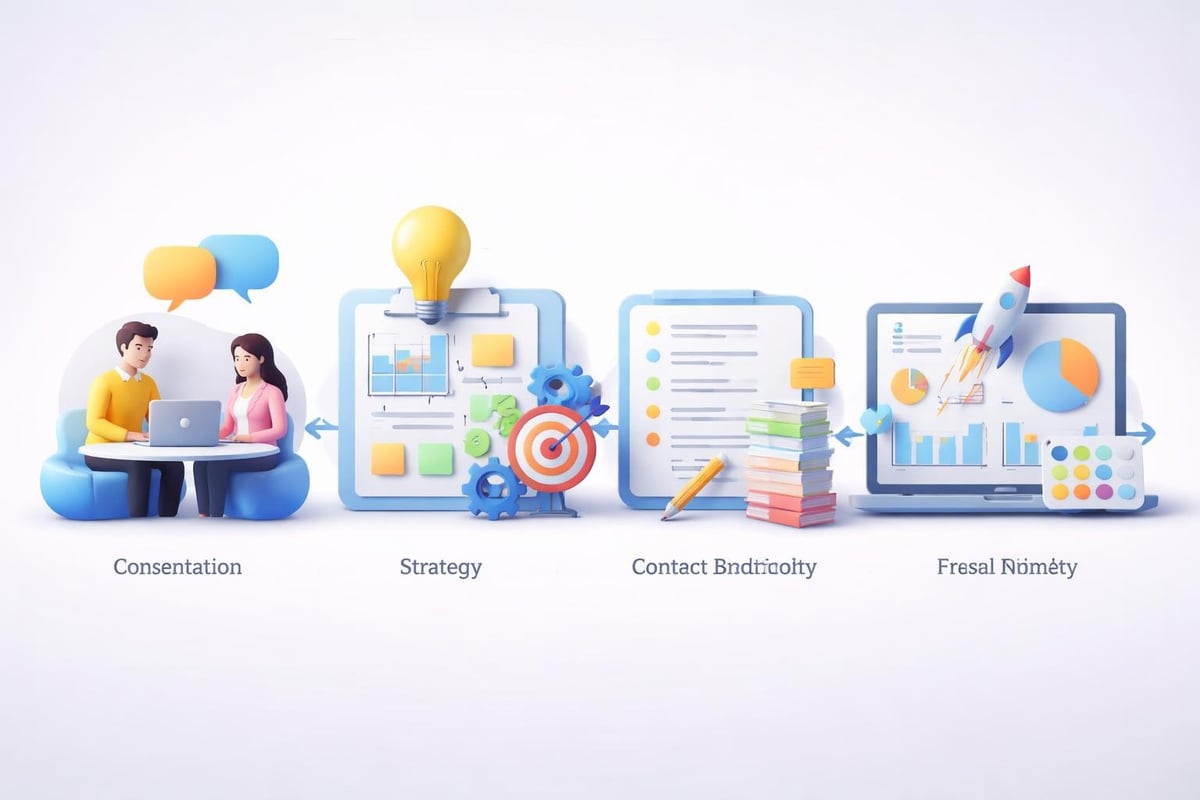
Core Services Offered by Presentation Design Firms
A comprehensive presentation design firm delivers multiple service categories, each addressing specific business communication needs. Understanding these offerings helps organizations select appropriate support levels based on project requirements and strategic objectives.
Creative Consulting and Strategy
Strategic consulting forms the foundation of effective presentation design. This service extends beyond visual aesthetics to address messaging hierarchy, narrative flow, and audience psychology. Consultants analyze target audiences, competitive positioning, and communication objectives before any design work begins.
The consulting process typically includes:
- Stakeholder interviews to understand business objectives
- Audience analysis and persona development
- Message architecture and narrative structuring
- Content audit and optimization recommendations
- Design direction and brand alignment strategy
Visual Storytelling and Data Visualization
Financial and technology sectors generate substantial quantitative information requiring translation into accessible visual formats. Professional designers apply data visualization principles that reveal insights rather than overwhelming audiences with raw numbers.
| Visualization Type | Best Used For | Design Considerations |
|---|---|---|
| Financial Charts | Revenue trends, growth metrics | Consistent color coding, clear axes |
| Process Diagrams | Technical workflows, systems | Logical flow direction, minimal text |
| Comparison Tables | Feature analysis, competitive positioning | Highlighting key differentiators |
| Infographics | Market statistics, industry trends | Visual hierarchy, icon consistency |
Effective layout for presentations requires understanding how visual elements guide audience attention and support message retention. Strategic spacing, typography choices, and color application all contribute to information hierarchy.
Selecting the Right Presentation Design Partner
Choosing a presentation design firm involves evaluating capabilities beyond portfolio aesthetics. Financial and technology companies should assess industry expertise, process transparency, and strategic thinking alongside design quality.
Industry Specialization Matters
Generic presentation design agencies often lack the domain knowledge necessary for complex financial or technical content. Specialized firms understand regulatory requirements, industry terminology, and audience expectations specific to these sectors.
Critical evaluation criteria include:
- Portfolio relevance: Previous work with similar industries and presentation types
- Technical understanding: Ability to visualize complex systems and financial instruments
- Compliance knowledge: Awareness of disclosure requirements and regulatory constraints
- Audience insight: Experience presenting to investors, board members, and technical stakeholders
- Brand alignment: Capability to work within established corporate identity guidelines
When evaluating company presentations, examine how firms balance information density with visual clarity. Technology companies especially benefit from designers who can represent abstract concepts through meaningful visual metaphors.
Process and Communication Standards
Professional presentation design firms establish clear workflows that integrate with client timelines and approval processes. Understanding these operational frameworks prevents miscommunication and ensures deliverable quality.
The typical engagement includes:
- Discovery phase: Requirements gathering, content review, objective setting
- Strategic development: Narrative structure, message hierarchy, visual direction
- Design execution: Slide creation, data visualization, brand application
- Review cycles: Stakeholder feedback integration, refinement iterations
- Final delivery: Master files, usage guidelines, template development
Transparent communication channels and realistic timeline expectations distinguish professional firms from generic design services. Many financial institutions require attractive PowerPoint templates that balance brand compliance with design innovation.

Design Principles for Financial and Technical Presentations
Effective presentation design follows established principles while adapting to industry-specific requirements. Financial services and technology sectors demand particular attention to accuracy, compliance, and sophisticated visual treatment of complex information.
Visual Hierarchy and Information Architecture
Professional designers structure information using established hierarchy principles that guide audience attention systematically. This approach ensures key messages receive appropriate emphasis while supporting details remain accessible without creating visual clutter.
According to presentation design best practices, simplicity and consistency form the foundation of effective visual communication. These principles apply across presentation types, from investor pitch decks to technical architecture reviews.
Hierarchy techniques include:
- Size variation: Larger elements naturally draw attention first
- Color contrast: Strategic use of brand colors to emphasize critical points
- Whitespace application: Adequate spacing improves readability and focus
- Typography scaling: Distinct heading and body text differentiation
- Visual grouping: Related information clustered through proximity
Brand Consistency Across Presentation Types
Organizations maintain multiple presentation templates for different purposes and audiences. A presentation design firm ensures visual consistency while allowing appropriate variation for specific contexts.
| Presentation Type | Primary Audience | Design Priorities |
|---|---|---|
| Investor Pitch Deck | Venture capitalists, private equity | Credibility, financial clarity, growth story |
| Board Presentations | Directors, executives | Strategic insights, performance metrics |
| Conference Keynotes | Industry peers, prospects | Thought leadership, brand positioning |
| Sales Presentations | Potential clients | Value proposition, differentiation |
| Technical Documentation | Engineers, architects | Accuracy, detail, systematic organization |
Maintaining brand integrity across these varied formats requires understanding both corporate identity systems and audience-specific communication needs. Professional presentation cover design establishes immediate credibility while setting appropriate tone for content that follows.
Technology and Tools in Modern Presentation Design
Professional presentation design firms leverage advanced software ecosystems that extend beyond standard PowerPoint capabilities. Understanding these tools helps clients appreciate the technical sophistication behind polished deliverables.
Software Platforms and Integration
While Microsoft PowerPoint remains the dominant business presentation platform, professional designers utilize complementary tools for specialized tasks. Vector graphics applications, data visualization software, and collaborative design platforms enhance creative possibilities and workflow efficiency.
Modern design workflows increasingly incorporate emerging platforms. Tools like Figma for slide design enable real-time collaboration and component-based design systems that improve consistency across large presentation libraries.
Common professional tools include:
- Adobe Creative Suite for custom graphics and advanced layouts
- Data visualization platforms for complex chart generation
- Template management systems for brand compliance
- Collaborative review platforms for stakeholder feedback
- Asset management solutions for photography and iconography
Automation and Template Systems
Enterprise organizations benefit from scalable template systems that empower internal teams while maintaining design quality. A presentation design firm can develop sophisticated template architectures that balance creative flexibility with brand governance.
Research into automated presentation generation explores how multimodal AI frameworks might enhance presentation creation processes. While automation offers efficiency benefits, human expertise remains essential for strategic messaging and audience-specific customization.

Common Presentation Design Challenges and Solutions
Financial services and technology companies face recurring presentation challenges that professional design expertise directly addresses. Recognizing these patterns helps organizations identify when external support delivers maximum value.
Complexity Without Clarity
Technical and financial presentations often contain dense information that resists simplification. The challenge lies in maintaining accuracy while improving accessibility for diverse audience knowledge levels.
Solution approaches include:
- Progressive disclosure: Revealing information incrementally across multiple slides
- Visual analogies: Relating complex concepts to familiar frameworks
- Layered detail: Providing summary views with drill-down capability
- Annotated diagrams: Combining visuals with explanatory callouts
- Narrative context: Framing data within strategic storytelling
Understanding the importance of professional presentations highlights how design quality influences audience perception, engagement, and persuasion effectiveness. Financial institutions particularly need presentations that convey sophistication matching their industry position.
Time Constraints and Resource Limitations
Internal teams often lack specialized design skills or sufficient time for high-stakes presentation development. This gap becomes critical during fundraising campaigns, major product launches, or board reporting cycles.
A presentation design firm provides scalable capacity that aligns with business cycles. Organizations access senior design expertise without maintaining full-time specialized staff, while meeting compressed timelines that internal resources cannot accommodate.
Brand Evolution and Template Modernization
Corporate rebranding initiatives or visual identity updates require cascading changes across presentation libraries. Professional design firms systematically update template systems, ensuring consistency while preserving institutional knowledge embedded in existing content structures.
Measuring Presentation Design Effectiveness
Quantifying design impact helps justify investment in professional services and guides continuous improvement. While presentation effectiveness involves qualitative dimensions, several metrics provide objective assessment frameworks.
Audience Engagement Indicators
Presentation success ultimately depends on audience response and subsequent actions. Tracking engagement metrics provides insight into design effectiveness beyond subjective aesthetic preferences.
Measurable indicators include:
- Conversion rates: Investment commitments, sales closed, partnerships secured
- Feedback quality: Stakeholder comments, question relevance, follow-up requests
- Time efficiency: Presentation duration versus information conveyed
- Message retention: Audience recall of key points in follow-up interactions
- Sharing frequency: How often presentations circulate beyond initial audiences
Internal Efficiency Metrics
Organizations also benefit from improved internal productivity when working with presentation specialists. Reducing time spent on design iteration allows subject matter experts to focus on strategic content development.
Efficiency gains manifest through:
- Reduced revision cycles due to clearer initial direction
- Faster approval processes with professional quality standards
- Decreased internal resource allocation to design tasks
- Improved template adoption and consistent brand application
- Lower opportunity costs from expedited presentation development
Following presentation design tips that emphasize layout structure and audience consideration helps maximize these efficiency benefits while maintaining quality standards.
Industry-Specific Considerations for Financial and Tech Sectors
Financial services and technology companies operate under unique constraints that influence presentation design requirements. A presentation design firm with sector expertise navigates these considerations systematically.
Regulatory Compliance and Disclosure Requirements
Financial presentations often include mandatory disclosures, risk statements, and regulatory language that must appear verbatim. Professional designers incorporate these elements without compromising visual appeal or message flow.
Compliance considerations include:
- Legal review workflows: Coordination with compliance teams for content approval
- Disclosure formatting: Readable presentation of required language
- Version control: Tracking content changes through review cycles
- Archival requirements: Maintaining presentation records for regulatory purposes
Technical Accuracy and Stakeholder Credibility
Technology sector presentations frequently contain architectural diagrams, technical specifications, and performance metrics requiring absolute accuracy. Design choices must enhance comprehension without introducing ambiguity or oversimplification.
| Content Type | Accuracy Requirement | Design Approach |
|---|---|---|
| System Architecture | Complete technical precision | Hierarchical diagrams with detailed annotations |
| Performance Metrics | Exact data representation | Professionally designed charts with clear sourcing |
| Product Roadmaps | Timeline and feature accuracy | Visual timelines balancing detail and readability |
| Security Frameworks | Compliance and certification detail | Structured layouts emphasizing certifications |
Reviewing guidance on presentation best practices demonstrates how professional standards apply across industries, with adaptations for sector-specific requirements.
Future Trends in Presentation Design Services
The presentation design landscape continues evolving with technological advancement and changing business communication patterns. Forward-thinking organizations partner with firms that anticipate these shifts rather than simply responding to current needs.
Interactive and Dynamic Presentations
Static slide decks increasingly give way to interactive experiences incorporating live data connections, embedded analytics, and responsive design elements. Professional presentation design firms develop capabilities in these emerging formats while maintaining compatibility with traditional viewing environments.
Sustainability and Digital-First Approaches
Environmental considerations and remote work patterns drive digital-first presentation strategies. Design firms optimize presentations for screen viewing rather than print output, considering factors like display resolution variability and virtual presentation platforms.
AI-Enhanced Design Assistance
Artificial intelligence tools begin augmenting designer capabilities, particularly for template application, layout optimization, and initial concept generation. However, strategic thinking, industry expertise, and nuanced communication understanding remain distinctly human contributions that separate professional services from automated solutions.
Additional insights from comprehensive presentation design guides explore how font selection, color psychology, and visual hierarchy contribute to effective communication across digital and physical presentation contexts.
Professional presentation design represents strategic investment rather than cosmetic enhancement, particularly for financial services and technology companies communicating complex information to sophisticated audiences. The specialized expertise, industry knowledge, and design sophistication provided by a dedicated presentation design firm deliver measurable business outcomes that generic design services cannot match. Whether developing investor pitch decks, board presentations, or conference keynotes, partnering with specialists who understand both visual communication principles and sector-specific requirements ensures your message achieves maximum impact. Prznt Perfect specializes in transforming complex financial and technical concepts into compelling visual narratives that drive business results, combining creative excellence with deep industry expertise to help your presentations achieve their strategic objectives.



- This is some text inside of a div block.lay out the facts clearly and compellingly. Use data to establish the ground reality, but remember that facts alone are like the individual strands of a tapestry—necessary but not complete.lay out the facts clearly and compellingly. Use data to establish the ground reality, but remember that facts alone are like the individual strands of a tapestry—necessary but not complete.
- This is some text inside of a div block.lay out the facts clearly and compellingly. Use data to establish the ground reality, but remember that facts alone are like the individual strands of a tapestry—necessary but not complete.

.png)
