Presentation Design Business: A Complete Guide

The presentation design business has evolved dramatically over the past decade, transforming from a niche service into a critical component of corporate communication strategies. As companies increasingly recognize that visual storytelling directly impacts their bottom line, the demand for professional presentation design services has surged. Financial institutions and technology companies, in particular, require sophisticated visual communications that translate complex data into compelling narratives that resonate with investors, stakeholders, and clients.

Understanding the Presentation Design Business Model

A successful presentation design business operates at the intersection of creative services and strategic communication. Unlike traditional graphic design, presentation design requires a deep understanding of narrative structure, data visualization, and audience psychology. Agencies must master the art of transforming abstract concepts and complex financial metrics into clear, actionable visual stories.

The service portfolio typically encompasses several key offerings. Pitch deck creation remains the cornerstone service, particularly for startups and growth-stage companies seeking investment. Keynote presentations serve executives who need to command attention at conferences and board meetings. Sales presentations help revenue teams close deals with compelling visual arguments. Investor relations materials maintain stakeholder confidence through polished quarterly reports and annual presentations.

Revenue Streams and Pricing Models

Presentation design businesses typically employ multiple pricing structures to accommodate different client needs and project scopes:

Pricing Model Best For Typical Range
Per-slide pricing Small projects, quick turnarounds $50-$300 per slide
Project-based Complete decks, defined scope $2,500-$25,000+
Retainer agreements Ongoing client relationships $3,000-$15,000/month
Hourly consulting Strategy sessions, reviews $150-$500/hour

The most profitable agencies combine these models strategically. Project-based pricing works well for Series B pitch decks and major investor presentations, while retainers provide predictable revenue from corporate clients who need regular presentation support. Hourly consulting fills gaps and allows agencies to monetize their strategic expertise beyond pure design work.

Presentation design business pricing models

Building Your Service Offering

The most successful presentation design businesses develop specialized expertise rather than attempting to serve every possible client. Financial services and technology sectors represent particularly lucrative niches, as these industries handle complex information that requires sophisticated visual translation. A presentation design business focused on fintech and banking pitch decks can command premium rates due to the specialized knowledge required.

Core Services That Drive Revenue

Creative consulting forms the foundation of high-value client relationships. This service involves working directly with executives to refine their message before any design work begins. Many clients initially approach agencies with unclear narratives or poorly structured content. Strategic consulting sessions help clarify objectives, identify key messages, and structure information for maximum impact.

Visual storytelling transforms raw data and concepts into compelling narratives. This goes beyond simply making slides look attractive. According to current presentation design trends, minimalist data visualization has become essential for maintaining audience attention. The challenge lies in balancing aesthetic appeal with information density, particularly for technical or financial content.

Marcom design extends presentation capabilities into broader marketing communications. Clients who initially engage agencies for pitch decks often need consistent visual language across multiple touchpoints. This includes one-pagers, executive summaries, leave-behind materials, and digital presentations. Creating cohesive visual systems increases project value and strengthens client relationships.

Brand management within presentations ensures consistency while allowing flexibility. Many corporations have established brand guidelines, but these often fail to address presentation-specific challenges. A presentation design business must interpret brand standards creatively, developing presentation-specific color palettes, typography systems, and visual hierarchies that honor the brand while optimizing for screen readability.

Client Acquisition and Market Positioning

Finding and securing clients represents the most significant challenge for any presentation design business. The market has become increasingly competitive, with freelancers, offshore providers, and AI-powered tools all vying for client attention. Differentiation requires demonstrating measurable value and specialized expertise.

Effective Marketing Strategies

Content marketing establishes thought leadership and attracts qualified leads. Publishing insights about professional PowerPoint techniques, case studies showcasing successful projects, and trend analyses positions agencies as industry experts. Educational content also serves SEO objectives, helping potential clients discover services when searching for presentation solutions.

  • Case study development showcasing specific results and ROI
  • Industry-specific content targeting financial services or technology sectors
  • Video tutorials demonstrating design principles and best practices
  • Webinar series on topics like data visualization or storytelling
  • Social media presence sharing before-and-after transformations

Referral networks generate the highest-quality leads for presentation design businesses. Satisfied clients naturally discuss their presentations with peers, especially after successful fundraising rounds or well-received board meetings. Implementing systematic referral programs with clear incentives encourages this organic growth.

Partnership development with complementary service providers creates additional lead sources. Management consultants, investor relations firms, venture capital advisors, and executive coaches all work with clients who need presentation support. These partnerships provide warm introductions and shared credibility.

Design Excellence and Workflow Optimization

Operational efficiency separates thriving presentation design businesses from struggling ones. Without optimized workflows, agencies face constant deadline pressure, quality inconsistency, and diminishing profit margins. Successful businesses develop repeatable processes that maintain creative excellence while scaling operations.

Production Workflow Structure

The typical presentation design project follows a structured progression:

  1. Discovery and briefing to understand objectives, audience, and constraints
  2. Content development or review of client-provided materials
  3. Narrative structuring to create logical flow and compelling arguments
  4. Visual concept development presenting design direction options
  5. Design execution creating all slides according to approved concept
  6. Review and revision incorporating client feedback systematically
  7. Final delivery with editable files and usage guidelines

Each phase requires specific tools, templates, and quality checkpoints. Many agencies develop consulting PowerPoint templates that accelerate production while maintaining design standards. These templates aren't limiting; they provide starting points that designers customize based on project requirements.

Presentation design workflow
Workflow Stage Time Allocation Key Deliverables
Discovery 10-15% Creative brief, audience analysis
Content/Narrative 20-25% Outline, key messages, data selection
Visual Concept 15-20% Style tiles, sample slides, mood boards
Design Production 35-40% Complete slide deck
Revision 10-15% Refined deck incorporating feedback

Quality Control and Standards

Maintaining consistent quality across projects and team members requires documented standards and review processes. Design guidelines should address typography hierarchy, color usage, data visualization principles, and animation standards. Regular design reviews ensure adherence to these standards while identifying opportunities for improvement.

The presentation creative process benefits from structured critique sessions. These reviews should evaluate not just aesthetic qualities but also narrative effectiveness, information hierarchy, and audience appropriateness. External perspectives often catch issues that designers too close to the project might miss.

Industry Trends Shaping the Business

The presentation design business continues evolving in response to technological advancement and changing client expectations. Staying current with these trends isn't optional; it's essential for remaining competitive and relevant. Research indicates that 72% of professionals consider presentations critical to their roles, underscoring the ongoing importance of this service category.

Emerging Design Approaches

Dark mode presentations have gained significant traction, particularly for technology companies and evening keynotes. These designs reduce eye strain during lengthy presentations and create a premium, modern aesthetic. However, they require careful attention to contrast ratios and color accessibility to remain legible.

Minimalist data visualization represents another major trend, moving away from cluttered charts toward clean, focused graphics that communicate single insights clearly. This approach aligns with broader presentation design trends emphasizing clarity over decoration. Financial presentations particularly benefit from this approach, as complex data becomes more accessible.

Interactive presentations are transforming traditional linear decks into dynamic experiences. Clients increasingly request presentations with branching navigation, embedded calculators, and customizable data views. These features allow presenters to adapt on the fly to audience questions and interests.

Technology Integration

AI tools have entered the presentation design space, but they complement rather than replace professional services. Smart agencies leverage AI for tasks like background removal, image enhancement, and initial layout suggestions while applying human creativity and strategic thinking to the overall narrative and design direction.

Collaboration platforms have revolutionized how presentation design businesses work with clients. Cloud-based tools enable real-time collaboration, version control, and seamless feedback integration. These technologies reduce revision cycles and improve client satisfaction by increasing transparency throughout the design process.

Technology in presentation design

Scaling Your Presentation Design Business

Growth requires intentional systems and strategic decisions. A presentation design business can't scale simply by working longer hours; it needs leveraged processes and potentially expanded team capacity. The path from solo practitioner to agency involves several critical transitions.

Team Structure and Hiring

As workload increases, strategic hiring becomes essential. The first hire often handles production work, allowing the founder to focus on client relationships and strategy. Subsequent hires might include additional designers, project managers, and potentially content strategists or copywriters.

  • Senior designers who can lead projects independently
  • Production designers for efficient execution of approved concepts
  • Project managers to coordinate timelines and client communications
  • Content strategists to refine messaging and narrative structure
  • Account managers to maintain client relationships and identify upsell opportunities

Remote work has expanded the talent pool for presentation design businesses significantly. Agencies can now access specialized expertise regardless of geographic location, though this requires robust communication systems and clear design standards to maintain quality.

Systems and Automation

Operational systems separate growing agencies from stagnant ones. Project management tools track progress, deadlines, and deliverables across multiple concurrent projects. CRM systems manage client relationships, pipeline, and follow-up activities. Financial systems handle invoicing, expense tracking, and profitability analysis by client and project type.

Template libraries and asset management systems accelerate production significantly. Well-organized repositories of contemporary PowerPoint templates, icon sets, image libraries, and chart styles reduce design time while maintaining consistency. These resources require ongoing curation and updating to remain current with design trends.

Delivering Exceptional Client Experiences

Client satisfaction drives referrals, repeat business, and premium pricing. The presentation design business thrives on relationships and reputation, making client experience a competitive differentiator. Small touches and consistent communication often matter more than individual design choices.

Communication Best Practices

Setting clear expectations from the outset prevents most client conflicts. Detailed proposals should specify deliverables, revision rounds, timeline, and process. When clients understand what to expect and when, they experience less anxiety and provide more focused feedback.

Regular project updates maintain momentum and demonstrate progress. Even when working independently on design execution, brief check-ins reassure clients that their project remains a priority. These touchpoints also catch potential misalignments early, before significant work proceeds in the wrong direction.

Managing Revisions Strategically

Revision requests represent the most common source of scope creep and profitability erosion. Successful agencies implement structured revision processes that balance client satisfaction with business viability. Following investor presentation best practices often means educating clients about what works rather than simply executing every requested change.

Consolidating feedback into organized revision rounds prevents constant minor changes that disrupt workflow. Many agencies request written feedback collected in a single document or annotation tool, then implement all changes simultaneously. This approach maintains design integrity and allows efficient batch processing.

Financial Management and Profitability

Understanding the financial dynamics of a presentation design business ensures long-term sustainability. Revenue alone doesn't indicate success; profit margin, cash flow, and client acquisition costs all impact viability. Many creative professionals excel at design but struggle with business fundamentals, limiting their growth potential.

Pricing Strategy and Value Perception

Pricing significantly impacts both profitability and client perception. Extremely low prices attract budget-conscious clients who may not value professional expertise, while premium pricing signals quality and attracts clients who understand the strategic importance of effective presentations. The presentation design business model supports premium positioning when coupled with specialized expertise and proven results.

Value-based pricing captures more revenue than cost-plus approaches. When presentations directly impact fundraising success, sales conversions, or partnership opportunities, clients will pay substantially more than simple time-and-materials calculations would suggest. The challenge lies in quantifying and communicating this value effectively.

Managing Cash Flow

Project-based work creates inherent cash flow challenges. Deposits or milestone payments help mitigate these issues by distributing revenue across the project timeline. Many agencies require 50% upfront for new clients, with the remainder due upon final delivery. This structure funds production costs while reducing risk.

Retainer agreements provide the most predictable cash flow, allowing better resource planning and reducing administrative overhead from constant new project negotiation. Converting project clients to retainer relationships should be a systematic sales priority for any growing presentation design business.

Measuring Success and Continuous Improvement

Defining and tracking success metrics guides business decisions and identifies improvement opportunities. Without measurement, agencies rely on intuition and anecdote rather than data-driven strategy. Key performance indicators should span financial health, operational efficiency, client satisfaction, and market position.

Essential Business Metrics

Financial metrics form the foundation of business health assessment:

  • Monthly recurring revenue from retainer clients
  • Average project value indicating pricing effectiveness and client quality
  • Gross profit margin after direct project costs
  • Client acquisition cost measuring marketing efficiency
  • Client lifetime value justifying acquisition investment

Operational metrics reveal efficiency and capacity:

  • Average project duration from kickoff to final delivery
  • Designer utilization rate measuring productive versus administrative time
  • Revision cycles per project indicating scope management effectiveness
  • On-time delivery rate reflecting process reliability

Client satisfaction metrics predict future business:

  • Net Promoter Score measuring referral likelihood
  • Repeat client rate indicating relationship strength
  • Client tenure showing relationship longevity
  • Portfolio diversity revealing market position and risk concentration

Building a thriving presentation design business requires balancing creative excellence with business fundamentals, combining artistic vision with operational discipline. Success comes from developing specialized expertise, delivering consistent value, and building systems that support sustainable growth. When you're ready to transform your corporate communications with visually stunning presentations that drive measurable results, Prznt Perfect brings specialized expertise in financial and technology sectors, helping clients craft compelling narratives that resonate with their most important audiences.

We offer free 30-min consultation on the presentation design audit
and hiring the right visual 
comms professional, let’s talk!
Shedule a call
Shedule a call
"I understand" goes a step further into the cognitive dance of persuasion. It's where the audience begins to see the connections between the facts, to grasp the nuances of the problem and the elegance of the solution.
  • This is some text inside of a div block.
    lay out the facts clearly and compellingly. Use data to establish the ground reality, but remember that facts alone are like the individual strands of a tapestry—necessary but not complete.
    lay out the facts clearly and compellingly. Use data to establish the ground reality, but remember that facts alone are like the individual strands of a tapestry—necessary but not complete.
  • This is some text inside of a div block.
    lay out the facts clearly and compellingly. Use data to establish the ground reality, but remember that facts alone are like the individual strands of a tapestry—necessary but not complete.

We offer free 30-min consultation on the presentation design audit

and hiring the right visual 
comms professional, let’s talk!

Shedule a call

"I understand" goes a step further into the cognitive dance of persuasion. It's where the audience begins to see the connections between the facts, to grasp the nuances of the problem and the elegance of the solution.

  • - 1 -
    Consistency at Scale:

    Biotech Market Trends 2024: Tailoring Your Pitch Deck to Current Industry Dynamics.

  • - 2 -
    Efficiency and Speed:

    The traditional process of manually updating presentations is not only slow but also prone to bottlenecks, especially when dealing with large volumes of slides. Automation dramatically accelerates this process, enabling designers to apply changes across hundreds of slides in the time it would take to manually update a single one. This efficiency is a game-changer for agencies working under tight deadlines or managing multiple projects simultaneously.

  • - 3 -
    Enhanced Creativity:

    With the burden of manual updates lifted, designers can allocate more time and energy to the creative aspects of presentation design. This freedom allows for deeper exploration of innovative design concepts, experimentation with new visual storytelling techniques, and the development of more engaging and interactive presentations. Automation doesn't stifle creativity; it amplifies it, enabling designers to push the boundaries of what's possible in corporate presentation design.

  • - 4 -
    Error Reduction:

    Manual updates are inherently prone to inconsistencies and mistakes, from misaligned logos to incorrect font sizes. These errors can detract from the professionalism of a presentation and, by extension, the corporate image. Automation minimizes these risks by ensuring that updates are applied uniformly and accurately across all slides, enhancing the overall quality and integrity of the presentation.

  • - 5 -
    Cost-Effectiveness:

    The time savings afforded by automation directly translate to cost savings for both the design agency and its clients. By reducing the hours spent on manual updates, agencies can optimize their workflows and resources, allowing them to take on more projects without compromising on quality. This efficiency can also make high-quality presentation design services more affordable and accessible to a broader range of businesses.

Presentation Design Business: A Complete Guide
Discover how to build and scale a presentation design business in 2026. Expert insights on services, pricing, client acquisition, and trends.

The presentation design business has evolved dramatically over the past decade, transforming from a niche service into a critical component of corporate communication strategies. As companies increasingly recognize that visual storytelling directly impacts their bottom line, the demand for professional presentation design services has surged. Financial institutions and technology companies, in particular, require sophisticated visual communications that translate complex data into compelling narratives that resonate with investors, stakeholders, and clients.

Understanding the Presentation Design Business Model

A successful presentation design business operates at the intersection of creative services and strategic communication. Unlike traditional graphic design, presentation design requires a deep understanding of narrative structure, data visualization, and audience psychology. Agencies must master the art of transforming abstract concepts and complex financial metrics into clear, actionable visual stories.

The service portfolio typically encompasses several key offerings. Pitch deck creation remains the cornerstone service, particularly for startups and growth-stage companies seeking investment. Keynote presentations serve executives who need to command attention at conferences and board meetings. Sales presentations help revenue teams close deals with compelling visual arguments. Investor relations materials maintain stakeholder confidence through polished quarterly reports and annual presentations.

Revenue Streams and Pricing Models

Presentation design businesses typically employ multiple pricing structures to accommodate different client needs and project scopes:

Pricing Model Best For Typical Range
Per-slide pricing Small projects, quick turnarounds $50-$300 per slide
Project-based Complete decks, defined scope $2,500-$25,000+
Retainer agreements Ongoing client relationships $3,000-$15,000/month
Hourly consulting Strategy sessions, reviews $150-$500/hour

The most profitable agencies combine these models strategically. Project-based pricing works well for Series B pitch decks and major investor presentations, while retainers provide predictable revenue from corporate clients who need regular presentation support. Hourly consulting fills gaps and allows agencies to monetize their strategic expertise beyond pure design work.

Presentation design business pricing models

Building Your Service Offering

The most successful presentation design businesses develop specialized expertise rather than attempting to serve every possible client. Financial services and technology sectors represent particularly lucrative niches, as these industries handle complex information that requires sophisticated visual translation. A presentation design business focused on fintech and banking pitch decks can command premium rates due to the specialized knowledge required.

Core Services That Drive Revenue

Creative consulting forms the foundation of high-value client relationships. This service involves working directly with executives to refine their message before any design work begins. Many clients initially approach agencies with unclear narratives or poorly structured content. Strategic consulting sessions help clarify objectives, identify key messages, and structure information for maximum impact.

Visual storytelling transforms raw data and concepts into compelling narratives. This goes beyond simply making slides look attractive. According to current presentation design trends, minimalist data visualization has become essential for maintaining audience attention. The challenge lies in balancing aesthetic appeal with information density, particularly for technical or financial content.

Marcom design extends presentation capabilities into broader marketing communications. Clients who initially engage agencies for pitch decks often need consistent visual language across multiple touchpoints. This includes one-pagers, executive summaries, leave-behind materials, and digital presentations. Creating cohesive visual systems increases project value and strengthens client relationships.

Brand management within presentations ensures consistency while allowing flexibility. Many corporations have established brand guidelines, but these often fail to address presentation-specific challenges. A presentation design business must interpret brand standards creatively, developing presentation-specific color palettes, typography systems, and visual hierarchies that honor the brand while optimizing for screen readability.

Client Acquisition and Market Positioning

Finding and securing clients represents the most significant challenge for any presentation design business. The market has become increasingly competitive, with freelancers, offshore providers, and AI-powered tools all vying for client attention. Differentiation requires demonstrating measurable value and specialized expertise.

Effective Marketing Strategies

Content marketing establishes thought leadership and attracts qualified leads. Publishing insights about professional PowerPoint techniques, case studies showcasing successful projects, and trend analyses positions agencies as industry experts. Educational content also serves SEO objectives, helping potential clients discover services when searching for presentation solutions.

  • Case study development showcasing specific results and ROI
  • Industry-specific content targeting financial services or technology sectors
  • Video tutorials demonstrating design principles and best practices
  • Webinar series on topics like data visualization or storytelling
  • Social media presence sharing before-and-after transformations

Referral networks generate the highest-quality leads for presentation design businesses. Satisfied clients naturally discuss their presentations with peers, especially after successful fundraising rounds or well-received board meetings. Implementing systematic referral programs with clear incentives encourages this organic growth.

Partnership development with complementary service providers creates additional lead sources. Management consultants, investor relations firms, venture capital advisors, and executive coaches all work with clients who need presentation support. These partnerships provide warm introductions and shared credibility.

Design Excellence and Workflow Optimization

Operational efficiency separates thriving presentation design businesses from struggling ones. Without optimized workflows, agencies face constant deadline pressure, quality inconsistency, and diminishing profit margins. Successful businesses develop repeatable processes that maintain creative excellence while scaling operations.

Production Workflow Structure

The typical presentation design project follows a structured progression:

  1. Discovery and briefing to understand objectives, audience, and constraints
  2. Content development or review of client-provided materials
  3. Narrative structuring to create logical flow and compelling arguments
  4. Visual concept development presenting design direction options
  5. Design execution creating all slides according to approved concept
  6. Review and revision incorporating client feedback systematically
  7. Final delivery with editable files and usage guidelines

Each phase requires specific tools, templates, and quality checkpoints. Many agencies develop consulting PowerPoint templates that accelerate production while maintaining design standards. These templates aren't limiting; they provide starting points that designers customize based on project requirements.
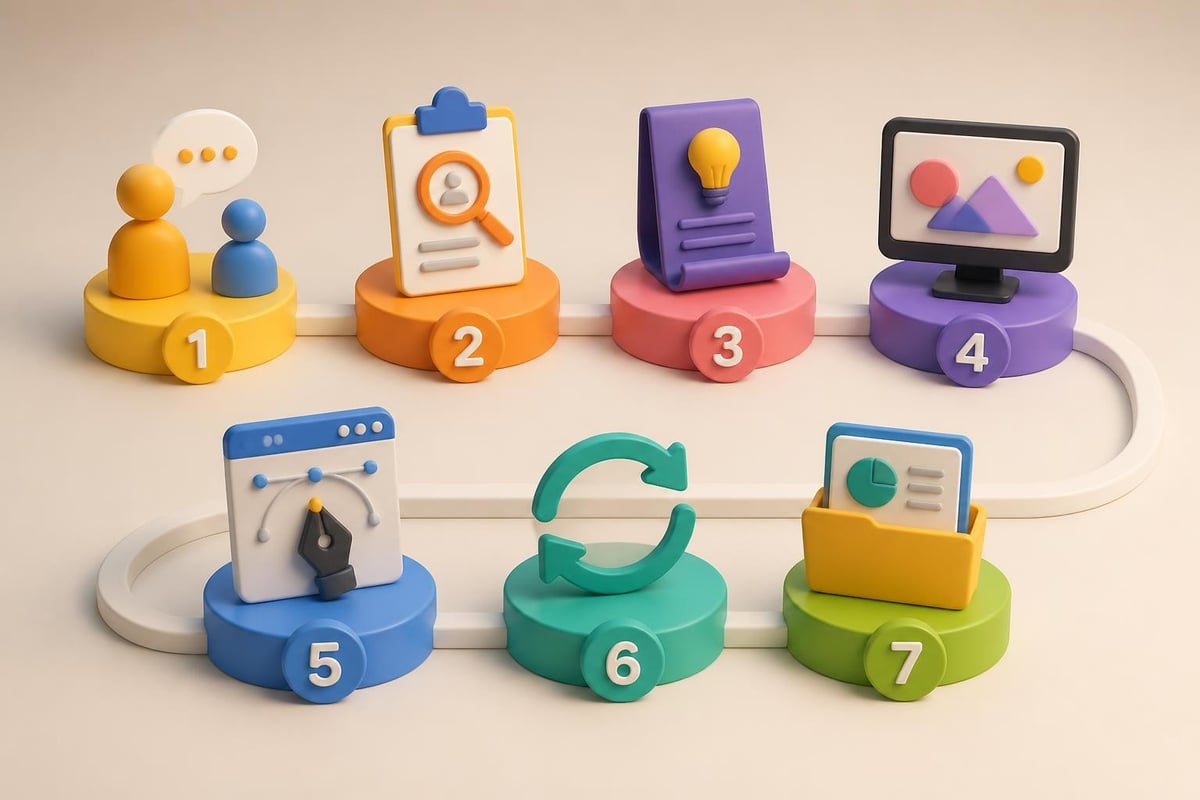
Presentation design workflow
Workflow Stage Time Allocation Key Deliverables
Discovery 10-15% Creative brief, audience analysis
Content/Narrative 20-25% Outline, key messages, data selection
Visual Concept 15-20% Style tiles, sample slides, mood boards
Design Production 35-40% Complete slide deck
Revision 10-15% Refined deck incorporating feedback

Quality Control and Standards

Maintaining consistent quality across projects and team members requires documented standards and review processes. Design guidelines should address typography hierarchy, color usage, data visualization principles, and animation standards. Regular design reviews ensure adherence to these standards while identifying opportunities for improvement.

The presentation creative process benefits from structured critique sessions. These reviews should evaluate not just aesthetic qualities but also narrative effectiveness, information hierarchy, and audience appropriateness. External perspectives often catch issues that designers too close to the project might miss.

Industry Trends Shaping the Business

The presentation design business continues evolving in response to technological advancement and changing client expectations. Staying current with these trends isn't optional; it's essential for remaining competitive and relevant. Research indicates that 72% of professionals consider presentations critical to their roles, underscoring the ongoing importance of this service category.

Emerging Design Approaches

Dark mode presentations have gained significant traction, particularly for technology companies and evening keynotes. These designs reduce eye strain during lengthy presentations and create a premium, modern aesthetic. However, they require careful attention to contrast ratios and color accessibility to remain legible.

Minimalist data visualization represents another major trend, moving away from cluttered charts toward clean, focused graphics that communicate single insights clearly. This approach aligns with broader presentation design trends emphasizing clarity over decoration. Financial presentations particularly benefit from this approach, as complex data becomes more accessible.

Interactive presentations are transforming traditional linear decks into dynamic experiences. Clients increasingly request presentations with branching navigation, embedded calculators, and customizable data views. These features allow presenters to adapt on the fly to audience questions and interests.

Technology Integration

AI tools have entered the presentation design space, but they complement rather than replace professional services. Smart agencies leverage AI for tasks like background removal, image enhancement, and initial layout suggestions while applying human creativity and strategic thinking to the overall narrative and design direction.

Collaboration platforms have revolutionized how presentation design businesses work with clients. Cloud-based tools enable real-time collaboration, version control, and seamless feedback integration. These technologies reduce revision cycles and improve client satisfaction by increasing transparency throughout the design process.

Technology in presentation design

Scaling Your Presentation Design Business

Growth requires intentional systems and strategic decisions. A presentation design business can't scale simply by working longer hours; it needs leveraged processes and potentially expanded team capacity. The path from solo practitioner to agency involves several critical transitions.

Team Structure and Hiring

As workload increases, strategic hiring becomes essential. The first hire often handles production work, allowing the founder to focus on client relationships and strategy. Subsequent hires might include additional designers, project managers, and potentially content strategists or copywriters.

  • Senior designers who can lead projects independently
  • Production designers for efficient execution of approved concepts
  • Project managers to coordinate timelines and client communications
  • Content strategists to refine messaging and narrative structure
  • Account managers to maintain client relationships and identify upsell opportunities

Remote work has expanded the talent pool for presentation design businesses significantly. Agencies can now access specialized expertise regardless of geographic location, though this requires robust communication systems and clear design standards to maintain quality.

Systems and Automation

Operational systems separate growing agencies from stagnant ones. Project management tools track progress, deadlines, and deliverables across multiple concurrent projects. CRM systems manage client relationships, pipeline, and follow-up activities. Financial systems handle invoicing, expense tracking, and profitability analysis by client and project type.

Template libraries and asset management systems accelerate production significantly. Well-organized repositories of contemporary PowerPoint templates, icon sets, image libraries, and chart styles reduce design time while maintaining consistency. These resources require ongoing curation and updating to remain current with design trends.

Delivering Exceptional Client Experiences

Client satisfaction drives referrals, repeat business, and premium pricing. The presentation design business thrives on relationships and reputation, making client experience a competitive differentiator. Small touches and consistent communication often matter more than individual design choices.

Communication Best Practices

Setting clear expectations from the outset prevents most client conflicts. Detailed proposals should specify deliverables, revision rounds, timeline, and process. When clients understand what to expect and when, they experience less anxiety and provide more focused feedback.

Regular project updates maintain momentum and demonstrate progress. Even when working independently on design execution, brief check-ins reassure clients that their project remains a priority. These touchpoints also catch potential misalignments early, before significant work proceeds in the wrong direction.

Managing Revisions Strategically

Revision requests represent the most common source of scope creep and profitability erosion. Successful agencies implement structured revision processes that balance client satisfaction with business viability. Following investor presentation best practices often means educating clients about what works rather than simply executing every requested change.

Consolidating feedback into organized revision rounds prevents constant minor changes that disrupt workflow. Many agencies request written feedback collected in a single document or annotation tool, then implement all changes simultaneously. This approach maintains design integrity and allows efficient batch processing.

Financial Management and Profitability

Understanding the financial dynamics of a presentation design business ensures long-term sustainability. Revenue alone doesn't indicate success; profit margin, cash flow, and client acquisition costs all impact viability. Many creative professionals excel at design but struggle with business fundamentals, limiting their growth potential.

Pricing Strategy and Value Perception

Pricing significantly impacts both profitability and client perception. Extremely low prices attract budget-conscious clients who may not value professional expertise, while premium pricing signals quality and attracts clients who understand the strategic importance of effective presentations. The presentation design business model supports premium positioning when coupled with specialized expertise and proven results.

Value-based pricing captures more revenue than cost-plus approaches. When presentations directly impact fundraising success, sales conversions, or partnership opportunities, clients will pay substantially more than simple time-and-materials calculations would suggest. The challenge lies in quantifying and communicating this value effectively.

Managing Cash Flow

Project-based work creates inherent cash flow challenges. Deposits or milestone payments help mitigate these issues by distributing revenue across the project timeline. Many agencies require 50% upfront for new clients, with the remainder due upon final delivery. This structure funds production costs while reducing risk.

Retainer agreements provide the most predictable cash flow, allowing better resource planning and reducing administrative overhead from constant new project negotiation. Converting project clients to retainer relationships should be a systematic sales priority for any growing presentation design business.

Measuring Success and Continuous Improvement

Defining and tracking success metrics guides business decisions and identifies improvement opportunities. Without measurement, agencies rely on intuition and anecdote rather than data-driven strategy. Key performance indicators should span financial health, operational efficiency, client satisfaction, and market position.

Essential Business Metrics

Financial metrics form the foundation of business health assessment:

  • Monthly recurring revenue from retainer clients
  • Average project value indicating pricing effectiveness and client quality
  • Gross profit margin after direct project costs
  • Client acquisition cost measuring marketing efficiency
  • Client lifetime value justifying acquisition investment

Operational metrics reveal efficiency and capacity:

  • Average project duration from kickoff to final delivery
  • Designer utilization rate measuring productive versus administrative time
  • Revision cycles per project indicating scope management effectiveness
  • On-time delivery rate reflecting process reliability

Client satisfaction metrics predict future business:

  • Net Promoter Score measuring referral likelihood
  • Repeat client rate indicating relationship strength
  • Client tenure showing relationship longevity
  • Portfolio diversity revealing market position and risk concentration

Building a thriving presentation design business requires balancing creative excellence with business fundamentals, combining artistic vision with operational discipline. Success comes from developing specialized expertise, delivering consistent value, and building systems that support sustainable growth. When you're ready to transform your corporate communications with visually stunning presentations that drive measurable results, Prznt Perfect brings specialized expertise in financial and technology sectors, helping clients craft compelling narratives that resonate with their most important audiences.

News & Updates...

Discover proven strategies for team PowerPoint collaboration. Learn how to streamline workflows, enhance visual consistency, and deliver presentations.

Master target audience presentation strategies to create compelling pitch decks and presentations that resonate with stakeholders and drive results.