Pitch Deck Website: Transform Your Online Presence

The evolution of fundraising has transformed how startups and established companies present their value propositions to investors. While traditional presentations remain valuable, a pitch deck website represents the next frontier in investor communication, combining the narrative power of a well-crafted deck with the accessibility and interactivity of web technology. This digital approach allows companies to reach potential investors anywhere, anytime, while maintaining complete control over their brand story and message delivery. For financial and tech businesses competing in saturated markets, this innovation offers a strategic advantage that traditional slide decks simply cannot match.

Understanding the Pitch Deck Website Concept

A pitch deck website transforms your investor presentation from a static document into an interactive digital experience. Unlike traditional PowerPoint or PDF files that investors download and view offline, this approach hosts your entire pitch as a dedicated web property. The format allows potential investors to access your materials through a simple URL, browse at their own pace, and engage with content in ways that static presentations cannot facilitate.

Key distinguishing features include:

  • Real-time updates without sending revised files
  • Analytics tracking to understand investor engagement
  • Mobile-responsive design for viewing on any device
  • Interactive elements like embedded videos and clickable prototypes
  • Password protection for confidential information
  • Integration with CRM systems for lead tracking

The concept bridges the gap between traditional presentation formats and modern digital communication expectations. When investors can access your materials instantly without downloading attachments or installing software, you remove friction from the decision-making process. This seamless experience reflects the same innovation and forward-thinking approach that investors seek in the companies they fund.

Pitch deck website architecture

Why Traditional Decks Fall Short

Email attachments get lost in crowded inboxes. File versions become outdated within hours of major updates. Investors struggle to share materials with partners while maintaining confidentiality. These challenges plague traditional pitch distribution methods and create unnecessary barriers between entrepreneurs and capital.

The static nature of conventional presentations also limits storytelling potential. A PowerPoint file cannot adapt to different audience needs or provide personalized experiences based on investor interests. When a venture capital firm wants to focus specifically on your financial projections or a strategic partner cares primarily about integration capabilities, a one-size-fits-all deck forces them to navigate irrelevant content.

Design Principles for Effective Pitch Deck Websites

Creating a successful pitch deck website requires balancing visual impact with functional simplicity. The fundamental principles of pitch deck design apply equally to digital formats, but web-based presentations demand additional considerations around navigation, loading speed, and cross-device compatibility.

Visual Hierarchy and Navigation

Your website structure should guide investors through a logical narrative progression. Start with a compelling landing page that immediately communicates your value proposition, then organize subsequent sections to build a persuasive case for investment. Clear navigation allows sophisticated investors to jump directly to sections that matter most to their evaluation criteria.

Design Element Purpose Best Practice
Landing Page Capture attention and set context One powerful statement with supporting visual
Problem Section Establish market need Data-driven insights with emotional resonance
Solution Section Present your innovation Product demos or interactive prototypes
Market Opportunity Quantify potential Charts and projections with credible sources
Team Section Build credibility Professional photos with relevant experience
Financials Demonstrate viability Clear projections with assumption transparency

Navigation should never require more than two clicks to reach any section. Include a persistent menu that remains accessible as investors scroll, and consider adding a progress indicator for linear narratives. The goal is creating an intuitive experience that feels natural rather than forcing investors to hunt for information.

Content Adaptation for Web Formats

Web-based presentations allow for richer content integration than traditional slides. Embed demonstration videos directly into your solution section rather than linking externally. Include interactive financial models that investors can manipulate to test different scenarios. Integrate customer testimonials as video clips rather than static quotes.

However, more capability does not mean more complexity. Each interactive element should serve a specific purpose in advancing your narrative. When designing professional presentations, the principle of purposeful simplicity becomes even more critical in digital formats where visitors can easily become overwhelmed.

Content optimization checklist:

  1. Compress images without sacrificing quality
  2. Use web-safe fonts or carefully selected custom typography
  3. Ensure videos load quickly or provide thumbnails
  4. Write concise copy that works on mobile screens
  5. Test all interactive elements across browsers
  6. Verify accessibility for screen readers
  7. Implement proper heading hierarchy for SEO

Technical Implementation Strategies

Building a pitch deck website requires choosing the right technology stack for your needs and technical capabilities. Options range from no-code website builders to custom development, each offering different tradeoffs between ease of implementation and customization potential.

Platform Selection Considerations

No-code platforms like Webflow, Carrd, or specialized pitch deck website builders offer the fastest path to launch. These services provide templates and drag-and-drop interfaces that allow non-technical founders to create professional presentations without writing code. The limitation lies in customization depth and potential platform dependencies.

Custom development using frameworks like React or Vue.js provides unlimited flexibility but requires technical expertise or budget for professional developers. This approach makes sense when your pitch deck website needs to integrate deeply with other systems or when brand differentiation demands unique interactive experiences that templates cannot accommodate.

For companies working with presentation design services, the platform decision often depends on whether the agency offers web development capabilities or focuses exclusively on slide design. Integrated services streamline the process by ensuring visual consistency between traditional and web-based presentations.

Security and Access Control

Investor presentations contain sensitive information about business strategy, financials, and competitive positioning. Proper security implementation protects this confidential data while maintaining the accessibility benefits of web-based delivery.

Essential security features:

  • Password protection with unique credentials per investor
  • Expiring access links that automatically deactivate
  • Download prevention for sensitive sections
  • Watermarking capabilities for screenshots
  • Activity logging to track who viewed what
  • SSL encryption for all data transmission

Consider implementing tiered access levels when different stakeholders need different information. Early-stage investors might receive access to high-level strategy and market opportunity, while due diligence partners get complete financial models and operational details. This granular control ensures you share appropriate information at each stage of the fundraising process.

Investor engagement analytics

Analytics and Performance Tracking

One of the most powerful advantages of a pitch deck website over traditional presentations is the ability to measure investor engagement with precision. Analytics reveal which sections capture attention, where investors lose interest, and how much time they spend evaluating different aspects of your business.

Meaningful Metrics to Monitor

Page views tell you how many investors accessed your materials, but deeper metrics provide actionable insights. Time on page indicates genuine engagement versus cursory glances. Scroll depth shows whether investors actually consume your content or bounce after the landing page. Click tracking on interactive elements reveals which features resonate most strongly.

Heat mapping tools visualize exactly where investors focus their attention on each page. This data helps identify confusing navigation, overlooked content, or sections that generate disproportionate interest. When multiple investors consistently skip certain sections, that signals a need for content revision or repositioning.

Metric What It Reveals Action Threshold
Bounce Rate Landing page effectiveness Above 60% needs improvement
Avg. Time on Site Overall engagement level Below 3 minutes suggests weak hook
Section Completion Content stickiness Drop-off points need strengthening
Return Visits Serious consideration Multiple visits indicate strong interest
Device Types Viewing context Optimize for predominant devices
Referral Sources Distribution effectiveness Track which channels drive quality traffic

Converting Insights into Action

Analytics data becomes valuable only when you act on discovered patterns. If investors consistently spend minimal time on your team section, perhaps you need stronger credibility indicators or more relevant experience highlights. When financial projections generate extended engagement, consider expanding that content or adding scenario modeling tools.

A/B testing different approaches validates optimization efforts. Create alternative versions of underperforming sections and measure which generates better engagement. This iterative improvement process, combined with insights from pitch deck design best practices, creates increasingly effective investor communication over time.

Modern digital marketing agencies like Social Zense apply these same data-driven optimization principles to broader marketing initiatives, demonstrating how analytics-informed iteration drives performance improvements across digital channels.

Content Strategy and Storytelling

A pitch deck website demands the same compelling narrative that makes traditional presentations successful, but adapted for self-directed exploration rather than presenter-guided delivery. Your content must work without verbal accompaniment while maintaining the emotional resonance that drives investment decisions.

Structuring the Narrative Flow

Begin with your most compelling insight rather than company background. Investors evaluate hundreds of opportunities and decide within minutes whether to invest attention. Your opening must immediately demonstrate why this opportunity matters and why now is the critical moment.

The problem section establishes context by illustrating pain points your target market experiences. Use specific examples, quantified impacts, and emotional language that helps investors viscerally understand the frustration your solution addresses. Data visualization strengthens this section by making abstract problems tangible and measurable.

Your solution presentation should feel inevitable given the problem you've established. Focus on what makes your approach unique rather than listing features that competitors could easily replicate. For tech and financial businesses, this often means highlighting proprietary technology, regulatory advantages, network effects, or data moats that create sustainable competitive barriers.

Narrative sequence elements:

  1. Hook: One sentence that captures your essence
  2. Problem validation: Market research and customer pain points
  3. Solution demonstration: How you uniquely solve the problem
  4. Market sizing: Total addressable market with bottom-up validation
  5. Business model: How you capture value at scale
  6. Traction proof: Metrics demonstrating progress and momentum
  7. Competitive positioning: Why you win in a crowded space
  8. Team credentials: Why this team can execute this vision
  9. Financial projections: Path to profitability with key assumptions
  10. Investment ask: Specific amount, use of funds, and investor terms

Writing for Web Consumption

Web reading patterns differ fundamentally from how people consume traditional presentations. Visitors scan rather than read linearly, looking for information that matters to their specific evaluation criteria. Break long paragraphs into scannable chunks. Use descriptive subheadings that communicate key points even when body text goes unread.

Bullet points and numbered lists improve comprehension and retention compared to dense paragraphs. When presenting complex financial data or technical specifications, tables organize information more effectively than prose descriptions. These formatting choices also improve mobile readability, where screen size limitations make long paragraphs particularly challenging.

Learning from successful pitch deck examples reveals common patterns in how top-performing presentations structure information and prioritize content. While your specific business requires unique positioning, proven frameworks provide valuable starting points for organizing your narrative.

Content hierarchy framework

Integration with Broader Fundraising Strategy

A pitch deck website functions most effectively as one component within a comprehensive investor relations approach rather than a standalone tool. The digital presentation should complement in-person meetings, email campaigns, and networking efforts to create consistent touchpoints throughout the fundraising journey.

Pre-Meeting Preparation

Send your pitch deck website URL to investors before scheduled meetings. This allows them to familiarize themselves with your business, formulate specific questions, and arrive prepared for substantive discussion. The analytics from their pre-meeting review reveal which topics interest them most, allowing you to customize your live presentation accordingly.

When investors have already consumed your basic story through the website, live meetings can focus on deeper strategic discussions rather than basic company introductions. This efficiency respects investor time while demonstrating your organization and preparation. The combination of self-service digital content and personalized interaction creates a professional impression that builds confidence in your execution capabilities.

Post-Meeting Follow-Up

After initial conversations, your pitch deck website serves as a persistent resource investors can reference during internal discussions. Unlike emailed slide decks that get buried in inboxes, a bookmarked URL remains easily accessible when investors need to refresh their memory or share materials with partners.

Update specific sections based on meeting feedback without sending revised files. When an investor asks detailed questions about your financial model, enhance that section with additional scenarios or explanatory notes. When concerns arise about competitive positioning, strengthen that content with more robust differentiation arguments. These targeted improvements demonstrate responsiveness while keeping all investors working from current information.

Mobile Optimization Imperatives

More than 60% of web traffic now originates from mobile devices, making smartphone optimization essential rather than optional for pitch deck websites. Investors review opportunities during commutes, between meetings, and in other mobile-first contexts where desktop access is impractical.

Responsive Design Requirements

Your pitch deck website must automatically adapt to different screen sizes without losing functionality or visual impact. Complex charts that work beautifully on desktop monitors become unreadable on smartphone screens unless specifically optimized for mobile viewing. Navigation that relies on hover states fails completely on touch interfaces.

Test your pitch deck website on multiple devices and screen sizes during development. What looks perfect on your laptop may render awkwardly on tablets or become completely unusable on phones. Pay particular attention to interactive elements, ensuring buttons are large enough for touch interaction and that spacing prevents accidental clicks.

Mobile optimization checklist:

  • Text size minimum 16px for body copy
  • Touch targets minimum 44x44 pixels
  • Simplified navigation for smaller screens
  • Horizontal scrolling elimination
  • Loading speed under 3 seconds on 4G
  • Portrait and landscape orientation support
  • Form fields optimized for mobile keyboards

Content Adaptation for Small Screens

Mobile viewers consume content differently than desktop users, typically in shorter sessions with more frequent interruptions. Structure your pitch deck website to accommodate this behavior by making each section self-contained and digestible in under two minutes.

Consider creating mobile-specific content variations for complex sections. A detailed financial model might appear as an interactive spreadsheet on desktop but transform into a simplified visualization with key highlights on mobile. This adaptive approach ensures mobile users receive appropriate information without forcing them to pinch and zoom through desktop-optimized content.

E-commerce platforms like Kida Digital have demonstrated how mobile-first design principles drive conversion improvements, lessons that apply equally to pitch deck websites where the conversion goal is securing investor meetings rather than product sales.

Visual Asset Optimization

High-quality visuals differentiate professional pitch deck websites from amateur efforts, but improperly optimized images create loading delays that frustrate investors and undermine your message. Balance visual impact with technical performance through proper asset preparation and delivery.

Image Processing Best Practices

Compress all images before upload using tools specifically designed for web optimization. Modern compression algorithms reduce file sizes by 60-80% while maintaining visual quality indistinguishable from originals at screen resolutions. Services like removit offer specialized image optimization for web platforms, ensuring your visuals load quickly while maintaining professional quality.

Choose appropriate file formats for different image types. Photographs work best as JPEGs with progressive loading enabled. Graphics with text or solid colors should use PNG format to preserve sharp edges. Consider WebP format for modern browsers, which provides superior compression compared to traditional formats while maintaining quality.

Image optimization specifications:

Image Type Format Max File Size Resolution
Hero Images WebP/JPEG 200KB 1920x1080
Section Headers WebP/PNG 150KB 1600x900
Charts/Graphs SVG/PNG 100KB As needed
Team Photos JPEG 75KB 800x800
Icons SVG 10KB Vector
Background Patterns WebP/PNG 50KB Tiled

Video Content Integration

Demonstration videos and customer testimonials add persuasive power to pitch deck websites but require careful implementation to avoid performance problems. Host videos on dedicated platforms like Vimeo or YouTube rather than uploading directly to your website server. This approach leverages their content delivery networks for faster loading while reducing your hosting bandwidth costs.

Include video thumbnails and preview text so investors understand content before clicking play. Auto-play videos create negative user experiences and should be avoided. When investors choose to watch, ensure videos start promptly without buffering delays by using adaptive streaming that adjusts quality based on connection speed.

Accessibility and Inclusive Design

Making your pitch deck website accessible to all potential investors is both ethically important and strategically valuable. Approximately 15% of the global population experiences some form of disability, meaning accessibility barriers could exclude significant investor segments from engaging with your materials.

Technical Accessibility Standards

Implement proper semantic HTML structure using heading tags (H1, H2, H3) in logical hierarchy. Screen readers rely on this structure to help visually impaired users navigate content efficiently. Include descriptive alt text for all images, explaining the content and purpose rather than simply labeling the file type.

Ensure sufficient color contrast between text and backgrounds to support users with low vision or color blindness. Tools like WebAIM's contrast checker validate whether your color choices meet WCAG accessibility standards. Avoid using color as the sole method of conveying information since colorblind users may not perceive the distinction.

Accessibility implementation requirements:

  • Keyboard navigation for all interactive elements
  • Focus indicators showing current navigation position
  • Skip-to-content links bypassing repetitive navigation
  • Captions and transcripts for video content
  • Readable fonts without decorative excess
  • Consistent navigation patterns throughout site
  • Form labels properly associated with inputs

Inclusive Content Practices

Write in clear, straightforward language that non-native English speakers can understand. While demonstrating sophisticated business acumen, avoid unnecessarily complex vocabulary or industry jargon when simpler alternatives communicate equally well. This clarity benefits all readers, not just those with cognitive or language processing differences.

Provide content in multiple formats when possible. Some investors prefer consuming information through video, others through text, and some through data visualizations. By offering key points through various modalities, you accommodate different learning preferences and accessibility needs while reinforcing your message through repetition.

SEO Considerations for Discoverability

While pitch deck websites primarily target known investor lists rather than organic search traffic, proper SEO implementation provides secondary benefits. Investors researching your company after initial outreach discover the pitch deck website through branded searches. Media coverage and industry analysis linking to your materials increase domain authority and credibility signals.

On-Page Optimization Elements

Include your company name and relevant industry keywords in page titles, meta descriptions, and heading tags. This optimization helps your pitch deck website rank for branded searches and positions you within industry category searches. However, avoid keyword stuffing that compromises readability in pursuit of search rankings.

Create descriptive URLs for each section rather than generic page numbers. A URL like "yourcompany.com/market-opportunity" communicates more information than "yourcompany.com/page-3" while providing SEO benefits. These semantic URLs also make sharing specific sections easier when investors want to reference particular content in discussions.

SEO technical checklist:

  1. XML sitemap submission to search engines
  2. Robots.txt file properly configured
  3. Canonical URLs preventing duplicate content
  4. Schema markup for organization and service information
  5. Page loading speed optimization
  6. Mobile-friendliness validation
  7. Internal linking between related sections
  8. External links to credible sources supporting claims

Agencies like Pioneer Marketing apply these same local SEO principles to help businesses improve discoverability, demonstrating how proper technical implementation creates competitive advantages across different business objectives.

Link Building and Authority Development

When industry publications, accelerator programs, or investor databases reference your pitch deck website, these backlinks strengthen domain authority. Actively distribute your materials to relevant directories and platforms that aggregate startup resources. The Pitch Deck Hunt collection and similar databases provide valuable reference materials while creating backlink opportunities.

Participate in industry forums and communities by sharing insights rather than overtly promoting your pitch deck website. When you contribute genuine value to discussions, community members naturally become curious about your business and seek out your materials. This organic discovery builds more authentic investor relationships than cold outreach.

Maintenance and Content Updates

A pitch deck website requires ongoing maintenance to remain effective as your business evolves. Unlike static presentations that become outdated but continue circulating, web-based materials can be continuously refined to reflect current reality and incorporate learnings from investor feedback.

Update Frequency Strategy

Review and refresh your pitch deck website monthly at minimum, updating key metrics like user growth, revenue performance, and partnership announcements. These regular updates demonstrate momentum and keep materials current for investors who return multiple times during extended evaluation periods. Material changes like pivot decisions, team additions, or competitive landscape shifts require immediate updates.

Archive older versions before making significant changes so you can reference previous messaging if needed. Document what changes were made and why, creating an audit trail that helps you understand which adjustments improved investor engagement. This version history also proves valuable when investors reference outdated information from earlier views.

Update priority categories:

Category Frequency Priority
Traction Metrics Monthly High
Financial Projections Quarterly High
Team Information As Needed High
Product Screenshots Monthly Medium
Competitive Landscape Quarterly Medium
Market Sizing Annually Medium
Design Refresh Annually Low

Performance Monitoring

Regularly audit your pitch deck website for technical issues like broken links, slow-loading sections, or browser compatibility problems. Set up automated monitoring tools that alert you when performance degrades or errors occur. Investors who encounter technical problems form negative impressions about your operational excellence regardless of how strong your business fundamentals may be.

Test all interactive elements after updates to ensure changes haven't inadvertently broken functionality. Check analytics to verify tracking codes continue working properly. Review mobile rendering periodically as operating system updates sometimes introduce unexpected display issues. This proactive maintenance prevents embarrassing technical failures when high-priority investors access your materials.

Cost-Benefit Analysis

Creating a pitch deck website represents an investment of time, money, or both depending on your implementation approach. Understanding the costs relative to potential benefits helps justify resource allocation and choose appropriate implementation strategies.

Implementation Cost Factors

No-code platform subscriptions typically range from $15 to $50 monthly for basic plans suitable for pitch deck websites. Custom development costs vary dramatically based on complexity and developer rates, ranging from $2,000 for basic implementations to $15,000+ for highly customized experiences with advanced interactivity.

Professional design services add additional costs but dramatically improve visual impact and user experience. Working with specialized agencies that understand both presentation design and web development creates cohesive experiences that effectively translate slide-based narratives to digital formats. These integrated services typically cost $3,000 to $10,000 depending on scope and customization requirements.

Cost comparison breakdown:

  • DIY No-Code: $200-600 annually (platform fees + time investment)
  • Template-Based: $500-2,000 one-time (template + customization)
  • Professional Design: $3,000-10,000 one-time (custom design + development)
  • Premium Custom: $10,000-25,000 one-time (fully bespoke experience)
  • Ongoing Hosting: $10-100 monthly (depends on traffic and features)

Return on Investment Considerations

The true value of a pitch deck website emerges in improved investor engagement and funding success rates. When better accessibility increases the number of investors who review your materials by 40%, and improved analytics help you optimize messaging that increases meeting conversion by 25%, the cumulative impact significantly exceeds implementation costs.

Calculate ROI by estimating how much a successful funding round is worth and what probability increase justifies the investment. If a pitch deck website improves your funding probability from 8% to 10% on a $2 million raise, that 2 percentage point improvement is worth $40,000 in expected value, easily justifying even premium implementation costs.

Industry-Specific Customization

Different sectors have unique investor expectations that should inform pitch deck website design and content strategy. Financial services presentations require different emphasis than biotech pitches, while SaaS companies face distinct communication challenges compared to hardware manufacturers.

Financial Services and Fintech

Investors in financial services companies prioritize regulatory compliance, security infrastructure, and risk management frameworks. Your pitch deck website should prominently address these concerns through dedicated sections explaining your compliance approach, security certifications, and risk mitigation strategies. When developing fintech pitch decks, regulatory clarity often matters more than growth projections.

Include detailed explanations of your business model economics, unit economics, and path to profitability with conservative assumptions. Financial sector investors typically bring deeper analytical sophistication and expect more rigorous quantitative support for growth claims. Interactive financial models that allow scenario testing demonstrate transparency while giving investors tools to validate your projections against their own assumptions.

Technology and Software

Tech company pitch deck websites should showcase product functionality through embedded demonstrations, interactive prototypes, or video walkthroughs. Investors need to understand not just what your product does but how it creates value in ways competitors cannot easily replicate. Technical differentiation requires clear explanation accessible to non-technical investors while satisfying technically sophisticated evaluators.

Emphasize network effects, switching costs, and other defensibility factors that create sustainable competitive advantages in technology markets. Address how you acquire customers, what expansion revenue looks like, and how you plan to scale go-to-market efforts. When creating cybersecurity pitch decks, technical credibility and threat landscape understanding become especially critical to investor confidence.

B2B vs B2C Distinctions

Business-to-business companies should emphasize customer acquisition cost, lifetime value ratios, and sales cycle details that demonstrate efficient scaling. Include case studies showing how you solve problems for enterprise customers and navigate complex organizational buying processes. B2B investors want to understand your sales methodology and how you plan to build a repeatable, scalable sales organization.

Consumer-focused companies need to prove product-market fit through user growth metrics, engagement statistics, and retention cohorts. Demonstrate deep understanding of your target customer psychographics and how you acquire users cost-effectively across different channels. Viral growth mechanics, brand strength, and community effects carry particular weight in consumer investment decisions.

Distribution and Promotion Tactics

Creating an excellent pitch deck website delivers value only when target investors actually visit and engage with the content. Strategic distribution ensures your materials reach qualified investor prospects while maintaining appropriate confidentiality around sensitive business information.

Targeted Investor Outreach

Research potential investors thoroughly before outreach, understanding their investment thesis, portfolio composition, and funding stage preferences. Personalize your initial contact explaining specifically why your opportunity aligns with their investment criteria. Include your pitch deck website URL as a natural next step for investors who want to learn more rather than attaching large files that may not get opened.

Track which investors have accessed your materials using analytics and follow up intelligently based on their engagement patterns. When an investor spends 15 minutes exploring your financials section, that signals serious interest warranting prompt follow-up. Investors who bounce after 30 seconds may need different messaging or may simply be poor fits for your stage and sector.

Distribution channel strategies:

  1. Direct email outreach to researched investors
  2. Warm introductions through mutual connections
  3. Demo day presentations with URL sharing
  4. Accelerator program investor databases
  5. Industry conference networking follow-up
  6. LinkedIn messaging to relevant investors
  7. AngelList and similar platform profiles
  8. Media coverage mentioning pitch materials

Leveraging Template Resources

While custom design creates maximum differentiation, entrepreneurs seeking faster implementation can adapt templates from sites offering pitch deck examples and templates. These resources provide proven structural frameworks that can be customized with your specific content and branding.

When using templates, invest effort in customization that makes the final result distinctly yours. Change color schemes to match your brand identity, replace placeholder images with custom graphics, and rewrite all copy in your authentic voice. The goal is leveraging proven structure while avoiding the generic appearance that suggests lack of investment in your investor materials.

Common Implementation Mistakes

Understanding frequent pitch deck website failures helps you avoid costly errors that undermine your fundraising efforts. Many mistakes stem from treating web presentations exactly like slide decks without adapting to the different medium and user expectations.

Information Overload

Entrepreneurs often include excessive detail, believing more information builds stronger cases. In reality, overwhelming investors with minutiae obscures your core message and creates decision fatigue. Focus on the essential narrative elements that drive investment decisions, providing depth through downloadable appendices or gated sections for serious investors.

Remember that investors evaluating your pitch deck website do so without presenter guidance to highlight key points and skip irrelevant details. Every section must justify its inclusion by advancing your narrative in ways that matter to investment decisions. When content does not directly support why investors should fund your company, remove it regardless of how much effort went into creation.

Technical Performance Issues

Slow loading times, broken interactive elements, or mobile rendering problems create negative impressions about your operational capabilities. Investors unconsciously extrapolate from presentation quality to product quality, assuming companies that deliver poor digital experiences likely struggle with execution more broadly. Thoroughly test your pitch deck website across devices, browsers, and connection speeds before sharing with investors.

Monitor for ongoing performance degradation as you add content and features. A site that performed well at launch may slow considerably after adding high-resolution images or complex interactive elements. Regular performance audits using tools like Google PageSpeed Insights help identify issues before they impact investor experiences.

Neglecting Mobile Experience

More than 60% of initial pitch deck website views occur on mobile devices, yet many entrepreneurs optimize exclusively for desktop viewing. Investors who encounter awkward mobile experiences often abandon review entirely rather than waiting to access desktop computers. Treat mobile optimization as a primary design constraint rather than an afterthought.

Test your pitch deck website extensively on actual smartphones and tablets, not just desktop browser responsive preview modes. Physical devices reveal issues that emulators miss, like touch target sizes that work fine with mouse precision but frustrate finger-based navigation. Have colleagues from outside your company attempt mobile navigation to identify confusing elements you have become blind to through familiarity.

Legal and Compliance Considerations

Pitch deck websites containing financial projections, business strategy, and competitive intelligence require careful legal review to avoid disclosure problems or regulatory violations. While sharing materials with investors is necessary, proper safeguards protect your interests and ensure compliance with securities regulations.

Securities Law Compliance

Fundraising communications fall under securities regulations that restrict how companies can solicit investment. Consult legal counsel about whether your pitch deck website constitutes general solicitation under Regulation D rules, which may limit your fundraising options. Password protection and restricting access to verified accredited investors helps maintain compliance with solicitation restrictions.

Include appropriate disclaimers about forward-looking statements, risk factors, and the speculative nature of projections. While investors understand that startup forecasts involve significant uncertainty, explicit disclaimers protect against claims of misrepresentation if results differ from projections. These legal protections should feel natural within your content rather than alarming legalese that undermines confidence.

Intellectual Property Protection

Pitch deck websites reveal significant intellectual property about your business strategy, product roadmap, and competitive positioning. While some disclosure is necessary to attract investment, implement protections against unauthorized sharing or competitive intelligence gathering. Watermarking, download prevention, and access logging create accountability around material distribution.

Consider using non-disclosure agreements for particularly sensitive sections like detailed financial models or proprietary technology explanations. Tiered access control allows you to share general information freely while gating confidential details behind additional authentication. This approach balances accessibility with appropriate protection of competitive advantages.


A pitch deck website transforms how you communicate value to investors, combining the narrative power of traditional presentations with the accessibility and analytics of digital platforms. By implementing the strategies outlined above, you create investor experiences that drive engagement, build confidence, and ultimately increase funding success rates. Whether you choose template-based implementation or custom development, the key lies in crafting clear narratives optimized for self-directed exploration while maintaining professional polish throughout every interaction. Prznt Perfect specializes in translating complex business stories into compelling visual narratives across both traditional and digital formats, helping financial and tech companies create pitch materials that resonate with sophisticated investors and drive meaningful fundraising outcomes.

We offer free 30-min consultation on the presentation design audit
and hiring the right visual 
comms professional, let’s talk!
Shedule a call
Shedule a call
"I understand" goes a step further into the cognitive dance of persuasion. It's where the audience begins to see the connections between the facts, to grasp the nuances of the problem and the elegance of the solution.
  • This is some text inside of a div block.
    lay out the facts clearly and compellingly. Use data to establish the ground reality, but remember that facts alone are like the individual strands of a tapestry—necessary but not complete.
    lay out the facts clearly and compellingly. Use data to establish the ground reality, but remember that facts alone are like the individual strands of a tapestry—necessary but not complete.
  • This is some text inside of a div block.
    lay out the facts clearly and compellingly. Use data to establish the ground reality, but remember that facts alone are like the individual strands of a tapestry—necessary but not complete.

We offer free 30-min consultation on the presentation design audit

and hiring the right visual 
comms professional, let’s talk!

Shedule a call

"I understand" goes a step further into the cognitive dance of persuasion. It's where the audience begins to see the connections between the facts, to grasp the nuances of the problem and the elegance of the solution.

  • - 1 -
    Consistency at Scale:

    Biotech Market Trends 2024: Tailoring Your Pitch Deck to Current Industry Dynamics.

  • - 2 -
    Efficiency and Speed:

    The traditional process of manually updating presentations is not only slow but also prone to bottlenecks, especially when dealing with large volumes of slides. Automation dramatically accelerates this process, enabling designers to apply changes across hundreds of slides in the time it would take to manually update a single one. This efficiency is a game-changer for agencies working under tight deadlines or managing multiple projects simultaneously.

  • - 3 -
    Enhanced Creativity:

    With the burden of manual updates lifted, designers can allocate more time and energy to the creative aspects of presentation design. This freedom allows for deeper exploration of innovative design concepts, experimentation with new visual storytelling techniques, and the development of more engaging and interactive presentations. Automation doesn't stifle creativity; it amplifies it, enabling designers to push the boundaries of what's possible in corporate presentation design.

  • - 4 -
    Error Reduction:

    Manual updates are inherently prone to inconsistencies and mistakes, from misaligned logos to incorrect font sizes. These errors can detract from the professionalism of a presentation and, by extension, the corporate image. Automation minimizes these risks by ensuring that updates are applied uniformly and accurately across all slides, enhancing the overall quality and integrity of the presentation.

  • - 5 -
    Cost-Effectiveness:

    The time savings afforded by automation directly translate to cost savings for both the design agency and its clients. By reducing the hours spent on manual updates, agencies can optimize their workflows and resources, allowing them to take on more projects without compromising on quality. This efficiency can also make high-quality presentation design services more affordable and accessible to a broader range of businesses.

Pitch Deck Website: Transform Your Online Presence
Learn how a pitch deck website transforms investor presentations into powerful digital experiences that drive engagement and funding success.

The evolution of fundraising has transformed how startups and established companies present their value propositions to investors. While traditional presentations remain valuable, a pitch deck website represents the next frontier in investor communication, combining the narrative power of a well-crafted deck with the accessibility and interactivity of web technology. This digital approach allows companies to reach potential investors anywhere, anytime, while maintaining complete control over their brand story and message delivery. For financial and tech businesses competing in saturated markets, this innovation offers a strategic advantage that traditional slide decks simply cannot match.

Understanding the Pitch Deck Website Concept

A pitch deck website transforms your investor presentation from a static document into an interactive digital experience. Unlike traditional PowerPoint or PDF files that investors download and view offline, this approach hosts your entire pitch as a dedicated web property. The format allows potential investors to access your materials through a simple URL, browse at their own pace, and engage with content in ways that static presentations cannot facilitate.

Key distinguishing features include:

  • Real-time updates without sending revised files
  • Analytics tracking to understand investor engagement
  • Mobile-responsive design for viewing on any device
  • Interactive elements like embedded videos and clickable prototypes
  • Password protection for confidential information
  • Integration with CRM systems for lead tracking

The concept bridges the gap between traditional presentation formats and modern digital communication expectations. When investors can access your materials instantly without downloading attachments or installing software, you remove friction from the decision-making process. This seamless experience reflects the same innovation and forward-thinking approach that investors seek in the companies they fund.

Pitch deck website architecture

Why Traditional Decks Fall Short

Email attachments get lost in crowded inboxes. File versions become outdated within hours of major updates. Investors struggle to share materials with partners while maintaining confidentiality. These challenges plague traditional pitch distribution methods and create unnecessary barriers between entrepreneurs and capital.

The static nature of conventional presentations also limits storytelling potential. A PowerPoint file cannot adapt to different audience needs or provide personalized experiences based on investor interests. When a venture capital firm wants to focus specifically on your financial projections or a strategic partner cares primarily about integration capabilities, a one-size-fits-all deck forces them to navigate irrelevant content.

Design Principles for Effective Pitch Deck Websites

Creating a successful pitch deck website requires balancing visual impact with functional simplicity. The fundamental principles of pitch deck design apply equally to digital formats, but web-based presentations demand additional considerations around navigation, loading speed, and cross-device compatibility.

Visual Hierarchy and Navigation

Your website structure should guide investors through a logical narrative progression. Start with a compelling landing page that immediately communicates your value proposition, then organize subsequent sections to build a persuasive case for investment. Clear navigation allows sophisticated investors to jump directly to sections that matter most to their evaluation criteria.

Design Element Purpose Best Practice
Landing Page Capture attention and set context One powerful statement with supporting visual
Problem Section Establish market need Data-driven insights with emotional resonance
Solution Section Present your innovation Product demos or interactive prototypes
Market Opportunity Quantify potential Charts and projections with credible sources
Team Section Build credibility Professional photos with relevant experience
Financials Demonstrate viability Clear projections with assumption transparency

Navigation should never require more than two clicks to reach any section. Include a persistent menu that remains accessible as investors scroll, and consider adding a progress indicator for linear narratives. The goal is creating an intuitive experience that feels natural rather than forcing investors to hunt for information.

Content Adaptation for Web Formats

Web-based presentations allow for richer content integration than traditional slides. Embed demonstration videos directly into your solution section rather than linking externally. Include interactive financial models that investors can manipulate to test different scenarios. Integrate customer testimonials as video clips rather than static quotes.

However, more capability does not mean more complexity. Each interactive element should serve a specific purpose in advancing your narrative. When designing professional presentations, the principle of purposeful simplicity becomes even more critical in digital formats where visitors can easily become overwhelmed.

Content optimization checklist:

  1. Compress images without sacrificing quality
  2. Use web-safe fonts or carefully selected custom typography
  3. Ensure videos load quickly or provide thumbnails
  4. Write concise copy that works on mobile screens
  5. Test all interactive elements across browsers
  6. Verify accessibility for screen readers
  7. Implement proper heading hierarchy for SEO

Technical Implementation Strategies

Building a pitch deck website requires choosing the right technology stack for your needs and technical capabilities. Options range from no-code website builders to custom development, each offering different tradeoffs between ease of implementation and customization potential.

Platform Selection Considerations

No-code platforms like Webflow, Carrd, or specialized pitch deck website builders offer the fastest path to launch. These services provide templates and drag-and-drop interfaces that allow non-technical founders to create professional presentations without writing code. The limitation lies in customization depth and potential platform dependencies.

Custom development using frameworks like React or Vue.js provides unlimited flexibility but requires technical expertise or budget for professional developers. This approach makes sense when your pitch deck website needs to integrate deeply with other systems or when brand differentiation demands unique interactive experiences that templates cannot accommodate.

For companies working with presentation design services, the platform decision often depends on whether the agency offers web development capabilities or focuses exclusively on slide design. Integrated services streamline the process by ensuring visual consistency between traditional and web-based presentations.

Security and Access Control

Investor presentations contain sensitive information about business strategy, financials, and competitive positioning. Proper security implementation protects this confidential data while maintaining the accessibility benefits of web-based delivery.

Essential security features:

  • Password protection with unique credentials per investor
  • Expiring access links that automatically deactivate
  • Download prevention for sensitive sections
  • Watermarking capabilities for screenshots
  • Activity logging to track who viewed what
  • SSL encryption for all data transmission

Consider implementing tiered access levels when different stakeholders need different information. Early-stage investors might receive access to high-level strategy and market opportunity, while due diligence partners get complete financial models and operational details. This granular control ensures you share appropriate information at each stage of the fundraising process.
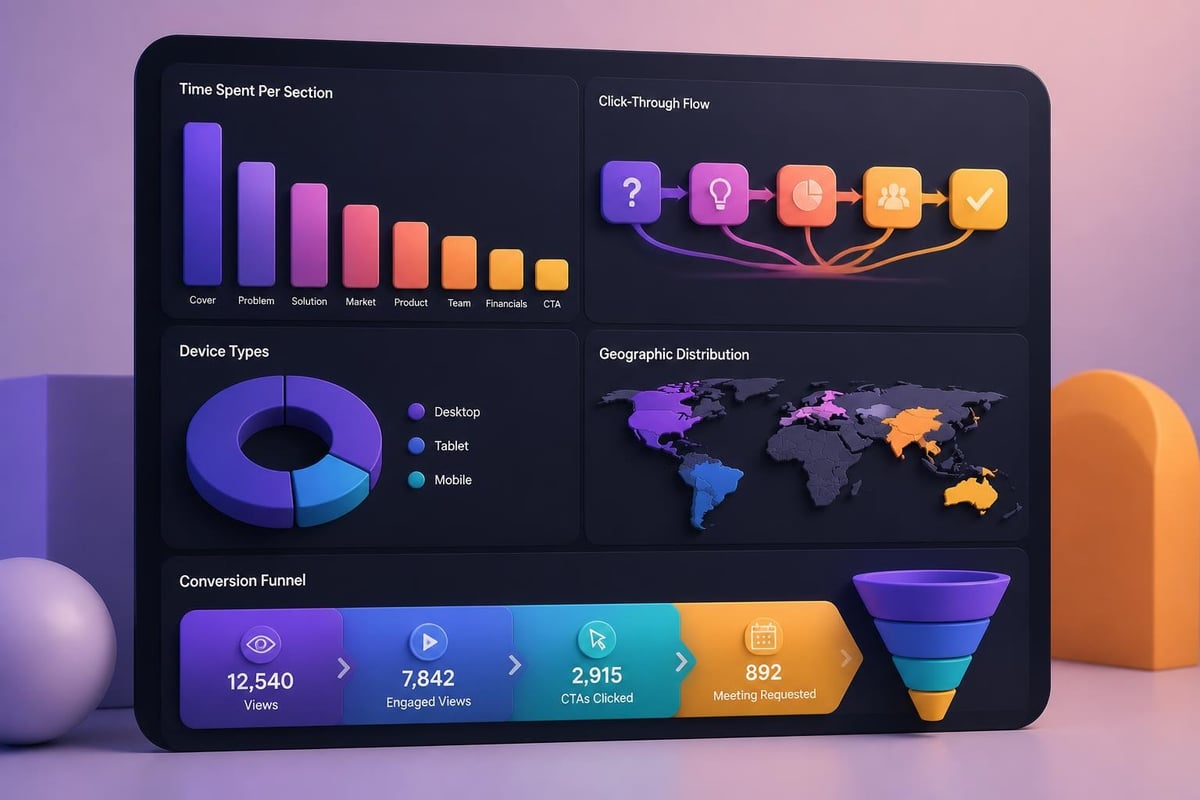
Investor engagement analytics

Analytics and Performance Tracking

One of the most powerful advantages of a pitch deck website over traditional presentations is the ability to measure investor engagement with precision. Analytics reveal which sections capture attention, where investors lose interest, and how much time they spend evaluating different aspects of your business.

Meaningful Metrics to Monitor

Page views tell you how many investors accessed your materials, but deeper metrics provide actionable insights. Time on page indicates genuine engagement versus cursory glances. Scroll depth shows whether investors actually consume your content or bounce after the landing page. Click tracking on interactive elements reveals which features resonate most strongly.

Heat mapping tools visualize exactly where investors focus their attention on each page. This data helps identify confusing navigation, overlooked content, or sections that generate disproportionate interest. When multiple investors consistently skip certain sections, that signals a need for content revision or repositioning.

Metric What It Reveals Action Threshold
Bounce Rate Landing page effectiveness Above 60% needs improvement
Avg. Time on Site Overall engagement level Below 3 minutes suggests weak hook
Section Completion Content stickiness Drop-off points need strengthening
Return Visits Serious consideration Multiple visits indicate strong interest
Device Types Viewing context Optimize for predominant devices
Referral Sources Distribution effectiveness Track which channels drive quality traffic

Converting Insights into Action

Analytics data becomes valuable only when you act on discovered patterns. If investors consistently spend minimal time on your team section, perhaps you need stronger credibility indicators or more relevant experience highlights. When financial projections generate extended engagement, consider expanding that content or adding scenario modeling tools.

A/B testing different approaches validates optimization efforts. Create alternative versions of underperforming sections and measure which generates better engagement. This iterative improvement process, combined with insights from pitch deck design best practices, creates increasingly effective investor communication over time.

Modern digital marketing agencies like Social Zense apply these same data-driven optimization principles to broader marketing initiatives, demonstrating how analytics-informed iteration drives performance improvements across digital channels.

Content Strategy and Storytelling

A pitch deck website demands the same compelling narrative that makes traditional presentations successful, but adapted for self-directed exploration rather than presenter-guided delivery. Your content must work without verbal accompaniment while maintaining the emotional resonance that drives investment decisions.

Structuring the Narrative Flow

Begin with your most compelling insight rather than company background. Investors evaluate hundreds of opportunities and decide within minutes whether to invest attention. Your opening must immediately demonstrate why this opportunity matters and why now is the critical moment.

The problem section establishes context by illustrating pain points your target market experiences. Use specific examples, quantified impacts, and emotional language that helps investors viscerally understand the frustration your solution addresses. Data visualization strengthens this section by making abstract problems tangible and measurable.

Your solution presentation should feel inevitable given the problem you've established. Focus on what makes your approach unique rather than listing features that competitors could easily replicate. For tech and financial businesses, this often means highlighting proprietary technology, regulatory advantages, network effects, or data moats that create sustainable competitive barriers.

Narrative sequence elements:

  1. Hook: One sentence that captures your essence
  2. Problem validation: Market research and customer pain points
  3. Solution demonstration: How you uniquely solve the problem
  4. Market sizing: Total addressable market with bottom-up validation
  5. Business model: How you capture value at scale
  6. Traction proof: Metrics demonstrating progress and momentum
  7. Competitive positioning: Why you win in a crowded space
  8. Team credentials: Why this team can execute this vision
  9. Financial projections: Path to profitability with key assumptions
  10. Investment ask: Specific amount, use of funds, and investor terms

Writing for Web Consumption

Web reading patterns differ fundamentally from how people consume traditional presentations. Visitors scan rather than read linearly, looking for information that matters to their specific evaluation criteria. Break long paragraphs into scannable chunks. Use descriptive subheadings that communicate key points even when body text goes unread.

Bullet points and numbered lists improve comprehension and retention compared to dense paragraphs. When presenting complex financial data or technical specifications, tables organize information more effectively than prose descriptions. These formatting choices also improve mobile readability, where screen size limitations make long paragraphs particularly challenging.

Learning from successful pitch deck examples reveals common patterns in how top-performing presentations structure information and prioritize content. While your specific business requires unique positioning, proven frameworks provide valuable starting points for organizing your narrative.
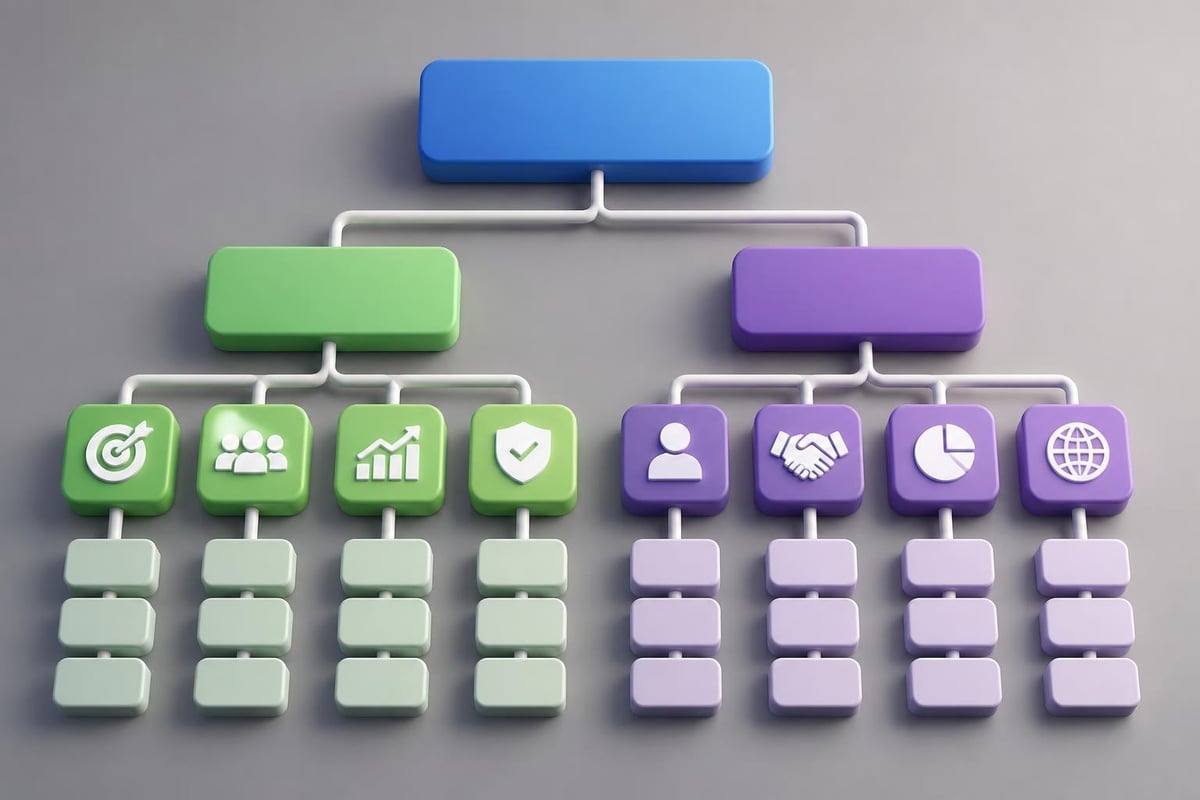
Content hierarchy framework

Integration with Broader Fundraising Strategy

A pitch deck website functions most effectively as one component within a comprehensive investor relations approach rather than a standalone tool. The digital presentation should complement in-person meetings, email campaigns, and networking efforts to create consistent touchpoints throughout the fundraising journey.

Pre-Meeting Preparation

Send your pitch deck website URL to investors before scheduled meetings. This allows them to familiarize themselves with your business, formulate specific questions, and arrive prepared for substantive discussion. The analytics from their pre-meeting review reveal which topics interest them most, allowing you to customize your live presentation accordingly.

When investors have already consumed your basic story through the website, live meetings can focus on deeper strategic discussions rather than basic company introductions. This efficiency respects investor time while demonstrating your organization and preparation. The combination of self-service digital content and personalized interaction creates a professional impression that builds confidence in your execution capabilities.

Post-Meeting Follow-Up

After initial conversations, your pitch deck website serves as a persistent resource investors can reference during internal discussions. Unlike emailed slide decks that get buried in inboxes, a bookmarked URL remains easily accessible when investors need to refresh their memory or share materials with partners.

Update specific sections based on meeting feedback without sending revised files. When an investor asks detailed questions about your financial model, enhance that section with additional scenarios or explanatory notes. When concerns arise about competitive positioning, strengthen that content with more robust differentiation arguments. These targeted improvements demonstrate responsiveness while keeping all investors working from current information.

Mobile Optimization Imperatives

More than 60% of web traffic now originates from mobile devices, making smartphone optimization essential rather than optional for pitch deck websites. Investors review opportunities during commutes, between meetings, and in other mobile-first contexts where desktop access is impractical.

Responsive Design Requirements

Your pitch deck website must automatically adapt to different screen sizes without losing functionality or visual impact. Complex charts that work beautifully on desktop monitors become unreadable on smartphone screens unless specifically optimized for mobile viewing. Navigation that relies on hover states fails completely on touch interfaces.

Test your pitch deck website on multiple devices and screen sizes during development. What looks perfect on your laptop may render awkwardly on tablets or become completely unusable on phones. Pay particular attention to interactive elements, ensuring buttons are large enough for touch interaction and that spacing prevents accidental clicks.

Mobile optimization checklist:

  • Text size minimum 16px for body copy
  • Touch targets minimum 44x44 pixels
  • Simplified navigation for smaller screens
  • Horizontal scrolling elimination
  • Loading speed under 3 seconds on 4G
  • Portrait and landscape orientation support
  • Form fields optimized for mobile keyboards

Content Adaptation for Small Screens

Mobile viewers consume content differently than desktop users, typically in shorter sessions with more frequent interruptions. Structure your pitch deck website to accommodate this behavior by making each section self-contained and digestible in under two minutes.

Consider creating mobile-specific content variations for complex sections. A detailed financial model might appear as an interactive spreadsheet on desktop but transform into a simplified visualization with key highlights on mobile. This adaptive approach ensures mobile users receive appropriate information without forcing them to pinch and zoom through desktop-optimized content.

E-commerce platforms like Kida Digital have demonstrated how mobile-first design principles drive conversion improvements, lessons that apply equally to pitch deck websites where the conversion goal is securing investor meetings rather than product sales.

Visual Asset Optimization

High-quality visuals differentiate professional pitch deck websites from amateur efforts, but improperly optimized images create loading delays that frustrate investors and undermine your message. Balance visual impact with technical performance through proper asset preparation and delivery.

Image Processing Best Practices

Compress all images before upload using tools specifically designed for web optimization. Modern compression algorithms reduce file sizes by 60-80% while maintaining visual quality indistinguishable from originals at screen resolutions. Services like removit offer specialized image optimization for web platforms, ensuring your visuals load quickly while maintaining professional quality.

Choose appropriate file formats for different image types. Photographs work best as JPEGs with progressive loading enabled. Graphics with text or solid colors should use PNG format to preserve sharp edges. Consider WebP format for modern browsers, which provides superior compression compared to traditional formats while maintaining quality.

Image optimization specifications:

Image Type Format Max File Size Resolution
Hero Images WebP/JPEG 200KB 1920x1080
Section Headers WebP/PNG 150KB 1600x900
Charts/Graphs SVG/PNG 100KB As needed
Team Photos JPEG 75KB 800x800
Icons SVG 10KB Vector
Background Patterns WebP/PNG 50KB Tiled

Video Content Integration

Demonstration videos and customer testimonials add persuasive power to pitch deck websites but require careful implementation to avoid performance problems. Host videos on dedicated platforms like Vimeo or YouTube rather than uploading directly to your website server. This approach leverages their content delivery networks for faster loading while reducing your hosting bandwidth costs.

Include video thumbnails and preview text so investors understand content before clicking play. Auto-play videos create negative user experiences and should be avoided. When investors choose to watch, ensure videos start promptly without buffering delays by using adaptive streaming that adjusts quality based on connection speed.

Accessibility and Inclusive Design

Making your pitch deck website accessible to all potential investors is both ethically important and strategically valuable. Approximately 15% of the global population experiences some form of disability, meaning accessibility barriers could exclude significant investor segments from engaging with your materials.

Technical Accessibility Standards

Implement proper semantic HTML structure using heading tags (H1, H2, H3) in logical hierarchy. Screen readers rely on this structure to help visually impaired users navigate content efficiently. Include descriptive alt text for all images, explaining the content and purpose rather than simply labeling the file type.

Ensure sufficient color contrast between text and backgrounds to support users with low vision or color blindness. Tools like WebAIM's contrast checker validate whether your color choices meet WCAG accessibility standards. Avoid using color as the sole method of conveying information since colorblind users may not perceive the distinction.

Accessibility implementation requirements:

  • Keyboard navigation for all interactive elements
  • Focus indicators showing current navigation position
  • Skip-to-content links bypassing repetitive navigation
  • Captions and transcripts for video content
  • Readable fonts without decorative excess
  • Consistent navigation patterns throughout site
  • Form labels properly associated with inputs

Inclusive Content Practices

Write in clear, straightforward language that non-native English speakers can understand. While demonstrating sophisticated business acumen, avoid unnecessarily complex vocabulary or industry jargon when simpler alternatives communicate equally well. This clarity benefits all readers, not just those with cognitive or language processing differences.

Provide content in multiple formats when possible. Some investors prefer consuming information through video, others through text, and some through data visualizations. By offering key points through various modalities, you accommodate different learning preferences and accessibility needs while reinforcing your message through repetition.

SEO Considerations for Discoverability

While pitch deck websites primarily target known investor lists rather than organic search traffic, proper SEO implementation provides secondary benefits. Investors researching your company after initial outreach discover the pitch deck website through branded searches. Media coverage and industry analysis linking to your materials increase domain authority and credibility signals.

On-Page Optimization Elements

Include your company name and relevant industry keywords in page titles, meta descriptions, and heading tags. This optimization helps your pitch deck website rank for branded searches and positions you within industry category searches. However, avoid keyword stuffing that compromises readability in pursuit of search rankings.

Create descriptive URLs for each section rather than generic page numbers. A URL like "yourcompany.com/market-opportunity" communicates more information than "yourcompany.com/page-3" while providing SEO benefits. These semantic URLs also make sharing specific sections easier when investors want to reference particular content in discussions.

SEO technical checklist:

  1. XML sitemap submission to search engines
  2. Robots.txt file properly configured
  3. Canonical URLs preventing duplicate content
  4. Schema markup for organization and service information
  5. Page loading speed optimization
  6. Mobile-friendliness validation
  7. Internal linking between related sections
  8. External links to credible sources supporting claims

Agencies like Pioneer Marketing apply these same local SEO principles to help businesses improve discoverability, demonstrating how proper technical implementation creates competitive advantages across different business objectives.

Link Building and Authority Development

When industry publications, accelerator programs, or investor databases reference your pitch deck website, these backlinks strengthen domain authority. Actively distribute your materials to relevant directories and platforms that aggregate startup resources. The Pitch Deck Hunt collection and similar databases provide valuable reference materials while creating backlink opportunities.

Participate in industry forums and communities by sharing insights rather than overtly promoting your pitch deck website. When you contribute genuine value to discussions, community members naturally become curious about your business and seek out your materials. This organic discovery builds more authentic investor relationships than cold outreach.

Maintenance and Content Updates

A pitch deck website requires ongoing maintenance to remain effective as your business evolves. Unlike static presentations that become outdated but continue circulating, web-based materials can be continuously refined to reflect current reality and incorporate learnings from investor feedback.

Update Frequency Strategy

Review and refresh your pitch deck website monthly at minimum, updating key metrics like user growth, revenue performance, and partnership announcements. These regular updates demonstrate momentum and keep materials current for investors who return multiple times during extended evaluation periods. Material changes like pivot decisions, team additions, or competitive landscape shifts require immediate updates.

Archive older versions before making significant changes so you can reference previous messaging if needed. Document what changes were made and why, creating an audit trail that helps you understand which adjustments improved investor engagement. This version history also proves valuable when investors reference outdated information from earlier views.

Update priority categories:

Category Frequency Priority
Traction Metrics Monthly High
Financial Projections Quarterly High
Team Information As Needed High
Product Screenshots Monthly Medium
Competitive Landscape Quarterly Medium
Market Sizing Annually Medium
Design Refresh Annually Low

Performance Monitoring

Regularly audit your pitch deck website for technical issues like broken links, slow-loading sections, or browser compatibility problems. Set up automated monitoring tools that alert you when performance degrades or errors occur. Investors who encounter technical problems form negative impressions about your operational excellence regardless of how strong your business fundamentals may be.

Test all interactive elements after updates to ensure changes haven't inadvertently broken functionality. Check analytics to verify tracking codes continue working properly. Review mobile rendering periodically as operating system updates sometimes introduce unexpected display issues. This proactive maintenance prevents embarrassing technical failures when high-priority investors access your materials.

Cost-Benefit Analysis

Creating a pitch deck website represents an investment of time, money, or both depending on your implementation approach. Understanding the costs relative to potential benefits helps justify resource allocation and choose appropriate implementation strategies.

Implementation Cost Factors

No-code platform subscriptions typically range from $15 to $50 monthly for basic plans suitable for pitch deck websites. Custom development costs vary dramatically based on complexity and developer rates, ranging from $2,000 for basic implementations to $15,000+ for highly customized experiences with advanced interactivity.

Professional design services add additional costs but dramatically improve visual impact and user experience. Working with specialized agencies that understand both presentation design and web development creates cohesive experiences that effectively translate slide-based narratives to digital formats. These integrated services typically cost $3,000 to $10,000 depending on scope and customization requirements.

Cost comparison breakdown:

  • DIY No-Code: $200-600 annually (platform fees + time investment)
  • Template-Based: $500-2,000 one-time (template + customization)
  • Professional Design: $3,000-10,000 one-time (custom design + development)
  • Premium Custom: $10,000-25,000 one-time (fully bespoke experience)
  • Ongoing Hosting: $10-100 monthly (depends on traffic and features)

Return on Investment Considerations

The true value of a pitch deck website emerges in improved investor engagement and funding success rates. When better accessibility increases the number of investors who review your materials by 40%, and improved analytics help you optimize messaging that increases meeting conversion by 25%, the cumulative impact significantly exceeds implementation costs.

Calculate ROI by estimating how much a successful funding round is worth and what probability increase justifies the investment. If a pitch deck website improves your funding probability from 8% to 10% on a $2 million raise, that 2 percentage point improvement is worth $40,000 in expected value, easily justifying even premium implementation costs.

Industry-Specific Customization

Different sectors have unique investor expectations that should inform pitch deck website design and content strategy. Financial services presentations require different emphasis than biotech pitches, while SaaS companies face distinct communication challenges compared to hardware manufacturers.

Financial Services and Fintech

Investors in financial services companies prioritize regulatory compliance, security infrastructure, and risk management frameworks. Your pitch deck website should prominently address these concerns through dedicated sections explaining your compliance approach, security certifications, and risk mitigation strategies. When developing fintech pitch decks, regulatory clarity often matters more than growth projections.

Include detailed explanations of your business model economics, unit economics, and path to profitability with conservative assumptions. Financial sector investors typically bring deeper analytical sophistication and expect more rigorous quantitative support for growth claims. Interactive financial models that allow scenario testing demonstrate transparency while giving investors tools to validate your projections against their own assumptions.

Technology and Software

Tech company pitch deck websites should showcase product functionality through embedded demonstrations, interactive prototypes, or video walkthroughs. Investors need to understand not just what your product does but how it creates value in ways competitors cannot easily replicate. Technical differentiation requires clear explanation accessible to non-technical investors while satisfying technically sophisticated evaluators.

Emphasize network effects, switching costs, and other defensibility factors that create sustainable competitive advantages in technology markets. Address how you acquire customers, what expansion revenue looks like, and how you plan to scale go-to-market efforts. When creating cybersecurity pitch decks, technical credibility and threat landscape understanding become especially critical to investor confidence.

B2B vs B2C Distinctions

Business-to-business companies should emphasize customer acquisition cost, lifetime value ratios, and sales cycle details that demonstrate efficient scaling. Include case studies showing how you solve problems for enterprise customers and navigate complex organizational buying processes. B2B investors want to understand your sales methodology and how you plan to build a repeatable, scalable sales organization.

Consumer-focused companies need to prove product-market fit through user growth metrics, engagement statistics, and retention cohorts. Demonstrate deep understanding of your target customer psychographics and how you acquire users cost-effectively across different channels. Viral growth mechanics, brand strength, and community effects carry particular weight in consumer investment decisions.

Distribution and Promotion Tactics

Creating an excellent pitch deck website delivers value only when target investors actually visit and engage with the content. Strategic distribution ensures your materials reach qualified investor prospects while maintaining appropriate confidentiality around sensitive business information.

Targeted Investor Outreach

Research potential investors thoroughly before outreach, understanding their investment thesis, portfolio composition, and funding stage preferences. Personalize your initial contact explaining specifically why your opportunity aligns with their investment criteria. Include your pitch deck website URL as a natural next step for investors who want to learn more rather than attaching large files that may not get opened.

Track which investors have accessed your materials using analytics and follow up intelligently based on their engagement patterns. When an investor spends 15 minutes exploring your financials section, that signals serious interest warranting prompt follow-up. Investors who bounce after 30 seconds may need different messaging or may simply be poor fits for your stage and sector.

Distribution channel strategies:

  1. Direct email outreach to researched investors
  2. Warm introductions through mutual connections
  3. Demo day presentations with URL sharing
  4. Accelerator program investor databases
  5. Industry conference networking follow-up
  6. LinkedIn messaging to relevant investors
  7. AngelList and similar platform profiles
  8. Media coverage mentioning pitch materials

Leveraging Template Resources

While custom design creates maximum differentiation, entrepreneurs seeking faster implementation can adapt templates from sites offering pitch deck examples and templates. These resources provide proven structural frameworks that can be customized with your specific content and branding.

When using templates, invest effort in customization that makes the final result distinctly yours. Change color schemes to match your brand identity, replace placeholder images with custom graphics, and rewrite all copy in your authentic voice. The goal is leveraging proven structure while avoiding the generic appearance that suggests lack of investment in your investor materials.

Common Implementation Mistakes

Understanding frequent pitch deck website failures helps you avoid costly errors that undermine your fundraising efforts. Many mistakes stem from treating web presentations exactly like slide decks without adapting to the different medium and user expectations.

Information Overload

Entrepreneurs often include excessive detail, believing more information builds stronger cases. In reality, overwhelming investors with minutiae obscures your core message and creates decision fatigue. Focus on the essential narrative elements that drive investment decisions, providing depth through downloadable appendices or gated sections for serious investors.

Remember that investors evaluating your pitch deck website do so without presenter guidance to highlight key points and skip irrelevant details. Every section must justify its inclusion by advancing your narrative in ways that matter to investment decisions. When content does not directly support why investors should fund your company, remove it regardless of how much effort went into creation.

Technical Performance Issues

Slow loading times, broken interactive elements, or mobile rendering problems create negative impressions about your operational capabilities. Investors unconsciously extrapolate from presentation quality to product quality, assuming companies that deliver poor digital experiences likely struggle with execution more broadly. Thoroughly test your pitch deck website across devices, browsers, and connection speeds before sharing with investors.

Monitor for ongoing performance degradation as you add content and features. A site that performed well at launch may slow considerably after adding high-resolution images or complex interactive elements. Regular performance audits using tools like Google PageSpeed Insights help identify issues before they impact investor experiences.

Neglecting Mobile Experience

More than 60% of initial pitch deck website views occur on mobile devices, yet many entrepreneurs optimize exclusively for desktop viewing. Investors who encounter awkward mobile experiences often abandon review entirely rather than waiting to access desktop computers. Treat mobile optimization as a primary design constraint rather than an afterthought.

Test your pitch deck website extensively on actual smartphones and tablets, not just desktop browser responsive preview modes. Physical devices reveal issues that emulators miss, like touch target sizes that work fine with mouse precision but frustrate finger-based navigation. Have colleagues from outside your company attempt mobile navigation to identify confusing elements you have become blind to through familiarity.

Legal and Compliance Considerations

Pitch deck websites containing financial projections, business strategy, and competitive intelligence require careful legal review to avoid disclosure problems or regulatory violations. While sharing materials with investors is necessary, proper safeguards protect your interests and ensure compliance with securities regulations.

Securities Law Compliance

Fundraising communications fall under securities regulations that restrict how companies can solicit investment. Consult legal counsel about whether your pitch deck website constitutes general solicitation under Regulation D rules, which may limit your fundraising options. Password protection and restricting access to verified accredited investors helps maintain compliance with solicitation restrictions.

Include appropriate disclaimers about forward-looking statements, risk factors, and the speculative nature of projections. While investors understand that startup forecasts involve significant uncertainty, explicit disclaimers protect against claims of misrepresentation if results differ from projections. These legal protections should feel natural within your content rather than alarming legalese that undermines confidence.

Intellectual Property Protection

Pitch deck websites reveal significant intellectual property about your business strategy, product roadmap, and competitive positioning. While some disclosure is necessary to attract investment, implement protections against unauthorized sharing or competitive intelligence gathering. Watermarking, download prevention, and access logging create accountability around material distribution.

Consider using non-disclosure agreements for particularly sensitive sections like detailed financial models or proprietary technology explanations. Tiered access control allows you to share general information freely while gating confidential details behind additional authentication. This approach balances accessibility with appropriate protection of competitive advantages.


A pitch deck website transforms how you communicate value to investors, combining the narrative power of traditional presentations with the accessibility and analytics of digital platforms. By implementing the strategies outlined above, you create investor experiences that drive engagement, build confidence, and ultimately increase funding success rates. Whether you choose template-based implementation or custom development, the key lies in crafting clear narratives optimized for self-directed exploration while maintaining professional polish throughout every interaction. Prznt Perfect specializes in translating complex business stories into compelling visual narratives across both traditional and digital formats, helping financial and tech companies create pitch materials that resonate with sophisticated investors and drive meaningful fundraising outcomes.


News & Updates...

Master communication skills PPT design with expert strategies for structure, visuals, and delivery. Transform presentations into powerful tools.

Master creative PPT presentation design with expert strategies for financial and tech businesses. Transform complex data into compelling visual stories.