
Marketing Presentation PPT: Design Strategies for 2026

Creating an effective marketing presentation ppt requires more than simply adding text to slides and calling it complete. In 2026, audiences expect sophisticated visual storytelling that transforms complex marketing strategies into digestible, actionable narratives. Financial and tech businesses face particular challenges when presenting data-heavy marketing initiatives to stakeholders, investors, and clients. The difference between a forgettable deck and one that drives decisions often comes down to strategic design choices that balance aesthetic appeal with information clarity. This comprehensive guide explores proven techniques for developing marketing presentations that engage audiences and deliver measurable results.
Understanding the Modern Marketing Presentation Landscape
The role of presentations in marketing has evolved significantly over the past several years. Marketing teams now use PowerPoint decks as strategic tools that support everything from quarterly reviews to investor pitches, product launches to client acquisitions. Unlike internal reports, a marketing presentation ppt must simultaneously inform, persuade, and inspire action.
Research shows that decision-makers form opinions about presentation quality within the first few slides. This reality makes professional design essential rather than optional. Tech companies presenting complex software solutions need visual frameworks that simplify technical concepts, while financial institutions must balance regulatory compliance with compelling storytelling.
Key Components of High-Performing Marketing Decks
Every successful marketing presentation shares several foundational elements that work together to create impact:
- Clear value proposition communicated within the opening slides
- Data visualization that transforms numbers into meaningful insights
- Brand consistency across typography, colors, and imagery
- Logical flow that guides audiences through your narrative
- Strategic calls-to-action placed at decision points
The best PowerPoint presentation templates provide frameworks for these elements while allowing customization to match your brand identity and specific marketing objectives.
Strategic Planning Before Design Execution
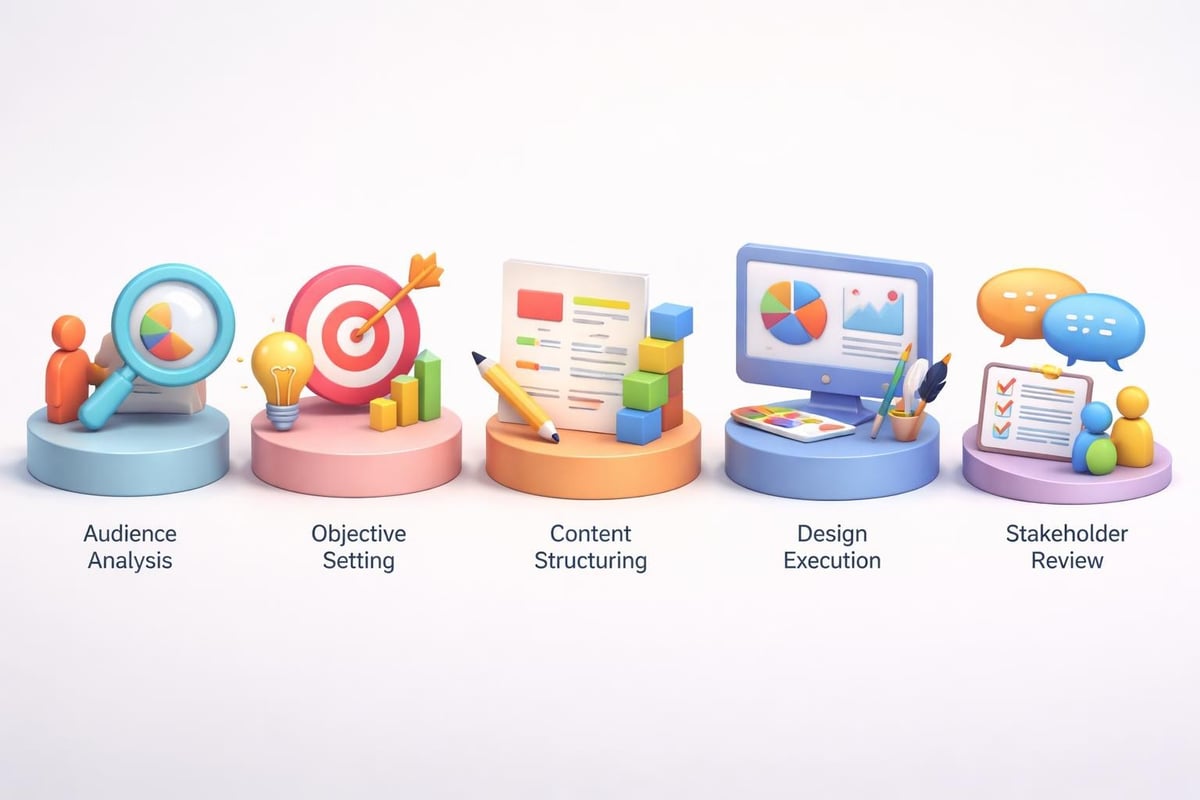
Before opening PowerPoint, successful marketing teams invest time in strategic planning that shapes every subsequent design decision. This preparation phase determines whether your presentation will achieve its intended objectives or fall flat with stakeholders.
Audience Analysis and Messaging Framework
Understanding your audience drives every aspect of your marketing presentation ppt. Financial executives require different approaches than technical teams, and external clients need different context than internal stakeholders. Create audience profiles that identify knowledge levels, decision-making authority, pain points, and preferred communication styles.
Your messaging framework should address three critical questions:
- What problem does your marketing strategy solve? Define the challenge in terms your audience recognizes and cares about solving.
- Why is your approach uniquely positioned to succeed? Differentiate your strategy from alternatives available to decision-makers.
- What specific outcomes can stakeholders expect? Quantify results using metrics that matter to your audience.
This framework becomes the foundation for your presentation cover design and internal slide structure, ensuring consistency throughout the deck.
Visual Storytelling Techniques for Marketing Content
Effective marketing presentations transform abstract strategies into concrete visual narratives. Rather than listing features or capabilities, high-performing decks show how marketing initiatives create value through strategic storytelling approaches that engage emotional and logical decision-making processes.
Data Visualization Best Practices
Marketing presentations inevitably include performance metrics, market analysis, and ROI projections. The challenge lies in presenting this information without overwhelming audiences or losing their attention to spreadsheet-style slides.
| Data Type | Recommended Visualization | Best Use Case |
|---|---|---|
| Performance trends | Line or area charts | Showing growth over time periods |
| Market segmentation | Pie charts or treemaps | Illustrating proportion of total market |
| Competitive comparison | Bar charts or radar graphs | Positioning against alternatives |
| Process flows | Diagrams or infographics | Explaining marketing funnel stages |
| Geographic distribution | Heat maps | Displaying regional performance |
When creating these visualizations for your marketing presentation ppt, apply the principle of progressive disclosure. Start with high-level insights on the main slide, then provide detailed breakdowns on backup slides that can be accessed during Q&A sessions.
Color Psychology and Brand Alignment
Color choices significantly impact how audiences perceive your marketing message. Financial institutions often leverage blues and grays to communicate stability and trustworthiness, while tech companies might incorporate vibrant accent colors to convey innovation and energy.
Your color palette should accomplish three objectives simultaneously: reinforce brand identity, create visual hierarchy, and support information comprehension. Limit your primary palette to three or four colors, using additional shades only for data visualization where distinction between multiple categories becomes necessary.
The strategies outlined in LinkedIn Learning's best practices for PowerPoint slides emphasize simplicity and visual appeal, principles that directly apply to marketing presentations where clarity drives conversion.
Content Structure for Maximum Impact
The sequence of information in your marketing presentation ppt determines whether audiences follow your logic or become confused by disjointed ideas. Professional presentations use proven structures that build understanding progressively while maintaining engagement throughout the deck.
The Pyramid Principle in Marketing Decks
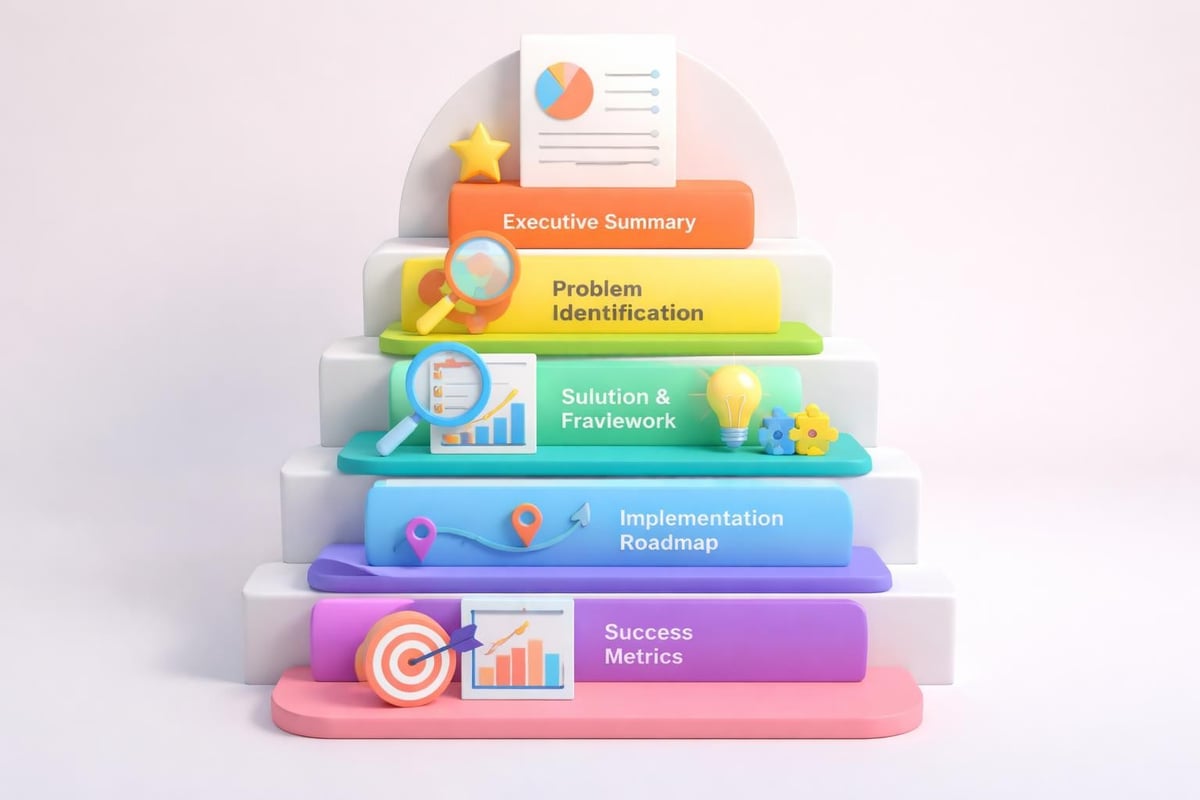
Start with conclusions, then provide supporting evidence. This approach, contrary to academic writing, recognizes that business audiences want answers first and justification second. Your opening slides should clearly state what you're recommending, why it matters, and what outcomes stakeholders can expect.
After establishing this foundation, subsequent sections provide the supporting analysis:
- Market opportunity and competitive landscape
- Strategic approach and tactical execution plan
- Resource requirements and timeline considerations
- Expected outcomes with measurement frameworks
- Risk mitigation strategies and contingency planning
Each section should open with a summary slide that previews the key points, followed by detailed slides that expand on each element.
Balancing Detail with Accessibility
One common mistake in marketing presentations involves overwhelming audiences with excessive detail that obscures strategic insights. Financial and tech businesses often struggle with this balance, wanting to demonstrate thoroughness while maintaining stakeholder engagement.
Apply the "one concept per slide" rule strictly. If a slide requires more than 30 seconds to understand, it contains too much information and should be divided into multiple slides or simplified to highlight only essential points.
For complex topics, consider using the approach detailed in resources about company presentations, which emphasizes maintaining audience attention through carefully paced information delivery.
Design Excellence in Marketing Presentations
Visual design transforms adequate marketing presentations into memorable experiences that drive decision-making. Professional design doesn't mean elaborate graphics or complex animations; it means strategic visual choices that support your message and guide audience attention to critical information.
Typography and Readability Optimization
Font selection impacts both aesthetics and comprehension. Your marketing presentation ppt should use no more than two font families: one for headings and another for body text. Sans-serif fonts generally work best for digital presentations, offering better readability on screens of various sizes.
Size requirements for optimal readability:
- Slide titles: 32-44 points
- Body text: 18-24 points minimum
- Data labels and footnotes: 14-16 points minimum
Avoid the temptation to reduce font sizes to fit more content. Instead, simplify your message or divide content across additional slides. Decision-makers viewing presentations on laptops or tablets particularly struggle with text below 18 points.
White Space as a Strategic Element
Professional designers recognize white space (negative space) as an active design element rather than wasted area. Adequate spacing around text blocks, images, and data visualizations reduces cognitive load and improves information retention.
When creating your marketing presentation ppt, ensure margins of at least 0.5 inches on all sides, with additional spacing between distinct content blocks. This approach aligns with principles discussed in GA Creative's presentation design best practices, which emphasize visual breathing room.
Custom Graphics Versus Stock Photography
Generic stock photos undermine credibility in professional marketing presentations. Audiences immediately recognize overused images, which can diminish perceived authenticity of your marketing strategy.
Instead, invest in custom graphics that illustrate your specific concepts, or use high-quality photographs that directly relate to your business context. Icons and diagrams should follow consistent styling throughout the deck, creating visual cohesion that reinforces professional quality.
Platform Considerations and Technical Optimization
While PowerPoint remains the dominant platform for business presentations, understanding technical considerations ensures your marketing presentation ppt displays correctly across different devices and presentation environments.
File Format and Compatibility Planning
Save presentation files in multiple formats to accommodate various presentation scenarios:
| Format | Best Use | Considerations |
|---|---|---|
| PPTX | Editable master file | Maintains all formatting and animations |
| Email distribution | Preserves layout but removes interactivity | |
| Video (MP4) | Auto-play scenarios | Good for trade shows or lobby displays |
| Google Slides | Cloud collaboration | Requires internet; some formatting may shift |
When presentations include embedded videos or custom fonts, test thoroughly on the actual presentation equipment before important meetings. Font substitution or missing media files can derail otherwise polished presentations.
Animation and Transition Strategy
Animations serve specific purposes in professional marketing presentations: revealing information progressively, demonstrating processes, or emphasizing critical points. They should never be decorative or distracting.
Limit animations to purposeful applications:
- Fade-in effects for bullet points to control pacing
- Simple wipe transitions between major sections
- Build animations for complex diagrams to explain components sequentially
- Subtle motion graphics to demonstrate processes or workflows
Avoid outdated effects like bouncing text or spinning graphics that undermine professional credibility. The guidance provided in DeckSherpa's marketing presentation tips emphasizes strategic use of visual elements to enhance rather than distract from core messages.
Tailoring Content for Different Marketing Scenarios
Different marketing contexts require adapted approaches to presentation structure and content emphasis. A quarterly performance review demands different treatment than a new product launch or client acquisition pitch.
Investor and Stakeholder Presentations
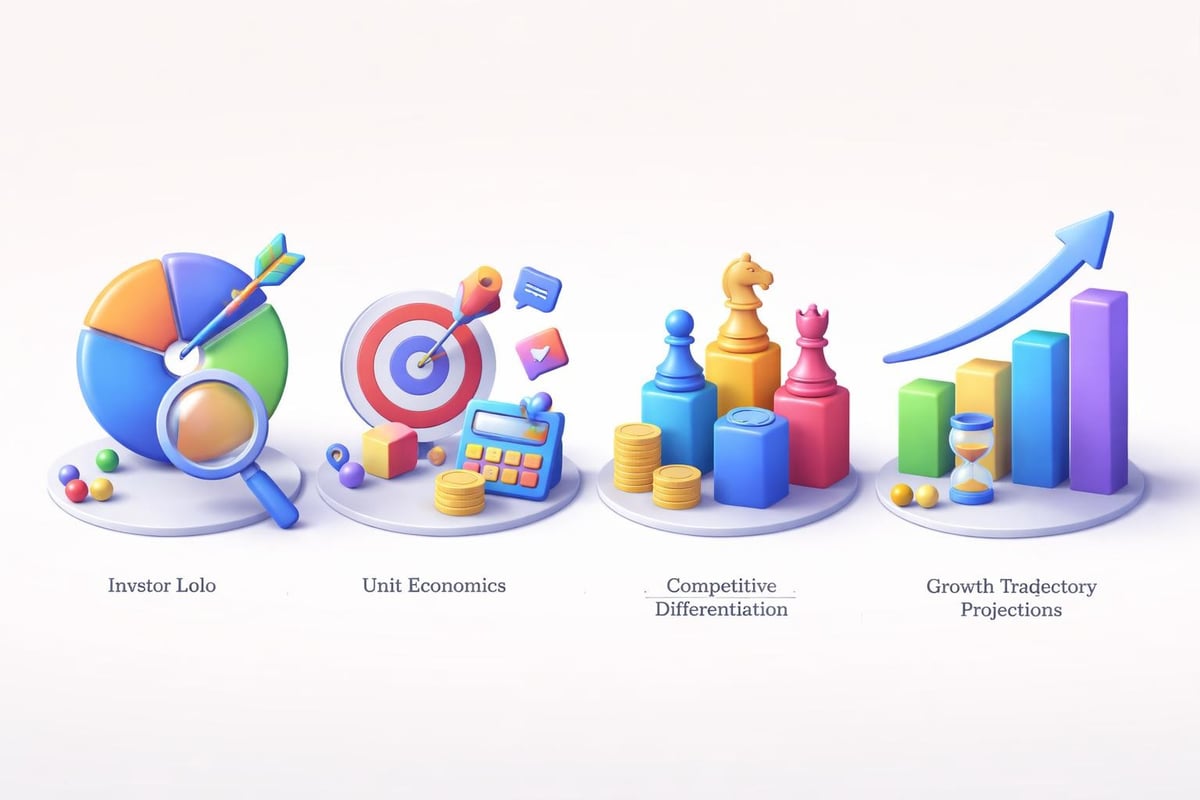
Marketing presentations for investors prioritize financial metrics, market opportunity, and competitive positioning. These audiences want to understand growth potential and return on marketing investment.
Structure these decks to answer critical investor questions:
- What market opportunity are you pursuing and why now?
- How does your marketing strategy create competitive advantage?
- What resources are required and what returns can be expected?
- Who comprises the team executing this strategy?
- What risks exist and how are they mitigated?
Financial projections should include conservative, expected, and optimistic scenarios with clear assumptions documented. This transparency builds credibility with sophisticated audiences who understand market uncertainties.
Client Acquisition and Proposal Presentations
Client-focused marketing presentations emphasize understanding of their specific challenges and demonstration of your capability to solve them. Unlike investor decks, these presentations should minimize discussion of your internal operations and maximize focus on client benefits.
The professional PowerPoint approaches that resonate with clients typically include case studies, relevant experience examples, and clear process explanations that reduce perceived risk of engagement.
Open with a recap of client objectives based on discovery conversations, demonstrating that you listened and understood their needs. Then present your recommended approach as a logical solution to their stated challenges, supported by evidence of past success in similar situations.
Collaboration and Review Processes
Professional marketing presentations rarely emerge from individual efforts. Effective development requires collaboration between marketing strategists, content creators, designers, and subject matter experts who collectively ensure accuracy, clarity, and impact.
Establishing Efficient Review Cycles
Create structured review processes that gather input without endless revision cycles. Define roles clearly: who provides strategic direction, who reviews technical accuracy, who makes final design decisions, and who holds approval authority.
Recommended review workflow:
- Strategy alignment review (content outline only)
- First draft review (structure and key messages)
- Design review (visual treatment and brand consistency)
- Final approval review (polish and error checking)
- Technical rehearsal (equipment and delivery testing)
Limit each review cycle to specific feedback categories, preventing stakeholders from revisiting previously approved decisions. Document all feedback in a centralized location to avoid conflicting direction from multiple reviewers.
Design Quality Control Checklist
Before finalizing your marketing presentation ppt, verify these quality standards:
- Consistent fonts, colors, and styling across all slides
- Proofread content with zero spelling or grammatical errors
- Proper alignment of text blocks, images, and graphic elements
- Functional hyperlinks if presentation includes interactive elements
- Appropriate file naming convention for version control
- Backup copies saved in multiple locations
The attention to detail that distinguishes amateur from professional presentations often comes down to these seemingly minor elements that collectively signal credibility and competence.
Advanced Techniques for Financial and Tech Sectors
Financial services and technology companies face unique presentation challenges that require specialized approaches beyond general marketing presentation best practices. These industries deal with complex products, regulated environments, and sophisticated audiences who demand precision alongside persuasion.
Presenting Complex Financial Data
Financial marketing presentations must balance regulatory requirements with engaging storytelling. Disclosure statements, risk warnings, and compliance language can overwhelm slides if not handled strategically.
Use appendix slides for detailed legal disclosures, keeping main presentation slides focused on strategic narratives. Reference compliance information with small footnotes that direct interested parties to comprehensive details without disrupting visual flow.
When presenting investment performance or financial projections, always include appropriate context about market conditions, benchmark comparisons, and methodology explanations. This transparency builds trust with financially sophisticated audiences who scrutinize claims carefully.
Technology Solution Demonstrations
Tech companies selling complex solutions struggle to explain capabilities without overwhelming prospects with technical specifications. Your marketing presentation ppt should focus on outcomes and benefits rather than features and functions.
Structure technology presentations around customer success stories that demonstrate real-world application of your solution. Show before-and-after scenarios that quantify improvements in efficiency, cost reduction, or capability enhancement.
For the technical deep-dive that some audiences require, create supplementary materials or breakout sections that can be accessed selectively based on audience interest and expertise level. This approach, similar to strategies discussed in resources about small business PowerPoint utilization, ensures presentations remain accessible while providing depth when needed.
Measuring Presentation Effectiveness
The most sophisticated marketing presentation ppt serves little purpose if it fails to achieve intended objectives. Establish measurement frameworks that evaluate both immediate presentation impact and longer-term business outcomes.
Immediate Engagement Metrics
During live presentations, observe audience engagement signals that indicate whether your content resonates. Active participation through questions, note-taking, and verbal agreement suggests strong engagement. Conversely, side conversations, device distraction, or early departures signal disconnection from your message.
For virtual presentations, engagement metrics become more challenging but remain important. Monitor camera usage, chat participation, and attendance duration to gauge interest levels throughout the presentation.
Business Outcome Tracking
Ultimate presentation success connects to business results rather than aesthetic appeal. Define clear objectives before creating your marketing presentation ppt, then track whether those objectives were achieved:
| Presentation Type | Success Metrics | Measurement Timeline |
|---|---|---|
| Sales presentations | Conversion to next stage, deal velocity | 30-90 days |
| Investor pitches | Funding secured, follow-up meetings | 60-180 days |
| Internal approvals | Budget allocation, project green-light | 7-30 days |
| Client reviews | Renewal rates, upsell opportunities | 90-365 days |
Track these metrics systematically to identify which presentation approaches drive best results, then refine your templates and processes accordingly. This data-driven improvement cycle elevates presentation quality over time.
Resource Optimization and Efficiency
Creating professional marketing presentations requires significant time investment. Organizations that develop multiple presentations monthly benefit from systems that increase efficiency without sacrificing quality.
Template Development and Brand Standards
Invest in comprehensive template systems that provide starting points for various presentation types while ensuring brand consistency. Well-designed templates should include master slides for common layouts, color palettes with exact specifications, approved fonts with usage guidelines, and graphic element libraries.
When developing templates, work with professional designers who understand both aesthetic principles and technical PowerPoint functionality. The investment in quality templates pays dividends through faster development times and consistent brand representation across all marketing communications.
Building a Slide Library
Maintain a library of proven slides that can be repurposed across presentations. Store slides in categories aligned with common presentation sections: company overviews, market analysis frameworks, case study templates, product feature descriptions, and pricing structures.
This library approach, combined with thoughtful use of attractive PowerPoint templates, enables rapid assembly of new presentations while maintaining quality standards that would otherwise require starting from scratch each time.
Future Trends in Marketing Presentations
As we progress through 2026, several emerging trends are reshaping how organizations approach marketing presentations. Staying ahead of these developments ensures your presentations remain competitive and engaging.
Interactive and Non-Linear Presentations
Traditional linear slide decks are giving way to interactive presentations that allow presenters to navigate based on audience interest and questions. This flexibility particularly benefits complex marketing strategies where different stakeholders care about different aspects.
PowerPoint's zoom and hyperlink features enable non-linear navigation within single presentation files. Presenters can jump directly to relevant sections based on real-time audience needs rather than forcing everyone through identical content sequences.
Integration with Digital Platforms
Marketing presentations increasingly serve as assets within broader digital ecosystems rather than standalone documents. Presentations get embedded in websites, shared through social platforms, and repurposed into video content that extends their reach beyond initial audiences.
When creating your marketing presentation ppt, consider how content might be extracted and reused across channels. Design slides that work both within the full presentation context and as standalone graphics for social media posts or blog articles.
AI-Assisted Design and Content Optimization
Artificial intelligence tools are beginning to influence presentation development, offering design suggestions, content recommendations, and even automated layout optimization. While these tools cannot replace strategic thinking and creative storytelling, they can accelerate certain technical aspects of presentation production.
Organizations should explore how AI tools might enhance efficiency in their presentation development workflows while maintaining the human judgment necessary for strategic messaging and audience connection that truly drives business results.
Mastering the marketing presentation ppt format requires balancing strategic messaging, professional design, and audience-focused delivery. The techniques outlined here provide frameworks for creating presentations that inform, persuade, and inspire action across financial and tech sectors. When your team needs to transform complex marketing strategies into compelling visual narratives that resonate with stakeholders, Prznt Perfect brings specialized expertise in creating presentations that drive business results through strategic design and data-driven storytelling.



- This is some text inside of a div block.lay out the facts clearly and compellingly. Use data to establish the ground reality, but remember that facts alone are like the individual strands of a tapestry—necessary but not complete.lay out the facts clearly and compellingly. Use data to establish the ground reality, but remember that facts alone are like the individual strands of a tapestry—necessary but not complete.
- This is some text inside of a div block.lay out the facts clearly and compellingly. Use data to establish the ground reality, but remember that facts alone are like the individual strands of a tapestry—necessary but not complete.

.png)
