
7 Must-Have Slides for a Winning Fintech Pitch Deck 2026

The race for fintech funding in 2026 is more intense than ever, with global investment surging and new players challenging established norms at every turn. In this fiercely competitive environment, a compelling fintech pitch deck is not just helpful, it is essential for grabbing investor attention and unlocking vital capital.
What separates successful founders from the crowd? The answer lies in mastering the art of the pitch deck. This article will reveal the 7 must-have slides that consistently win over fintech investors, complete with practical tips and standout examples. Ready to build a winning fintech pitch deck? Read on to discover the proven formula.
The Evolving Landscape of Fintech Pitch Decks in 2026
The global fintech market is experiencing unprecedented growth, projected to reach $644.6 billion by 2029 with a CAGR of 25.18%. This surge is fueling record investments and fierce competition, making the fintech pitch deck more important than ever for founders seeking capital. Investors poured $95.6 billion into fintechs in 2024, underscoring the need to stand out in an increasingly crowded arena.
Investor expectations for a fintech pitch deck have evolved significantly. Today’s venture capitalists and corporate backers demand not just innovation but also clarity, regulatory foresight, and a well-articulated path to profitability. Decks must present compliant, scalable business models and showcase how the company navigates complex financial regulations. Compliance with new data privacy laws and anti-fraud measures is now a must-have, not a bonus.
Visual storytelling has become a defining feature of the modern fintech pitch deck. Investors now expect concise, visually driven presentations that communicate complex ideas quickly. Data-driven narratives, clean infographics, and dynamic charts are replacing dense slides packed with text. A compelling deck uses visuals to highlight traction, market opportunity, and competitive advantage, ensuring key messages are absorbed in seconds.
Fintech founders face unique hurdles. Regulatory landscapes shift rapidly, requiring decks to address compliance strategies upfront. With hundreds of startups targeting similar pain points, demonstrating a defensible moat and profit potential is critical. Investors want to see a fintech pitch deck that not only explains the business but also builds trust in execution and risk management.
Recent success stories show what works. SecureSave and Albert both raised millions with decks that balanced clear branding, concise problem statements, and strong validation. These startups leveraged AI-driven personalization, robust data analytics, and digital transformation to stand out. For more real-world inspiration, review these Fintech pitch deck examples to see how top founders structure their narratives and slides.
Industry best practices have also shifted. The ideal fintech pitch deck is typically 12–15 slides, following a logical order: Title, Problem, Solution, Market, Business Model, Traction, Team, and so on. Investors consistently advise founders to keep decks focused, avoid jargon, and support claims with credible data. Feedback from recent funding rounds highlights a preference for decks that blend vision with transparency and actionable metrics.
In 2026, the fintech pitch deck is more than a presentation—it is a strategic asset that reflects a founder’s understanding of the market, compliance, storytelling, and innovation. Mastering its evolving landscape is essential for winning investor confidence and securing the next round of funding.

7 Must-Have Slides for a Winning Fintech Pitch Deck 2026
A fintech pitch deck in 2026 must do more than present facts—it needs to tell a compelling, data-driven story. Investors are pressed for time and faced with hundreds of options, so your slides must deliver clarity, confidence, and vision. Below, discover the 7 essential slides every fintech pitch deck needs to stand out and secure funding.

1. Title & Vision Slide
Your title and vision slide is your fintech pitch deck’s handshake and first impression. It must instantly communicate who you are, what you do, and why it matters. Display your company name, logo, and a concise tagline that captures your value proposition.
A powerful vision statement should reflect the future your fintech is building, such as “Empowering secure savings for every worker” or “AI-powered banking for the next generation.” SecureSave, for example, uses bold branding and a laser-focused tagline to set the stage for their investor conversations.
Tips for Maximum Impact:
- Use a clean, minimalist layout with strong branding.
- Limit text—focus on a single, memorable message.
- Tailor your vision to resonate with 2026 fintech trends like AI, ESG, or digital transformation.
Remember, investors typically spend less than 30 seconds on this slide. Make every word and visual count. For inspiration on tailored deck solutions, explore Fintech and banking pitch decks.
2. Problem & Opportunity Slide
This slide is your chance to prove that your fintech pitch deck addresses a real, urgent pain point. Start with a concise statement of the problem, backed by market data and real-world anecdotes. Quantify the scale and urgency—use metrics like market size, growth rates, or inefficiencies in the current system.
Show how regulatory, technological, or consumer shifts in 2026 have intensified the problem. For example, Relief highlights the rising cost and complexity of credit card debt collection, bringing the challenge to life with relatable customer stories.
Effective Visuals:
- Infographics to highlight market gaps.
- Charts showing the growth of the problem.
- Short customer testimonials or case studies.
Timeliness is crucial. Connect the problem to current trends, such as increased regulatory scrutiny or shifting consumer preferences. A strong fintech pitch deck makes clear why solving this problem now unlocks significant opportunity.
3. Solution & Product Overview Slide
Now that you have their attention, showcase your solution. This slide should clearly demonstrate how your fintech pitch deck solves the problem you just outlined. Highlight your product’s unique features, technology stack, and competitive differentiators.
Use product screenshots, architecture diagrams, or short demo clips to bring your offering to life. Albert, for instance, impresses investors with a seamless interface for personalized budgeting and investment, leveraging AI for smarter financial decisions.
Key Elements to Include:
- Overview of core features and benefits.
- Explanation of how your solution uses innovations like AI, blockchain, or open banking.
- Address regulatory compliance or security as a foundational advantage if applicable.
Prioritize user experience, scalability, and market fit. Show that your fintech pitch deck is not just innovative but also practical and compliant for 2026’s landscape.
4. Market Size & Growth Potential Slide
Investors want evidence that your fintech pitch deck is targeting a substantial and growing market. Break down your Total Addressable Market (TAM), Serviceable Available Market (SAM), and Serviceable Obtainable Market (SOM) with credible data.
Visualize this information using clear charts and graphs for rapid comprehension. NDVR, for example, uses focused data to illustrate the size of the high-net-worth quant investing market.
| Market Metric | Definition | Example Value |
|---|---|---|
| TAM | Total global market for your solution | $644.6B by 2029 |
| SAM | Portion of TAM you can serve | $120B |
| SOM | Realistically obtainable share in 3–5 years | $10B |
Discuss barriers to entry, customer segments, and how your fintech pitch deck positions you to capture market share. Reference macroeconomic trends or regulatory shifts fueling demand. Use reputable data sources to build trust and credibility with investors.
5. Business Model & Revenue Streams Slide
A winning fintech pitch deck must make your path to profitability crystal clear. Explain exactly how your fintech generates revenue—be it subscriptions, transaction fees, partnerships, or SaaS models. Detail your pricing strategy and customer acquisition plans.
Include unit economics, such as Lifetime Value to Customer Acquisition Cost (LTV:CAC) ratios, and visual diagrams to simplify complex models. Percent, for example, presents a three-sided marketplace for private credit, clarifying each revenue stream.
What to Show:
- Revenue model(s) and pricing tiers.
- Early traction or pilot program results.
- Impact of regulatory requirements on revenue and scalability.
Use flowcharts or tables to illustrate the interplay between different revenue streams. Demonstrate that your fintech pitch deck has validated and scalable financial foundations.
6. Traction, Metrics & Validation Slide
This slide is where your fintech pitch deck proves its momentum. Highlight key milestones, such as user growth, revenue, strategic partnerships, or product launches. Use relevant KPIs—Annual Recurring Revenue (ARR), user retention rates, transaction volumes—to show progress.
Graphs and charts are vital here, making your growth story visually compelling. Novo, for instance, showcases rapid expansion in small business banking, using clear metrics and press coverage to build credibility.
Validation Elements:
- Testimonials from customers or partners.
- Media mentions, awards, or industry recognition.
- Regulatory approvals or licenses.
If you are pre-revenue, present results from pilot programs, waitlists, or letters of intent. The goal is to convince investors that your fintech pitch deck represents a validated and investable opportunity.
7. Team & Competitive Advantage Slide
Investors back teams as much as ideas, so your fintech pitch deck must introduce your leadership with clarity and confidence. Present headshots and concise bios for founders, key hires, and advisors, emphasizing fintech experience and past successes.
Explain what makes your team uniquely qualified to execute the vision. Compare your strengths against competitors, whether it is proprietary technology, strategic partnerships, or regulatory expertise. NDVR, for instance, highlights its recruitment of top quant talent from AQR Capital.
Effective Visual Aids:
- Team timelines or org charts.
- Competitive matrices showing your edge.
- Quick facts summarizing achievements.
This final slide should leave investors with a sense of trust and excitement about your fintech pitch deck. Show that your team is equipped to lead, adapt, and outperform in the dynamic 2026 fintech market.
Visual Storytelling & Design Best Practices for Fintech Pitch Decks
Standing out in the crowded fintech space starts with a visually compelling fintech pitch deck. Investors review dozens of decks daily, so your design must instantly command attention. Visual storytelling transforms raw data into a narrative that resonates and sticks with investors long after the meeting ends.
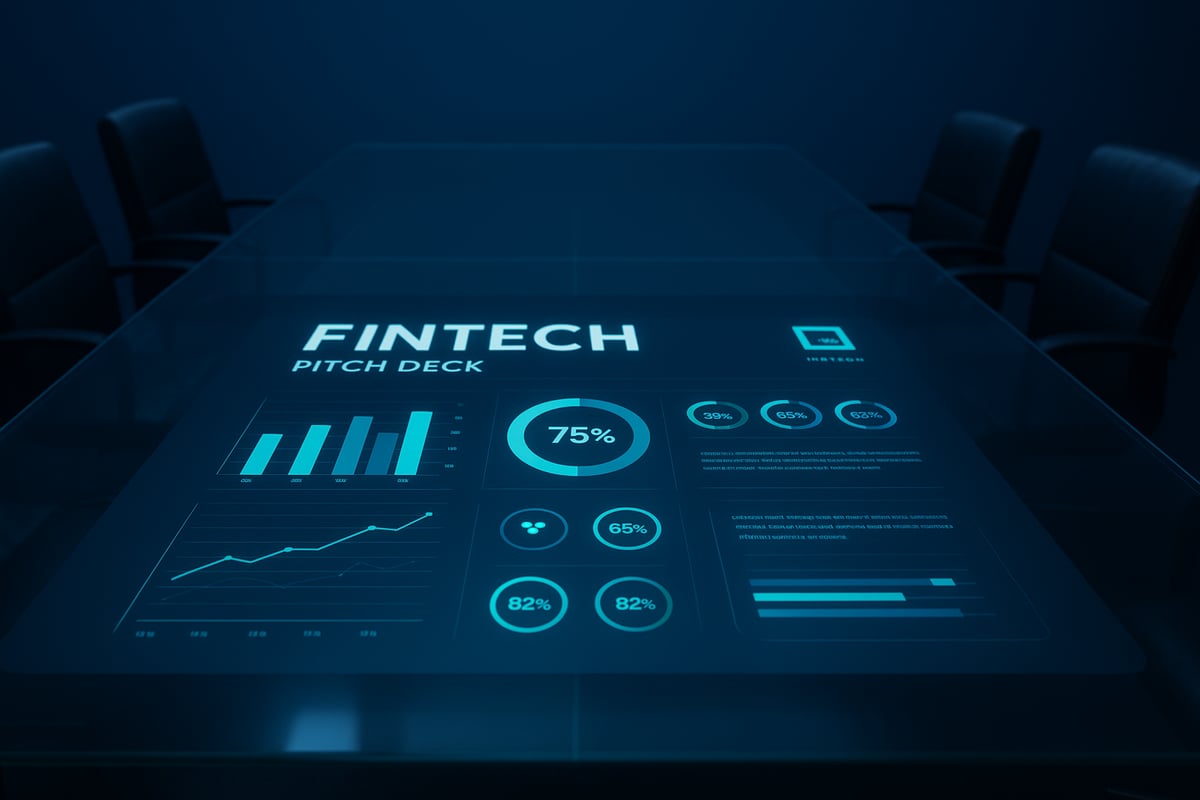
The Power of Visual Storytelling in Fintech
A fintech pitch deck built on powerful visuals can communicate complex ideas quickly. Use bold images, concise headlines, and iconography to guide investors through your narrative. Avoid overwhelming slides with text—think of each slide as a billboard, not a novel.
- Start each slide with a clear message.
- Use visual hierarchy to highlight key points.
- Incorporate customer stories or user journeys visually.
This approach ensures your fintech pitch deck is not just seen but remembered. Visual storytelling bridges the gap between innovation and investor understanding.
Design Fundamentals: Consistency and Branding
Consistency is the backbone of a professional fintech pitch deck. Use a uniform color palette, typography, and logo placement on every slide. This builds trust and reinforces your brand identity.
- Choose 2–3 primary colors and stick to them.
- Use one or two readable fonts throughout.
- Integrate your logo subtly but consistently.
When deadlines are tight, refer to Designing investor-ready slides for practical tips on maintaining clarity and polish under pressure. Consistency signals attention to detail, a trait investors value highly in fintech founders.
Data Visualization: Making Complexity Clear
Fintech concepts are often data-heavy. The fintech pitch deck should translate intricate figures into easy-to-grasp visuals. Use bar charts, pie graphs, and infographics to present market size, growth, or KPIs.
- Limit each slide to one main data point.
- Use contrasting colors to distinguish data sets.
- Annotate charts with brief, actionable insights.
Well-designed visuals make your fintech pitch deck accessible to both technical and non-technical investors. Remember, clarity is more persuasive than complexity.
Narrative Flow and Common Design Pitfalls
A winning fintech pitch deck maintains momentum with logical slide sequencing and concise pacing. Each slide should build on the last, guiding investors smoothly from problem to solution to traction.
- Open with a strong title and vision.
- Group related slides together for coherence.
- Limit total slides to 10–15 to avoid fatigue.
Avoid clutter, inconsistent layouts, and jargon-heavy slides. Learn from standout decks like Rocket Dollar and Tulipshare, which balance technical depth with visual simplicity. By sidestepping common pitfalls, your fintech pitch deck will engage and persuade investors effectively.
Preparing for Investor Questions & Due Diligence
Investors in 2026 are more discerning than ever. Once your fintech pitch deck grabs their attention, the real test begins: fielding tough questions and passing rigorous due diligence. Preparation is not just a formality, it is a key differentiator for successful fintech founders.
Common Investor Questions and How to Prepare
During a funding meeting, investors will probe every facet of your fintech pitch deck. Expect questions on revenue models, unit economics, regulatory compliance, risk management, and what sets you apart from competitors. Founders should anticipate these areas by preparing thorough answers and supporting slides.
A practical strategy is to include a backup FAQ section at the end of your fintech pitch deck. This can address hot topics like data privacy, customer acquisition costs, or recent regulatory shifts. For example, successful decks from SecureSave and Albert featured concise backup slides that preempted investor concerns.
Building Trust with Transparency and Data
Transparency is non-negotiable in today's fintech landscape. Investors want to see defensible metrics—think audited financials, clear KPIs, and detailed user data—before they commit. Organizing a secure data room with financial statements, legal documents, and compliance certificates speeds up due diligence and signals professionalism.
Citing third-party validations, regulatory approvals, or independent audits in your fintech pitch deck further builds credibility. According to How to impress fintech investors, clarity and honesty in your responses are often the deciding factors for investment.
Practice, Prepare, and Perform
Rehearse your pitch with advisors or mentors who understand the fintech space. Use founder-tested checklists to ensure nothing is overlooked, from legal documentation to updated metrics. Practicing your responses to challenging questions will boost your confidence and help you handle unexpected curveballs.
Every fintech pitch deck should reflect a founder who is ready, transparent, and responsive. By anticipating questions and backing up every claim with data, you will inspire investor trust and accelerate your path to funding.
Prznt Perfect: Your Partner for Impactful Fintech Pitch Decks
When it comes to crafting a standout fintech pitch deck, partnering with the right experts makes all the difference. Prznt Perfect specializes in financial communications and investor presentations, helping fintech founders translate complex data into clear, persuasive narratives.
With a track record of over $2.3 billion raised through decks designed by Prznt Perfect, their team brings executive-level communication skills and unmatched visual storytelling expertise. Services include pitch deck design, creative consulting, data visualization, and strategic brand management, all tailored for the fintech industry.
Ready to elevate your fintech pitch deck and make a lasting impression in the 2026 funding landscape? Discover how Prznt Perfect can help your startup stand out and capture investor attention.



- This is some text inside of a div block.lay out the facts clearly and compellingly. Use data to establish the ground reality, but remember that facts alone are like the individual strands of a tapestry—necessary but not complete.lay out the facts clearly and compellingly. Use data to establish the ground reality, but remember that facts alone are like the individual strands of a tapestry—necessary but not complete.
- This is some text inside of a div block.lay out the facts clearly and compellingly. Use data to establish the ground reality, but remember that facts alone are like the individual strands of a tapestry—necessary but not complete.

.png)
