Company Presentation: A Complete Guide for 2026

A company presentation represents far more than a collection of slides-it serves as the primary vehicle for communicating your organization's value proposition, strategy, and vision to critical stakeholders. Whether you're pitching to investors, presenting quarterly results to the board, or introducing your brand to potential clients, the quality of your presentation directly impacts how audiences perceive your business. In 2026, with attention spans decreasing and competition for mindshare intensifying, creating presentations that capture attention while conveying complex information clearly has become essential for financial and tech businesses seeking to maintain their competitive edge.

Understanding the Strategic Role of Company Presentations

Every company presentation serves a specific strategic objective within your broader business goals. These presentations function as persuasive documents that must balance information delivery with emotional engagement, positioning your organization favorably in the minds of your audience.

The most effective presentations align tightly with business objectives. A pitch deck for venture capital funding requires different emphasis than an internal strategy review or a client onboarding presentation. Understanding your presentation's purpose shapes every decision from content selection to visual hierarchy.

Key Presentation Types and Their Functions

Financial and tech businesses typically rely on several distinct presentation formats:

  • Investor pitch decks that communicate growth potential and market opportunity
  • Sales presentations designed to convert prospects into clients
  • Product demonstrations showcasing technical capabilities and user benefits
  • Quarterly business reviews providing performance updates to stakeholders
  • Conference presentations establishing thought leadership and industry authority

Each format demands specific content architecture and design approaches. Effective business presentations require careful consideration of audience expectations and the decision-making context surrounding your presentation.

Building a Compelling Narrative Framework

The foundation of any successful company presentation lies in its narrative structure. Rather than simply presenting facts and figures, compelling presentations tell stories that resonate with audience motivations and concerns.

Narrative structure for company presentations

Structuring Your Core Message

Begin by identifying the single most important takeaway you want your audience to remember. This central message should inform every slide and talking point throughout your presentation. Clarity of purpose prevents message dilution and ensures your audience leaves with the exact impression you intended to create.

The classic presentation structure follows a problem-solution-benefit pattern:

  1. Establish the challenge your audience faces or the opportunity they're missing
  2. Present your solution with evidence of its effectiveness
  3. Demonstrate the benefits in terms that matter to your specific audience
  4. Provide the path forward with clear next steps

This framework works particularly well for financial and tech businesses because it mirrors the analytical thinking processes these audiences already use. Understanding how to make a good presentation involves mastering this fundamental architecture while adapting it to your specific context.

Audience Analysis and Customization

Different stakeholders require different information presented in varying levels of detail. C-suite executives typically prefer high-level strategic overviews with key metrics, while technical teams need deeper detail on implementation and functionality.

Audience Type Information Priority Presentation Focus
Investors Financial returns, market size, competitive advantage Growth trajectory and exit strategy
Clients Problem resolution, ROI, implementation ease Value delivery and differentiation
Internal Teams Strategy alignment, role clarity, resource allocation Operational details and timelines

Customizing your company presentation for each audience demonstrates professionalism and increases engagement significantly.

Design Principles for Visual Impact

Visual design directly influences how audiences process and retain information from your company presentation. In financial and tech sectors, where complex data and technical concepts dominate, effective visual communication becomes even more critical.

Creating Visual Hierarchy

Every slide should guide the viewer's eye toward the most important information first. Achieve this through strategic use of:

  • Size variation to emphasize key data points and headlines
  • Color contrast that highlights critical information without overwhelming
  • White space that allows content to breathe and improves comprehension
  • Consistent alignment that creates professional polish and ease of scanning

Good presentation design balances aesthetic appeal with functional clarity, ensuring that beauty never compromises comprehension.

Data Visualization Best Practices

Financial and tech presentations invariably include data that must be communicated clearly. Transform raw numbers into compelling visuals that tell immediate stories:

Charts should simplify, not complicate. Remove gridlines, excessive labels, and decorative elements that distract from the core insight. Each data visualization should answer a specific question or support a particular claim within your narrative.

Choose the right chart type for your data story. Line charts show trends over time, bar charts compare discrete categories, and scatter plots reveal correlations. Using the wrong visualization format creates confusion even when the underlying data is sound.

The PowerPoint strategies for corporate presentations emphasize that simplicity in data visualization increases audience comprehension and retention rates significantly.

Data visualization in presentations

Content Development and Messaging

The substance of your company presentation determines its ultimate success more than any design element. Content must be thoroughly researched, precisely targeted, and strategically organized to achieve your objectives.

Crafting Compelling Headlines

Each slide headline should communicate a complete thought rather than simply labeling a topic. Instead of "Q4 Revenue," use "Q4 Revenue Exceeded Projections by 23%." This approach allows audiences to grasp your key points even if they skim through slides quickly.

Action-oriented headlines create momentum and engagement throughout your presentation. They transform passive information delivery into active storytelling that keeps audiences invested in your narrative.

Balancing Detail and Brevity

The eternal challenge in company presentations involves providing sufficient detail to support claims while maintaining audience attention. Follow the "one idea per slide" principle to prevent information overload.

Complex concepts require breakdown into digestible components:

  1. Introduce the concept at a high level
  2. Explain the mechanism or process
  3. Provide a concrete example or case study
  4. Connect back to audience benefits

This progressive disclosure keeps audiences engaged while building comprehensive understanding. The approach works particularly well when presenting company information to diverse stakeholder groups with varying levels of prior knowledge.

Technical Excellence and Professional Polish

The mechanical execution of your company presentation reveals your organization's attention to detail and commitment to quality. Small technical errors undermine credibility even when content is strong.

Typography and Readability

Font selection impacts both aesthetics and legibility. Professional presentations typically employ:

  • Sans-serif fonts for headlines and body text (Arial, Helvetica, Calibri)
  • Consistent font hierarchy with 3-4 size variations maximum
  • Sufficient contrast between text and background (minimum 4.5:1 ratio)
  • Appropriate sizing with body text never smaller than 18-20 points

Understanding PPT layout design principles ensures your content remains accessible across different viewing contexts from laptop screens to conference room projectors.

Brand Consistency and Identity

Your company presentation should reinforce brand recognition through consistent application of:

Brand Element Application Guidelines
Color Palette Primary and secondary colors used systematically
Logo Placement Consistent position across all slides
Image Style Unified aesthetic (photography vs. illustration)
Graphic Elements Repeated visual motifs and patterns

Brand consistency builds professional credibility while making your organization memorable to audiences. Presentation cover design sets the tone for this consistency from the opening slide.

Delivery Preparation and Presentation Skills

Even perfectly designed company presentations fail without effective delivery. The presenter's confidence, clarity, and connection with the audience transforms static slides into dynamic experiences.

Rehearsal Strategies

Professional presenters invest significant time in rehearsal, treating it as seriously as the presentation itself. Effective practice involves:

Recording yourself to identify verbal tics, pacing issues, and areas where content needs clarification. Video review reveals nonverbal communication patterns that audio alone misses.

Timing each section ensures you allocate appropriate attention to key points while staying within time constraints. Financial presentations particularly benefit from precise timing, as investor pitches often have strict limits.

Anticipating questions allows you to prepare thoughtful responses rather than improvising under pressure. Create a separate document of potential questions with prepared answers.

Handling Technical Challenges

Technology failures during presentations create memorable experiences for wrong reasons. Minimize risks through thorough preparation:

  • Arrive early to test all equipment and connections
  • Bring backup copies on multiple devices and cloud storage
  • Prepare a simplified version that works without internet connectivity
  • Have printed handouts available as fallback option
Presentation delivery preparation

Industry-Specific Considerations for Tech and Financial Sectors

Financial and tech businesses face unique presentation challenges that require specialized approaches beyond general best practices.

Financial Sector Requirements

Financial presentations demand exceptional accuracy and regulatory awareness. Every claim must be substantiated with verifiable data, and projections require clear methodology disclosure. Transparency builds trust in an industry where credibility is paramount.

Complex financial instruments and strategies need translation into accessible concepts without oversimplification. Use analogies that connect unfamiliar financial concepts to everyday experiences your audience understands.

Technology Sector Dynamics

Tech presentations balance technical depth with market opportunity. Technical audiences need sufficient detail to evaluate feasibility, while business stakeholders focus on market fit and revenue potential.

Product demonstrations within company presentations should emphasize user benefits before technical specifications. Show the outcome before explaining the mechanism. This approach maintains engagement across diverse audience segments within tech organizations.

The tips for winning company presentations emphasize adaptability-the ability to adjust technical depth based on real-time audience feedback during delivery.

Measuring Presentation Effectiveness

Evaluating presentation success requires metrics beyond subjective impressions. Establish clear success criteria aligned with your presentation objectives before delivery.

Quantitative Assessment Methods

Track specific outcomes that indicate presentation impact:

  • Conversion rates for sales presentations (meetings scheduled, proposals requested)
  • Funding secured relative to amount requested in investor pitches
  • Engagement metrics in virtual presentations (questions asked, chat participation)
  • Follow-up actions taken by audience members post-presentation

These concrete measurements reveal whether your company presentation achieved its intended business outcomes.

Qualitative Feedback Collection

Numbers tell part of the story, but qualitative insights reveal why presentations succeed or fail. Implement structured feedback collection:

Feedback Method Best Use Case Key Insights Gained
Post-presentation surveys Large audiences Overall satisfaction and clarity ratings
One-on-one interviews High-value stakeholders Detailed objections and concerns
A/B testing Recurring presentations Comparative effectiveness of different approaches

Continuous improvement through systematic feedback separates adequate presentations from exceptional ones. The presentation best practices emphasize this iterative refinement process.

Leveraging Professional Resources

Creating exceptional company presentations requires specialized skills that many organizations lack internally. Recognizing when to seek professional assistance prevents costly missteps and accelerates results.

When to Engage Presentation Specialists

Consider professional presentation design services when:

  • Stakes are exceptionally high (major investor pitches, board presentations)
  • Timeline is compressed and quality cannot be compromised
  • Internal resources lack design expertise to execute your vision
  • Brand consistency needs establishment across presentation library

Specialized agencies bring expertise in visual storytelling, data visualization, and narrative development that transforms adequate presentations into compelling business tools. Exploring professional presentation design services provides access to capabilities beyond typical internal resources.

Building Internal Capabilities

Organizations that present frequently benefit from developing internal presentation excellence. Invest in:

Template systems that ensure brand consistency while allowing flexibility for different presentation types. Well-designed templates accelerate creation while maintaining professional standards.

Training programs that develop presentation skills across teams. Presentation effectiveness improves dramatically when multiple team members can deliver with confidence.

Content libraries of approved messaging, data visualizations, and case studies that presenters can draw upon. This shared resource prevents redundant work and ensures accuracy.

Emerging Trends Shaping Company Presentations

The presentation landscape continues evolving with technological advancement and changing audience expectations. Staying current with emerging trends maintains competitive advantage.

Interactive and Dynamic Content

Static presentations increasingly give way to interactive experiences that engage audiences actively rather than passively. Embedded videos, clickable prototypes, and live data connections transform presentations from one-way broadcasts into conversations.

Financial dashboards within presentations allow real-time exploration of different scenarios during investor discussions. Tech demos incorporate actual product interaction rather than static screenshots.

Sustainability and Accessibility Focus

Modern company presentations increasingly emphasize accessibility compliance and environmental consciousness. Design choices that accommodate diverse abilities expand audience reach while demonstrating organizational values.

Alternative text for images, sufficient color contrast, and logical reading order ensure presentations work for audiences using assistive technologies. These considerations reflect professional excellence and legal compliance in many jurisdictions.

AI-Enhanced Presentation Development

Artificial intelligence tools now assist with content generation, design suggestions, and even delivery coaching. While AI cannot replace strategic thinking and creative vision, it accelerates certain production tasks significantly.

Smart layout suggestions, automated data visualization, and real-time translation capabilities enhance presentation effectiveness while reducing production time. Understanding how to leverage these tools without sacrificing authentic communication separates forward-thinking organizations from those clinging to outdated processes.


Mastering the company presentation format requires strategic thinking, design excellence, and delivery confidence working in concert. Organizations that invest in developing these capabilities gain significant competitive advantages through clearer communication and stronger stakeholder relationships. When your presentation needs demand the highest level of professional expertise-whether for a critical investor pitch, major client presentation, or executive strategy review-Prznt Perfect transforms complex information into compelling visual narratives that drive business results for financial and tech organizations.

We offer free 30-min consultation on the presentation design audit
and hiring the right visual 
comms professional, let’s talk!
Shedule a call
Shedule a call
"I understand" goes a step further into the cognitive dance of persuasion. It's where the audience begins to see the connections between the facts, to grasp the nuances of the problem and the elegance of the solution.
  • This is some text inside of a div block.
    lay out the facts clearly and compellingly. Use data to establish the ground reality, but remember that facts alone are like the individual strands of a tapestry—necessary but not complete.
    lay out the facts clearly and compellingly. Use data to establish the ground reality, but remember that facts alone are like the individual strands of a tapestry—necessary but not complete.
  • This is some text inside of a div block.
    lay out the facts clearly and compellingly. Use data to establish the ground reality, but remember that facts alone are like the individual strands of a tapestry—necessary but not complete.

We offer free 30-min consultation on the presentation design audit

and hiring the right visual 
comms professional, let’s talk!

Shedule a call

"I understand" goes a step further into the cognitive dance of persuasion. It's where the audience begins to see the connections between the facts, to grasp the nuances of the problem and the elegance of the solution.

  • - 1 -
    Consistency at Scale:

    Biotech Market Trends 2024: Tailoring Your Pitch Deck to Current Industry Dynamics.

  • - 2 -
    Efficiency and Speed:

    The traditional process of manually updating presentations is not only slow but also prone to bottlenecks, especially when dealing with large volumes of slides. Automation dramatically accelerates this process, enabling designers to apply changes across hundreds of slides in the time it would take to manually update a single one. This efficiency is a game-changer for agencies working under tight deadlines or managing multiple projects simultaneously.

  • - 3 -
    Enhanced Creativity:

    With the burden of manual updates lifted, designers can allocate more time and energy to the creative aspects of presentation design. This freedom allows for deeper exploration of innovative design concepts, experimentation with new visual storytelling techniques, and the development of more engaging and interactive presentations. Automation doesn't stifle creativity; it amplifies it, enabling designers to push the boundaries of what's possible in corporate presentation design.

  • - 4 -
    Error Reduction:

    Manual updates are inherently prone to inconsistencies and mistakes, from misaligned logos to incorrect font sizes. These errors can detract from the professionalism of a presentation and, by extension, the corporate image. Automation minimizes these risks by ensuring that updates are applied uniformly and accurately across all slides, enhancing the overall quality and integrity of the presentation.

  • - 5 -
    Cost-Effectiveness:

    The time savings afforded by automation directly translate to cost savings for both the design agency and its clients. By reducing the hours spent on manual updates, agencies can optimize their workflows and resources, allowing them to take on more projects without compromising on quality. This efficiency can also make high-quality presentation design services more affordable and accessible to a broader range of businesses.

Company Presentation: A Complete Guide for 2026

Master the art of company presentation design with expert strategies for financial and tech businesses. Learn structure, visuals, and delivery.

A company presentation represents far more than a collection of slides-it serves as the primary vehicle for communicating your organization's value proposition, strategy, and vision to critical stakeholders. Whether you're pitching to investors, presenting quarterly results to the board, or introducing your brand to potential clients, the quality of your presentation directly impacts how audiences perceive your business. In 2026, with attention spans decreasing and competition for mindshare intensifying, creating presentations that capture attention while conveying complex information clearly has become essential for financial and tech businesses seeking to maintain their competitive edge.

Understanding the Strategic Role of Company Presentations

Every company presentation serves a specific strategic objective within your broader business goals. These presentations function as persuasive documents that must balance information delivery with emotional engagement, positioning your organization favorably in the minds of your audience.

The most effective presentations align tightly with business objectives. A pitch deck for venture capital funding requires different emphasis than an internal strategy review or a client onboarding presentation. Understanding your presentation's purpose shapes every decision from content selection to visual hierarchy.

Key Presentation Types and Their Functions

Financial and tech businesses typically rely on several distinct presentation formats:

  • Investor pitch decks that communicate growth potential and market opportunity
  • Sales presentations designed to convert prospects into clients
  • Product demonstrations showcasing technical capabilities and user benefits
  • Quarterly business reviews providing performance updates to stakeholders
  • Conference presentations establishing thought leadership and industry authority

Each format demands specific content architecture and design approaches. Effective business presentations require careful consideration of audience expectations and the decision-making context surrounding your presentation.

Building a Compelling Narrative Framework

The foundation of any successful company presentation lies in its narrative structure. Rather than simply presenting facts and figures, compelling presentations tell stories that resonate with audience motivations and concerns.

Narrative structure for company presentations

Structuring Your Core Message

Begin by identifying the single most important takeaway you want your audience to remember. This central message should inform every slide and talking point throughout your presentation. Clarity of purpose prevents message dilution and ensures your audience leaves with the exact impression you intended to create.

The classic presentation structure follows a problem-solution-benefit pattern:

  1. Establish the challenge your audience faces or the opportunity they're missing
  2. Present your solution with evidence of its effectiveness
  3. Demonstrate the benefits in terms that matter to your specific audience
  4. Provide the path forward with clear next steps

This framework works particularly well for financial and tech businesses because it mirrors the analytical thinking processes these audiences already use. Understanding how to make a good presentation involves mastering this fundamental architecture while adapting it to your specific context.

Audience Analysis and Customization

Different stakeholders require different information presented in varying levels of detail. C-suite executives typically prefer high-level strategic overviews with key metrics, while technical teams need deeper detail on implementation and functionality.

Audience Type Information Priority Presentation Focus
Investors Financial returns, market size, competitive advantage Growth trajectory and exit strategy
Clients Problem resolution, ROI, implementation ease Value delivery and differentiation
Internal Teams Strategy alignment, role clarity, resource allocation Operational details and timelines

Customizing your company presentation for each audience demonstrates professionalism and increases engagement significantly.

Design Principles for Visual Impact

Visual design directly influences how audiences process and retain information from your company presentation. In financial and tech sectors, where complex data and technical concepts dominate, effective visual communication becomes even more critical.

Creating Visual Hierarchy

Every slide should guide the viewer's eye toward the most important information first. Achieve this through strategic use of:

  • Size variation to emphasize key data points and headlines
  • Color contrast that highlights critical information without overwhelming
  • White space that allows content to breathe and improves comprehension
  • Consistent alignment that creates professional polish and ease of scanning

Good presentation design balances aesthetic appeal with functional clarity, ensuring that beauty never compromises comprehension.

Data Visualization Best Practices

Financial and tech presentations invariably include data that must be communicated clearly. Transform raw numbers into compelling visuals that tell immediate stories:

Charts should simplify, not complicate. Remove gridlines, excessive labels, and decorative elements that distract from the core insight. Each data visualization should answer a specific question or support a particular claim within your narrative.

Choose the right chart type for your data story. Line charts show trends over time, bar charts compare discrete categories, and scatter plots reveal correlations. Using the wrong visualization format creates confusion even when the underlying data is sound.

The PowerPoint strategies for corporate presentations emphasize that simplicity in data visualization increases audience comprehension and retention rates significantly.
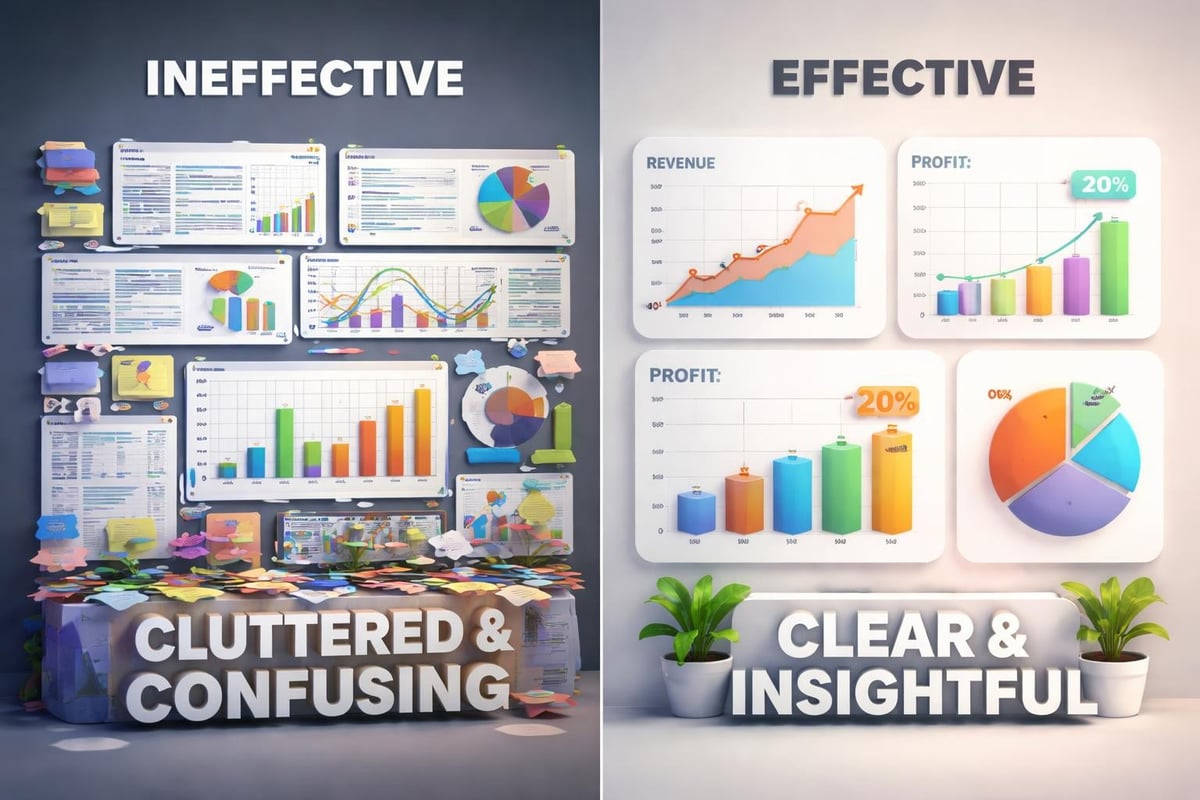
Data visualization in presentations

Content Development and Messaging

The substance of your company presentation determines its ultimate success more than any design element. Content must be thoroughly researched, precisely targeted, and strategically organized to achieve your objectives.

Crafting Compelling Headlines

Each slide headline should communicate a complete thought rather than simply labeling a topic. Instead of "Q4 Revenue," use "Q4 Revenue Exceeded Projections by 23%." This approach allows audiences to grasp your key points even if they skim through slides quickly.

Action-oriented headlines create momentum and engagement throughout your presentation. They transform passive information delivery into active storytelling that keeps audiences invested in your narrative.

Balancing Detail and Brevity

The eternal challenge in company presentations involves providing sufficient detail to support claims while maintaining audience attention. Follow the "one idea per slide" principle to prevent information overload.

Complex concepts require breakdown into digestible components:

  1. Introduce the concept at a high level
  2. Explain the mechanism or process
  3. Provide a concrete example or case study
  4. Connect back to audience benefits

This progressive disclosure keeps audiences engaged while building comprehensive understanding. The approach works particularly well when presenting company information to diverse stakeholder groups with varying levels of prior knowledge.

Technical Excellence and Professional Polish

The mechanical execution of your company presentation reveals your organization's attention to detail and commitment to quality. Small technical errors undermine credibility even when content is strong.

Typography and Readability

Font selection impacts both aesthetics and legibility. Professional presentations typically employ:

  • Sans-serif fonts for headlines and body text (Arial, Helvetica, Calibri)
  • Consistent font hierarchy with 3-4 size variations maximum
  • Sufficient contrast between text and background (minimum 4.5:1 ratio)
  • Appropriate sizing with body text never smaller than 18-20 points

Understanding PPT layout design principles ensures your content remains accessible across different viewing contexts from laptop screens to conference room projectors.

Brand Consistency and Identity

Your company presentation should reinforce brand recognition through consistent application of:

Brand Element Application Guidelines
Color Palette Primary and secondary colors used systematically
Logo Placement Consistent position across all slides
Image Style Unified aesthetic (photography vs. illustration)
Graphic Elements Repeated visual motifs and patterns

Brand consistency builds professional credibility while making your organization memorable to audiences. Presentation cover design sets the tone for this consistency from the opening slide.

Delivery Preparation and Presentation Skills

Even perfectly designed company presentations fail without effective delivery. The presenter's confidence, clarity, and connection with the audience transforms static slides into dynamic experiences.

Rehearsal Strategies

Professional presenters invest significant time in rehearsal, treating it as seriously as the presentation itself. Effective practice involves:

Recording yourself to identify verbal tics, pacing issues, and areas where content needs clarification. Video review reveals nonverbal communication patterns that audio alone misses.

Timing each section ensures you allocate appropriate attention to key points while staying within time constraints. Financial presentations particularly benefit from precise timing, as investor pitches often have strict limits.

Anticipating questions allows you to prepare thoughtful responses rather than improvising under pressure. Create a separate document of potential questions with prepared answers.

Handling Technical Challenges

Technology failures during presentations create memorable experiences for wrong reasons. Minimize risks through thorough preparation:

  • Arrive early to test all equipment and connections
  • Bring backup copies on multiple devices and cloud storage
  • Prepare a simplified version that works without internet connectivity
  • Have printed handouts available as fallback option
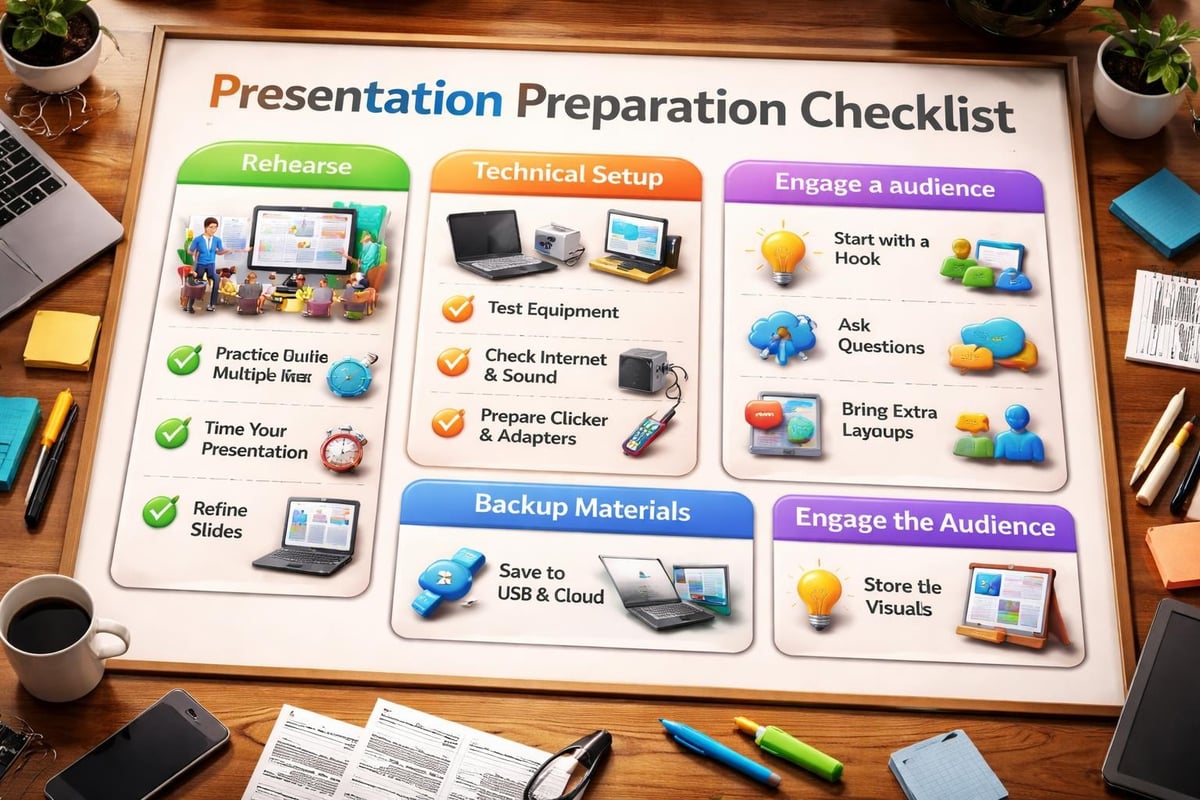
Presentation delivery preparation

Industry-Specific Considerations for Tech and Financial Sectors

Financial and tech businesses face unique presentation challenges that require specialized approaches beyond general best practices.

Financial Sector Requirements

Financial presentations demand exceptional accuracy and regulatory awareness. Every claim must be substantiated with verifiable data, and projections require clear methodology disclosure. Transparency builds trust in an industry where credibility is paramount.

Complex financial instruments and strategies need translation into accessible concepts without oversimplification. Use analogies that connect unfamiliar financial concepts to everyday experiences your audience understands.

Technology Sector Dynamics

Tech presentations balance technical depth with market opportunity. Technical audiences need sufficient detail to evaluate feasibility, while business stakeholders focus on market fit and revenue potential.

Product demonstrations within company presentations should emphasize user benefits before technical specifications. Show the outcome before explaining the mechanism. This approach maintains engagement across diverse audience segments within tech organizations.

The tips for winning company presentations emphasize adaptability-the ability to adjust technical depth based on real-time audience feedback during delivery.

Measuring Presentation Effectiveness

Evaluating presentation success requires metrics beyond subjective impressions. Establish clear success criteria aligned with your presentation objectives before delivery.

Quantitative Assessment Methods

Track specific outcomes that indicate presentation impact:

  • Conversion rates for sales presentations (meetings scheduled, proposals requested)
  • Funding secured relative to amount requested in investor pitches
  • Engagement metrics in virtual presentations (questions asked, chat participation)
  • Follow-up actions taken by audience members post-presentation

These concrete measurements reveal whether your company presentation achieved its intended business outcomes.

Qualitative Feedback Collection

Numbers tell part of the story, but qualitative insights reveal why presentations succeed or fail. Implement structured feedback collection:

Feedback Method Best Use Case Key Insights Gained
Post-presentation surveys Large audiences Overall satisfaction and clarity ratings
One-on-one interviews High-value stakeholders Detailed objections and concerns
A/B testing Recurring presentations Comparative effectiveness of different approaches

Continuous improvement through systematic feedback separates adequate presentations from exceptional ones. The presentation best practices emphasize this iterative refinement process.

Leveraging Professional Resources

Creating exceptional company presentations requires specialized skills that many organizations lack internally. Recognizing when to seek professional assistance prevents costly missteps and accelerates results.

When to Engage Presentation Specialists

Consider professional presentation design services when:

  • Stakes are exceptionally high (major investor pitches, board presentations)
  • Timeline is compressed and quality cannot be compromised
  • Internal resources lack design expertise to execute your vision
  • Brand consistency needs establishment across presentation library

Specialized agencies bring expertise in visual storytelling, data visualization, and narrative development that transforms adequate presentations into compelling business tools. Exploring professional presentation design services provides access to capabilities beyond typical internal resources.

Building Internal Capabilities

Organizations that present frequently benefit from developing internal presentation excellence. Invest in:

Template systems that ensure brand consistency while allowing flexibility for different presentation types. Well-designed templates accelerate creation while maintaining professional standards.

Training programs that develop presentation skills across teams. Presentation effectiveness improves dramatically when multiple team members can deliver with confidence.

Content libraries of approved messaging, data visualizations, and case studies that presenters can draw upon. This shared resource prevents redundant work and ensures accuracy.

Emerging Trends Shaping Company Presentations

The presentation landscape continues evolving with technological advancement and changing audience expectations. Staying current with emerging trends maintains competitive advantage.

Interactive and Dynamic Content

Static presentations increasingly give way to interactive experiences that engage audiences actively rather than passively. Embedded videos, clickable prototypes, and live data connections transform presentations from one-way broadcasts into conversations.

Financial dashboards within presentations allow real-time exploration of different scenarios during investor discussions. Tech demos incorporate actual product interaction rather than static screenshots.

Sustainability and Accessibility Focus

Modern company presentations increasingly emphasize accessibility compliance and environmental consciousness. Design choices that accommodate diverse abilities expand audience reach while demonstrating organizational values.

Alternative text for images, sufficient color contrast, and logical reading order ensure presentations work for audiences using assistive technologies. These considerations reflect professional excellence and legal compliance in many jurisdictions.

AI-Enhanced Presentation Development

Artificial intelligence tools now assist with content generation, design suggestions, and even delivery coaching. While AI cannot replace strategic thinking and creative vision, it accelerates certain production tasks significantly.

Smart layout suggestions, automated data visualization, and real-time translation capabilities enhance presentation effectiveness while reducing production time. Understanding how to leverage these tools without sacrificing authentic communication separates forward-thinking organizations from those clinging to outdated processes.


Mastering the company presentation format requires strategic thinking, design excellence, and delivery confidence working in concert. Organizations that invest in developing these capabilities gain significant competitive advantages through clearer communication and stronger stakeholder relationships. When your presentation needs demand the highest level of professional expertise-whether for a critical investor pitch, major client presentation, or executive strategy review-Prznt Perfect transforms complex information into compelling visual narratives that drive business results for financial and tech organizations.


News & Updates...

Discover how to create a professional PPT that captivates audiences and drives results. Expert strategies for financial and tech presentations.

Discover how premium ppt templates transform business presentations. Expert insights on selection, customization, and ROI for financial and tech firms.