Biotech Partnership Deck: Guide to Strategic Presentations

The biotechnology industry thrives on collaboration, and a well-crafted biotech partnership deck serves as the critical communication tool that bridges the gap between innovative science and strategic commercial alliances. Unlike investor-focused pitch decks that emphasize financial returns, partnership presentations must address a unique set of stakeholder priorities, including scientific validation, operational compatibility, intellectual property considerations, and long-term strategic alignment. When biotech companies approach pharmaceutical giants, contract research organizations, or academic institutions for collaborations, the quality of their presentation materials often determines whether initial interest transforms into meaningful dialogue.

Understanding the Biotech Partnership Deck Framework

A biotech partnership deck requires a fundamentally different approach than traditional investor presentations. The primary distinction lies in addressing mutual value creation rather than one-sided funding requests. Strategic partners evaluate biotech collaborations based on scientific credibility, operational feasibility, market potential, and risk mitigation strategies. These presentations must demonstrate how both organizations benefit from the proposed alliance while minimizing potential conflicts.

The typical partnership presentation encompasses three core dimensions: scientific excellence, commercial viability, and operational integration. Each dimension requires distinct visual storytelling approaches and data presentation methods that resonate with decision-makers across different functional areas.

Key Components of Effective Partnership Presentations

Partnership decks should include comprehensive sections covering technology platforms, clinical development status, regulatory pathways, market opportunity, competitive landscape, and proposed collaboration structures. However, the sequence and emphasis differ significantly from investor materials.

  • Technology validation and scientific foundation
  • Intellectual property landscape and freedom to operate
  • Clinical or preclinical data demonstrating proof of concept
  • Regulatory strategy and pathway clarity
  • Market analysis with addressable patient populations
  • Proposed partnership structure and value distribution
  • Resource requirements and timeline projections

According to best practices for company presentations, biotech companies should adopt a standardized framework while customizing content for specific partnership scenarios. This balance ensures consistency across multiple partnership discussions while maintaining relevance to each potential collaborator's strategic priorities.

Partnership framework components

Structuring Your Partnership Narrative

The narrative arc of a biotech partnership deck must address the "why now, why us, why together" framework that sophisticated partners use to evaluate collaboration opportunities. This structure differs from the investor-focused problem-solution-traction model.

Opening with Strategic Context

Begin partnership presentations by establishing the broader industry context and unmet medical need. Rather than focusing on company history, immediately address the therapeutic area landscape and current treatment gaps. This approach positions your technology within a familiar framework for partners already active in the space.

The opening slides should answer three critical questions: What specific patient population remains underserved? What scientific or technological barriers have prevented better solutions? How does your approach represent a paradigm shift rather than incremental improvement?

Section Investor Deck Focus Partnership Deck Focus
Opening Market size and opportunity Unmet medical need and scientific gap
Team Founder credentials and advisors Scientific expertise and operational capacity
Solution Product features and benefits Technology platform and differentiation
Traction Revenue metrics and user growth Clinical data and validation milestones
Ask Funding amount and use of proceeds Partnership scope and resource contribution

This structural distinction reflects the fundamental difference between capital providers seeking returns and strategic partners seeking complementary capabilities. Understanding how to craft professional PowerPoint presentations becomes essential for biotech companies communicating these nuanced messages effectively.

Presenting Scientific Data with Clarity

Scientific credibility forms the cornerstone of any biotech partnership deck. Partners need sufficient technical depth to evaluate your claims without becoming overwhelmed by excessive detail. The presentation must strike a delicate balance between demonstrating expertise and maintaining accessibility for non-specialist decision-makers.

Key considerations for presenting scientific content include:

  1. Use simplified mechanism of action diagrams that highlight differentiation
  2. Present clinical or preclinical data with appropriate context and benchmarks
  3. Include clear explanations of statistical significance and clinical relevance
  4. Address potential safety concerns proactively
  5. Demonstrate understanding of the competitive scientific landscape

Research from building scalable partnership models shows that early-stage biotech companies benefit significantly from presenting data within frameworks that larger pharmaceutical partners already understand and use internally.

Designing Visual Elements for Maximum Impact

Visual design quality directly impacts how partners perceive your organization's professionalism and attention to detail. A poorly designed biotech partnership deck signals potential operational weaknesses, while sophisticated design demonstrates the organizational maturity necessary for complex collaborations.

Data Visualization Best Practices

Complex scientific and clinical data requires thoughtful visualization approaches that enhance comprehension rather than creating confusion. Tables work well for detailed specifications, while charts excel at showing trends, comparisons, and relationships.

Effective biotech presentations leverage custom graphics that simplify complex biological processes, clinical trial designs, and market dynamics. Generic stock images undermine credibility, while purpose-built illustrations demonstrate thorough preparation and strategic thinking.

Companies seeking to elevate their presentation quality often explore options from professional presentation design agencies that specialize in transforming technical content into compelling visual narratives. This investment proves particularly valuable when approaching multiple partnership opportunities simultaneously.

Data visualization techniques

Consistency and Brand Alignment

Partnership presentations represent your organization's brand just as much as your website or marketing materials. Visual consistency across all slides signals operational discipline and professionalism. This includes maintaining uniform typography, color schemes, spacing, and graphic styles throughout the deck.

Brand alignment extends beyond aesthetics to include messaging consistency. The partnership deck should reflect the same positioning, value propositions, and strategic priorities communicated through other channels. Misalignment between different communication materials raises questions about organizational clarity and leadership alignment.

Addressing Partnership-Specific Considerations

Unlike investor presentations that focus primarily on financial projections and exit scenarios, biotech partnership decks must address operational integration, governance structures, and value distribution mechanisms.

Intellectual Property and Deal Structure

Potential partners require clear understanding of intellectual property ownership, licensing arrangements, and freedom to operate. The biotech partnership deck should include a dedicated section outlining IP assets, patent status, and proposed collaboration frameworks.

Common partnership structures include:

  • Research collaborations with shared IP rights to new discoveries
  • Licensing agreements with milestone payments and royalties
  • Co-development arrangements with shared costs and profits
  • Platform access deals with defined application areas
  • Acquisition with earnouts tied to development milestones

Guidelines for structuring commercial partnerships emphasize the importance of clarity around decision-making authority, resource commitments, and exit provisions from the earliest partnership discussions.

Resource Requirements and Timeline Projections

Strategic partners evaluate collaboration opportunities based on required resource commitments and expected timelines. The partnership deck should provide detailed projections of financial requirements, headcount needs, facility access, and specialized equipment or capabilities.

Development Stage Typical Duration Resource Requirements Partner Contribution Areas
Preclinical 2-4 years Animal studies, toxicology, formulation Assay development, regulatory guidance
Phase I 1-2 years Clinical sites, patient recruitment, monitoring Trial design, safety monitoring
Phase II 2-3 years Expanded patient cohorts, biomarker analysis Statistical analysis, protocol optimization
Phase III 3-5 years Multi-site coordination, manufacturing scale-up Regulatory strategy, commercial planning

This transparency builds trust and enables partners to assess whether the collaboration aligns with their strategic capacity and priorities. Insights from biotech partnerships guides demonstrate that successful collaborations begin with realistic resource projections and shared understanding of development timelines.

Tailoring Content for Different Partnership Types

The biotech partnership deck format requires customization based on the partnership objective. A research collaboration with an academic institution demands different emphasis than a commercial licensing discussion with a pharmaceutical company.

Academic and Research Institution Partnerships

Academic partnerships typically focus on scientific collaboration, publication rights, and student training opportunities rather than commercial terms. Presentations for research institutions should emphasize scientific advancement, methodology innovation, and knowledge generation.

Key slides for academic partnership decks include research objectives, proposed methodologies, publication strategies, and intellectual property handling for academic discoveries. These presentations generally require less commercial focus but greater scientific depth than pharmaceutical partnership materials.

Pharmaceutical and Biotech Company Collaborations

Commercial partnerships with pharmaceutical or biotech companies require comprehensive coverage of market opportunity, competitive positioning, and financial projections. These stakeholders evaluate collaborations through commercial viability lenses alongside scientific merit.

Tips for delivering effective partnering presentations stress the importance of understanding partner strategic priorities and tailoring content accordingly. A company focused on oncology partnerships needs different competitive analysis than one pursuing rare disease collaborations.

Contract Research and Manufacturing Partnerships

Operational partnerships with contract research organizations or manufacturing partners emphasize quality systems, capacity planning, and timeline reliability. These decks should highlight operational capabilities, quality certifications, and track records of successful project delivery.

The presentation structure for operational partnerships includes facility specifications, quality management systems, capacity availability, and case studies of similar successful collaborations. Companies in sectors requiring specialized manufacturing, such as those working with research peptides or other complex biologics, particularly benefit from demonstrating operational excellence and quality assurance capabilities.

Partnership presentation types

Delivering Partnership Presentations Effectively

Content quality means little without effective delivery. The biotech partnership deck serves as a visual aid supporting strategic conversations, not a standalone document. Presentation delivery skills often determine whether partners move forward with collaboration discussions.

Preparation and Rehearsal Strategies

Thorough preparation involves anticipating questions, preparing supporting materials, and coordinating team member roles. Partnership presentations typically involve multiple stakeholders with different expertise areas, requiring careful orchestration.

Effective preparation steps include:

  1. Conduct internal dry runs with colleagues playing partner roles
  2. Prepare detailed appendix slides addressing likely technical questions
  3. Coordinate speaking roles among team members based on expertise
  4. Develop consistent messaging across different presenters
  5. Practice transitions between speakers and sections

Resources on what biotech investor presentations are and are not provide valuable frameworks for understanding presentation theory applications in life sciences contexts, helping presenters refine their delivery approaches.

Managing Q&A Sessions

Question-and-answer sessions following biotech partnership presentations often determine collaboration outcomes. Partners use Q&A to probe technical details, assess team expertise, and evaluate organizational capabilities.

Effective Q&A management requires honesty about uncertainties, depth of technical knowledge, and ability to connect scientific details to strategic objectives. Attempting to answer questions outside your expertise undermines credibility more than acknowledging limitations and offering to follow up with specialists.

Common Mistakes to Avoid

Even experienced biotech executives make preventable errors when creating partnership presentations. Understanding these pitfalls helps teams develop stronger materials that advance partnership objectives.

Overloading Slides with Technical Detail

The most common biotech partnership deck mistake involves excessive technical complexity that overwhelms non-specialist decision-makers. While scientific rigor matters, presentations must remain accessible to executives from legal, business development, and commercial functions.

Balance technical depth with accessibility by using appendix slides for detailed data, supplementary materials for deep dives, and verbal explanations for nuanced scientific points. The main presentation should enable understanding without requiring advanced degrees in molecular biology.

Neglecting Commercial Considerations

Scientific excellence alone rarely secures partnerships. Partners need confidence in market opportunity, competitive positioning, and revenue potential. Biotech companies sometimes focus so heavily on science that commercial viability questions remain unaddressed.

Include market sizing with bottom-up validation, competitive analysis highlighting sustainable differentiation, and pricing strategies based on value demonstration. These commercial elements reassure partners that scientific innovation translates to business success.

Generic Partnership Proposals

Template-based partnership decks that lack customization for specific potential partners signal minimal commitment. Every partnership presentation should reflect research into the partner's strategic priorities, portfolio gaps, and organizational culture.

Customization includes referencing the partner's existing products, highlighting complementary capabilities, and proposing collaboration structures aligned with their standard practices. This preparation demonstrates serious interest and increases partnership probability.

Weak Visual Design

Poor design quality undermines otherwise strong scientific and commercial content. Inconsistent fonts, cluttered layouts, low-resolution images, and amateurish graphics create negative impressions about organizational capabilities.

Investment in professional PowerPoint design services pays dividends by ensuring partnership materials reflect the sophistication and professionalism necessary for major collaborations. Companies working with specialized sectors, such as those requiring premium quality peptides for research applications, particularly benefit from presentation quality that matches their scientific rigor.

Measuring Partnership Deck Effectiveness

Biotech companies should track partnership presentation performance to identify improvement opportunities and refine materials over time. Unlike investor pitches with clear funding outcomes, partnership discussions involve longer timelines and multiple touchpoints.

Key Performance Indicators

Relevant metrics for biotech partnership deck effectiveness include:

  • Initial meeting conversion rates to follow-up discussions
  • Time from presentation to term sheet or collaboration agreement
  • Number of technical questions requiring follow-up information
  • Partner feedback scores on presentation clarity and completeness
  • Comparison of outcomes between different presentation versions

Tracking these metrics enables continuous improvement and helps organizations understand which messages resonate with different partner types. Companies pursuing diverse partnership strategies, including those exploring international opportunities through services like citizenship by investment programs, benefit from systematic performance tracking across different contexts.

Iterative Refinement Process

The most effective biotech partnership decks evolve through systematic refinement based on partner feedback and presentation outcomes. Regular updates ensure content remains current with clinical progress, competitive developments, and strategic priorities.

Establish quarterly review processes to update data, refresh competitive analysis, incorporate new clinical results, and refine messaging based on partner interactions. This discipline ensures partnership materials accurately represent organizational capabilities and strategic direction.

Advanced Techniques for Partnership Presentations

Sophisticated biotech companies employ advanced techniques that differentiate their partnership presentations from competitors. These approaches demonstrate strategic thinking and organizational maturity that appeal to potential collaborators.

Scenario-Based Partnership Modeling

Rather than proposing a single collaboration structure, advanced partnership decks present multiple scenarios with different risk-sharing, value-distribution, and decision-making frameworks. This approach enables partners to select structures aligning with their strategic preferences and risk tolerance.

Scenario modeling includes optimistic, base, and conservative projections for development timelines, resource requirements, and commercial outcomes. This transparency builds credibility and facilitates productive negotiation discussions.

Case studies on building trust in biotech partnering demonstrate how scenario-based approaches accelerate partnership discussions by addressing partner concerns proactively.

Interactive Data Presentations

Technology-enabled presentations allow real-time manipulation of assumptions, parameters, and scenarios during partnership discussions. Interactive elements enable partners to explore different collaboration structures dynamically rather than reviewing static slides.

Tools for interactive presentations include embedded calculators for milestone payments, adjustable timelines for development scenarios, and clickable competitive landscape maps. These capabilities transform passive presentations into collaborative exploration sessions.

Supplementary Materials Strategy

Comprehensive partnership materials extend beyond the core presentation to include detailed appendices, executive summaries, one-page overviews, and leave-behind documents. Strategic use of supplementary materials enables different stakeholders to access appropriate detail levels.

Effective supplementary material packages include technical appendices with detailed scientific data, commercial appendices with comprehensive market analysis, executive summaries for senior leadership, and one-page overviews for quick reference. This approach recognizes that partnership decisions involve multiple stakeholders with different information needs.


Mastering the biotech partnership deck requires balancing scientific depth with commercial clarity, technical precision with visual accessibility, and standardized frameworks with partner-specific customization. Companies that invest in developing sophisticated partnership materials position themselves for more productive collaboration discussions and ultimately more favorable partnership terms. Whether you're preparing for your first partnership presentation or refining materials for established programs, Prznt Perfect specializes in transforming complex biotech narratives into visually compelling presentations that resonate with strategic partners and accelerate collaboration timelines.

We offer free 30-min consultation on the presentation design audit
and hiring the right visual 
comms professional, let’s talk!
Shedule a call
Shedule a call
"I understand" goes a step further into the cognitive dance of persuasion. It's where the audience begins to see the connections between the facts, to grasp the nuances of the problem and the elegance of the solution.
  • This is some text inside of a div block.
    lay out the facts clearly and compellingly. Use data to establish the ground reality, but remember that facts alone are like the individual strands of a tapestry—necessary but not complete.
    lay out the facts clearly and compellingly. Use data to establish the ground reality, but remember that facts alone are like the individual strands of a tapestry—necessary but not complete.
  • This is some text inside of a div block.
    lay out the facts clearly and compellingly. Use data to establish the ground reality, but remember that facts alone are like the individual strands of a tapestry—necessary but not complete.

We offer free 30-min consultation on the presentation design audit

and hiring the right visual 
comms professional, let’s talk!

Shedule a call

"I understand" goes a step further into the cognitive dance of persuasion. It's where the audience begins to see the connections between the facts, to grasp the nuances of the problem and the elegance of the solution.

  • - 1 -
    Consistency at Scale:

    Biotech Market Trends 2024: Tailoring Your Pitch Deck to Current Industry Dynamics.

  • - 2 -
    Efficiency and Speed:

    The traditional process of manually updating presentations is not only slow but also prone to bottlenecks, especially when dealing with large volumes of slides. Automation dramatically accelerates this process, enabling designers to apply changes across hundreds of slides in the time it would take to manually update a single one. This efficiency is a game-changer for agencies working under tight deadlines or managing multiple projects simultaneously.

  • - 3 -
    Enhanced Creativity:

    With the burden of manual updates lifted, designers can allocate more time and energy to the creative aspects of presentation design. This freedom allows for deeper exploration of innovative design concepts, experimentation with new visual storytelling techniques, and the development of more engaging and interactive presentations. Automation doesn't stifle creativity; it amplifies it, enabling designers to push the boundaries of what's possible in corporate presentation design.

  • - 4 -
    Error Reduction:

    Manual updates are inherently prone to inconsistencies and mistakes, from misaligned logos to incorrect font sizes. These errors can detract from the professionalism of a presentation and, by extension, the corporate image. Automation minimizes these risks by ensuring that updates are applied uniformly and accurately across all slides, enhancing the overall quality and integrity of the presentation.

  • - 5 -
    Cost-Effectiveness:

    The time savings afforded by automation directly translate to cost savings for both the design agency and its clients. By reducing the hours spent on manual updates, agencies can optimize their workflows and resources, allowing them to take on more projects without compromising on quality. This efficiency can also make high-quality presentation design services more affordable and accessible to a broader range of businesses.

Biotech Partnership Deck: Guide to Strategic Presentations

Master the biotech partnership deck with expert strategies for structuring, designing, and delivering presentations that secure strategic collaborations.

The biotechnology industry thrives on collaboration, and a well-crafted biotech partnership deck serves as the critical communication tool that bridges the gap between innovative science and strategic commercial alliances. Unlike investor-focused pitch decks that emphasize financial returns, partnership presentations must address a unique set of stakeholder priorities, including scientific validation, operational compatibility, intellectual property considerations, and long-term strategic alignment. When biotech companies approach pharmaceutical giants, contract research organizations, or academic institutions for collaborations, the quality of their presentation materials often determines whether initial interest transforms into meaningful dialogue.

Understanding the Biotech Partnership Deck Framework

A biotech partnership deck requires a fundamentally different approach than traditional investor presentations. The primary distinction lies in addressing mutual value creation rather than one-sided funding requests. Strategic partners evaluate biotech collaborations based on scientific credibility, operational feasibility, market potential, and risk mitigation strategies. These presentations must demonstrate how both organizations benefit from the proposed alliance while minimizing potential conflicts.

The typical partnership presentation encompasses three core dimensions: scientific excellence, commercial viability, and operational integration. Each dimension requires distinct visual storytelling approaches and data presentation methods that resonate with decision-makers across different functional areas.

Key Components of Effective Partnership Presentations

Partnership decks should include comprehensive sections covering technology platforms, clinical development status, regulatory pathways, market opportunity, competitive landscape, and proposed collaboration structures. However, the sequence and emphasis differ significantly from investor materials.

  • Technology validation and scientific foundation
  • Intellectual property landscape and freedom to operate
  • Clinical or preclinical data demonstrating proof of concept
  • Regulatory strategy and pathway clarity
  • Market analysis with addressable patient populations
  • Proposed partnership structure and value distribution
  • Resource requirements and timeline projections

According to best practices for company presentations, biotech companies should adopt a standardized framework while customizing content for specific partnership scenarios. This balance ensures consistency across multiple partnership discussions while maintaining relevance to each potential collaborator's strategic priorities.

Partnership framework components

Structuring Your Partnership Narrative

The narrative arc of a biotech partnership deck must address the "why now, why us, why together" framework that sophisticated partners use to evaluate collaboration opportunities. This structure differs from the investor-focused problem-solution-traction model.

Opening with Strategic Context

Begin partnership presentations by establishing the broader industry context and unmet medical need. Rather than focusing on company history, immediately address the therapeutic area landscape and current treatment gaps. This approach positions your technology within a familiar framework for partners already active in the space.

The opening slides should answer three critical questions: What specific patient population remains underserved? What scientific or technological barriers have prevented better solutions? How does your approach represent a paradigm shift rather than incremental improvement?

Section Investor Deck Focus Partnership Deck Focus
Opening Market size and opportunity Unmet medical need and scientific gap
Team Founder credentials and advisors Scientific expertise and operational capacity
Solution Product features and benefits Technology platform and differentiation
Traction Revenue metrics and user growth Clinical data and validation milestones
Ask Funding amount and use of proceeds Partnership scope and resource contribution

This structural distinction reflects the fundamental difference between capital providers seeking returns and strategic partners seeking complementary capabilities. Understanding how to craft professional PowerPoint presentations becomes essential for biotech companies communicating these nuanced messages effectively.

Presenting Scientific Data with Clarity

Scientific credibility forms the cornerstone of any biotech partnership deck. Partners need sufficient technical depth to evaluate your claims without becoming overwhelmed by excessive detail. The presentation must strike a delicate balance between demonstrating expertise and maintaining accessibility for non-specialist decision-makers.

Key considerations for presenting scientific content include:

  1. Use simplified mechanism of action diagrams that highlight differentiation
  2. Present clinical or preclinical data with appropriate context and benchmarks
  3. Include clear explanations of statistical significance and clinical relevance
  4. Address potential safety concerns proactively
  5. Demonstrate understanding of the competitive scientific landscape

Research from building scalable partnership models shows that early-stage biotech companies benefit significantly from presenting data within frameworks that larger pharmaceutical partners already understand and use internally.

Designing Visual Elements for Maximum Impact

Visual design quality directly impacts how partners perceive your organization's professionalism and attention to detail. A poorly designed biotech partnership deck signals potential operational weaknesses, while sophisticated design demonstrates the organizational maturity necessary for complex collaborations.

Data Visualization Best Practices

Complex scientific and clinical data requires thoughtful visualization approaches that enhance comprehension rather than creating confusion. Tables work well for detailed specifications, while charts excel at showing trends, comparisons, and relationships.

Effective biotech presentations leverage custom graphics that simplify complex biological processes, clinical trial designs, and market dynamics. Generic stock images undermine credibility, while purpose-built illustrations demonstrate thorough preparation and strategic thinking.

Companies seeking to elevate their presentation quality often explore options from professional presentation design agencies that specialize in transforming technical content into compelling visual narratives. This investment proves particularly valuable when approaching multiple partnership opportunities simultaneously.
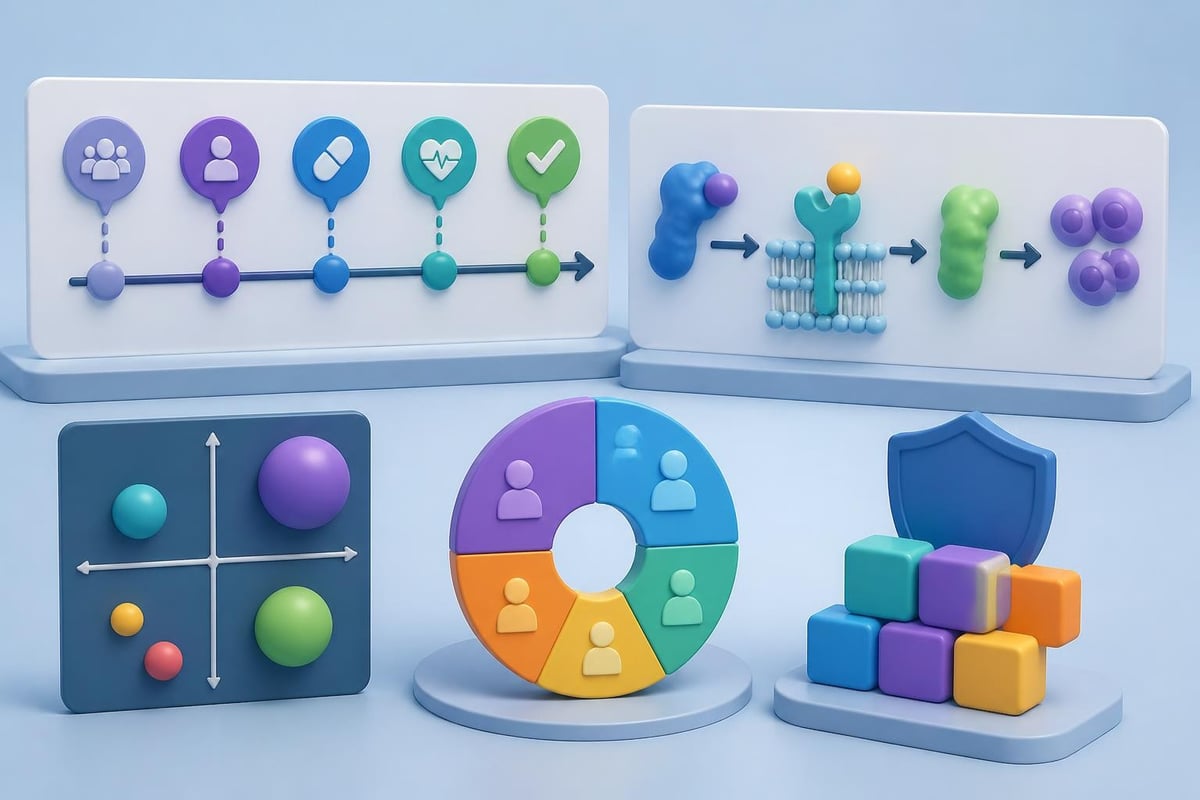
Data visualization techniques

Consistency and Brand Alignment

Partnership presentations represent your organization's brand just as much as your website or marketing materials. Visual consistency across all slides signals operational discipline and professionalism. This includes maintaining uniform typography, color schemes, spacing, and graphic styles throughout the deck.

Brand alignment extends beyond aesthetics to include messaging consistency. The partnership deck should reflect the same positioning, value propositions, and strategic priorities communicated through other channels. Misalignment between different communication materials raises questions about organizational clarity and leadership alignment.

Addressing Partnership-Specific Considerations

Unlike investor presentations that focus primarily on financial projections and exit scenarios, biotech partnership decks must address operational integration, governance structures, and value distribution mechanisms.

Intellectual Property and Deal Structure

Potential partners require clear understanding of intellectual property ownership, licensing arrangements, and freedom to operate. The biotech partnership deck should include a dedicated section outlining IP assets, patent status, and proposed collaboration frameworks.

Common partnership structures include:

  • Research collaborations with shared IP rights to new discoveries
  • Licensing agreements with milestone payments and royalties
  • Co-development arrangements with shared costs and profits
  • Platform access deals with defined application areas
  • Acquisition with earnouts tied to development milestones

Guidelines for structuring commercial partnerships emphasize the importance of clarity around decision-making authority, resource commitments, and exit provisions from the earliest partnership discussions.

Resource Requirements and Timeline Projections

Strategic partners evaluate collaboration opportunities based on required resource commitments and expected timelines. The partnership deck should provide detailed projections of financial requirements, headcount needs, facility access, and specialized equipment or capabilities.

Development Stage Typical Duration Resource Requirements Partner Contribution Areas
Preclinical 2-4 years Animal studies, toxicology, formulation Assay development, regulatory guidance
Phase I 1-2 years Clinical sites, patient recruitment, monitoring Trial design, safety monitoring
Phase II 2-3 years Expanded patient cohorts, biomarker analysis Statistical analysis, protocol optimization
Phase III 3-5 years Multi-site coordination, manufacturing scale-up Regulatory strategy, commercial planning

This transparency builds trust and enables partners to assess whether the collaboration aligns with their strategic capacity and priorities. Insights from biotech partnerships guides demonstrate that successful collaborations begin with realistic resource projections and shared understanding of development timelines.

Tailoring Content for Different Partnership Types

The biotech partnership deck format requires customization based on the partnership objective. A research collaboration with an academic institution demands different emphasis than a commercial licensing discussion with a pharmaceutical company.

Academic and Research Institution Partnerships

Academic partnerships typically focus on scientific collaboration, publication rights, and student training opportunities rather than commercial terms. Presentations for research institutions should emphasize scientific advancement, methodology innovation, and knowledge generation.

Key slides for academic partnership decks include research objectives, proposed methodologies, publication strategies, and intellectual property handling for academic discoveries. These presentations generally require less commercial focus but greater scientific depth than pharmaceutical partnership materials.

Pharmaceutical and Biotech Company Collaborations

Commercial partnerships with pharmaceutical or biotech companies require comprehensive coverage of market opportunity, competitive positioning, and financial projections. These stakeholders evaluate collaborations through commercial viability lenses alongside scientific merit.

Tips for delivering effective partnering presentations stress the importance of understanding partner strategic priorities and tailoring content accordingly. A company focused on oncology partnerships needs different competitive analysis than one pursuing rare disease collaborations.

Contract Research and Manufacturing Partnerships

Operational partnerships with contract research organizations or manufacturing partners emphasize quality systems, capacity planning, and timeline reliability. These decks should highlight operational capabilities, quality certifications, and track records of successful project delivery.

The presentation structure for operational partnerships includes facility specifications, quality management systems, capacity availability, and case studies of similar successful collaborations. Companies in sectors requiring specialized manufacturing, such as those working with research peptides or other complex biologics, particularly benefit from demonstrating operational excellence and quality assurance capabilities.

Partnership presentation types

Delivering Partnership Presentations Effectively

Content quality means little without effective delivery. The biotech partnership deck serves as a visual aid supporting strategic conversations, not a standalone document. Presentation delivery skills often determine whether partners move forward with collaboration discussions.

Preparation and Rehearsal Strategies

Thorough preparation involves anticipating questions, preparing supporting materials, and coordinating team member roles. Partnership presentations typically involve multiple stakeholders with different expertise areas, requiring careful orchestration.

Effective preparation steps include:

  1. Conduct internal dry runs with colleagues playing partner roles
  2. Prepare detailed appendix slides addressing likely technical questions
  3. Coordinate speaking roles among team members based on expertise
  4. Develop consistent messaging across different presenters
  5. Practice transitions between speakers and sections

Resources on what biotech investor presentations are and are not provide valuable frameworks for understanding presentation theory applications in life sciences contexts, helping presenters refine their delivery approaches.

Managing Q&A Sessions

Question-and-answer sessions following biotech partnership presentations often determine collaboration outcomes. Partners use Q&A to probe technical details, assess team expertise, and evaluate organizational capabilities.

Effective Q&A management requires honesty about uncertainties, depth of technical knowledge, and ability to connect scientific details to strategic objectives. Attempting to answer questions outside your expertise undermines credibility more than acknowledging limitations and offering to follow up with specialists.

Common Mistakes to Avoid

Even experienced biotech executives make preventable errors when creating partnership presentations. Understanding these pitfalls helps teams develop stronger materials that advance partnership objectives.

Overloading Slides with Technical Detail

The most common biotech partnership deck mistake involves excessive technical complexity that overwhelms non-specialist decision-makers. While scientific rigor matters, presentations must remain accessible to executives from legal, business development, and commercial functions.

Balance technical depth with accessibility by using appendix slides for detailed data, supplementary materials for deep dives, and verbal explanations for nuanced scientific points. The main presentation should enable understanding without requiring advanced degrees in molecular biology.

Neglecting Commercial Considerations

Scientific excellence alone rarely secures partnerships. Partners need confidence in market opportunity, competitive positioning, and revenue potential. Biotech companies sometimes focus so heavily on science that commercial viability questions remain unaddressed.

Include market sizing with bottom-up validation, competitive analysis highlighting sustainable differentiation, and pricing strategies based on value demonstration. These commercial elements reassure partners that scientific innovation translates to business success.

Generic Partnership Proposals

Template-based partnership decks that lack customization for specific potential partners signal minimal commitment. Every partnership presentation should reflect research into the partner's strategic priorities, portfolio gaps, and organizational culture.

Customization includes referencing the partner's existing products, highlighting complementary capabilities, and proposing collaboration structures aligned with their standard practices. This preparation demonstrates serious interest and increases partnership probability.

Weak Visual Design

Poor design quality undermines otherwise strong scientific and commercial content. Inconsistent fonts, cluttered layouts, low-resolution images, and amateurish graphics create negative impressions about organizational capabilities.

Investment in professional PowerPoint design services pays dividends by ensuring partnership materials reflect the sophistication and professionalism necessary for major collaborations. Companies working with specialized sectors, such as those requiring premium quality peptides for research applications, particularly benefit from presentation quality that matches their scientific rigor.

Measuring Partnership Deck Effectiveness

Biotech companies should track partnership presentation performance to identify improvement opportunities and refine materials over time. Unlike investor pitches with clear funding outcomes, partnership discussions involve longer timelines and multiple touchpoints.

Key Performance Indicators

Relevant metrics for biotech partnership deck effectiveness include:

  • Initial meeting conversion rates to follow-up discussions
  • Time from presentation to term sheet or collaboration agreement
  • Number of technical questions requiring follow-up information
  • Partner feedback scores on presentation clarity and completeness
  • Comparison of outcomes between different presentation versions

Tracking these metrics enables continuous improvement and helps organizations understand which messages resonate with different partner types. Companies pursuing diverse partnership strategies, including those exploring international opportunities through services like citizenship by investment programs, benefit from systematic performance tracking across different contexts.

Iterative Refinement Process

The most effective biotech partnership decks evolve through systematic refinement based on partner feedback and presentation outcomes. Regular updates ensure content remains current with clinical progress, competitive developments, and strategic priorities.

Establish quarterly review processes to update data, refresh competitive analysis, incorporate new clinical results, and refine messaging based on partner interactions. This discipline ensures partnership materials accurately represent organizational capabilities and strategic direction.

Advanced Techniques for Partnership Presentations

Sophisticated biotech companies employ advanced techniques that differentiate their partnership presentations from competitors. These approaches demonstrate strategic thinking and organizational maturity that appeal to potential collaborators.

Scenario-Based Partnership Modeling

Rather than proposing a single collaboration structure, advanced partnership decks present multiple scenarios with different risk-sharing, value-distribution, and decision-making frameworks. This approach enables partners to select structures aligning with their strategic preferences and risk tolerance.

Scenario modeling includes optimistic, base, and conservative projections for development timelines, resource requirements, and commercial outcomes. This transparency builds credibility and facilitates productive negotiation discussions.

Case studies on building trust in biotech partnering demonstrate how scenario-based approaches accelerate partnership discussions by addressing partner concerns proactively.

Interactive Data Presentations

Technology-enabled presentations allow real-time manipulation of assumptions, parameters, and scenarios during partnership discussions. Interactive elements enable partners to explore different collaboration structures dynamically rather than reviewing static slides.

Tools for interactive presentations include embedded calculators for milestone payments, adjustable timelines for development scenarios, and clickable competitive landscape maps. These capabilities transform passive presentations into collaborative exploration sessions.

Supplementary Materials Strategy

Comprehensive partnership materials extend beyond the core presentation to include detailed appendices, executive summaries, one-page overviews, and leave-behind documents. Strategic use of supplementary materials enables different stakeholders to access appropriate detail levels.

Effective supplementary material packages include technical appendices with detailed scientific data, commercial appendices with comprehensive market analysis, executive summaries for senior leadership, and one-page overviews for quick reference. This approach recognizes that partnership decisions involve multiple stakeholders with different information needs.


Mastering the biotech partnership deck requires balancing scientific depth with commercial clarity, technical precision with visual accessibility, and standardized frameworks with partner-specific customization. Companies that invest in developing sophisticated partnership materials position themselves for more productive collaboration discussions and ultimately more favorable partnership terms. Whether you're preparing for your first partnership presentation or refining materials for established programs, Prznt Perfect specializes in transforming complex biotech narratives into visually compelling presentations that resonate with strategic partners and accelerate collaboration timelines.


News & Updates...

Discover which companies hire art directors in 2026. Explore top industries, hiring trends, and what leading employers seek in creative leadership.

Discover how to hire the right art director for your presentation and visual design projects. Expert insights on sourcing, evaluating, and working with freelance art directors.