24-Hour Pitch Deck Services: Fast Turnaround Solutions

In today's fast-paced business environment, opportunities often emerge with minimal warning. A last-minute investor meeting, an unexpected pitch competition, or a sudden board presentation can catch even the most prepared entrepreneurs off guard. When time is scarce and stakes are high, 24-hour pitch deck services provide the critical support needed to transform rough ideas into polished, investor-ready presentations. These specialized services combine design expertise, strategic thinking, and rapid execution to deliver professional results under extreme time constraints.

Understanding the Need for Rapid Turnaround Services

The traditional timeline for creating a comprehensive pitch deck typically spans weeks, involving multiple rounds of revisions, stakeholder feedback, and design iterations. However, business realities don't always accommodate ideal timelines.

Urgent situations requiring immediate pitch deck support include:

  • Unexpected investor meetings scheduled within 48 hours
  • Last-minute conference speaking opportunities
  • Board presentations moved forward unexpectedly
  • Competitive pitch competitions with tight deadlines
  • Critical partnership proposals requiring immediate response

The financial and tech sectors particularly face these time-sensitive scenarios. A well-crafted VC pitch deck shapes critical first impressions with potential investors, making professional execution essential even under compressed timelines. When founders lack the bandwidth or expertise to create compelling presentations quickly, specialized agencies bridge this gap.

Time-critical business scenarios requiring fast pitch deck creation

The Challenge of Speed Without Sacrificing Quality

Many entrepreneurs assume they must choose between speed and quality when facing tight deadlines. This false dichotomy has led countless startups to present subpar materials that fail to capture their true value proposition.

Professional 24-hour pitch deck services challenge this assumption by deploying specialized workflows, experienced teams, and proven frameworks that accelerate production without compromising impact. These services understand that pitch decks serve specific purposes in securing investor interest, making strategic design decisions critical regardless of timeline constraints.

The key differentiator lies in process optimization. Rather than condensing a weeks-long timeline proportionally, rapid services restructure workflows entirely, eliminating redundancies while preserving essential quality checkpoints.

What Distinguishes Professional Express Services

Not all rapid design services deliver equivalent results. The difference between exceptional and mediocre 24-hour pitch deck services becomes apparent in their approach, expertise, and execution standards.

Service Feature Standard Services Professional Express Services
Designer Experience Mixed skill levels Senior designers only
Industry Expertise Generalist approach Specialized in finance/tech
Revision Rounds Limited or none Structured feedback loops
Strategic Input Design execution only Strategic consulting included
Brand Consistency Template-based Custom brand integration

Deep Industry Knowledge Makes the Difference

Generic presentation designers can arrange slides attractively, but creating compelling pitch decks requires understanding what investors actually evaluate. Professional services specializing in financial and tech presentations bring nuanced knowledge of sector-specific expectations, valuation frameworks, and competitive positioning strategies.

This expertise manifests in knowing which metrics matter most for different funding stages, how to structure complex technical concepts for non-technical audiences, and which design principles capture investor attention most effectively. For instance, understanding that seed-stage investors prioritize team and market opportunity differently than Series B investors fundamentally changes deck structure and emphasis.

Critical industry knowledge areas include:

  • Financial modeling presentation standards
  • Technology stack visualization best practices
  • Competitive landscape mapping techniques
  • Market sizing methodologies
  • Traction metrics presentation

When working with Series B pitch decks, experienced designers know to emphasize unit economics, customer acquisition costs, and scalability evidence rather than focusing primarily on vision and team credentials appropriate for earlier stages.

The Streamlined Process Behind Express Delivery

Delivering professional results within 24 hours requires meticulously engineered processes that maximize efficiency without creating quality bottlenecks. Understanding this workflow helps clients prepare for successful collaboration.

Initial Consultation and Information Gathering

The express timeline begins with a focused intake session, typically lasting 30-60 minutes. During this critical phase, designers extract essential information about your business, target audience, key messages, and specific presentation context.

Efficient intake sessions cover:

  1. Business fundamentals - value proposition, business model, target market
  2. Audience profile - investor types, knowledge level, specific interests
  3. Key objectives - funding amount, partnership goals, validation targets
  4. Existing assets - brand guidelines, previous decks, data sources
  5. Critical constraints - must-include elements, compliance requirements, brand restrictions

This concentrated discovery phase replaces the typically elongated back-and-forth that characterizes traditional design projects. By front-loading information gathering, professional services minimize mid-project delays caused by missing details or unclear requirements.

Structured intake process for rapid pitch deck development

Parallel Workstreams and Specialized Roles

Rather than sequential handoffs between writers, designers, and strategists, express services deploy parallel workstreams where specialized team members work simultaneously on different deck components.

While one designer develops the visual framework and establishes design systems, a content strategist refines messaging architecture and narrative flow. A data visualization specialist simultaneously transforms financial models and metrics into clear, compelling graphics. This parallel approach compresses timelines dramatically compared to traditional waterfall methods.

The coordination required for this approach demands experienced project managers who orchestrate multiple specialists without creating communication overhead. Agencies offering professional PowerPoint services at this level have refined these orchestration capabilities through hundreds of rapid-turnaround projects.

Essential Elements Delivered Under Tight Deadlines

Even with compressed timelines, comprehensive pitch decks must address specific elements that investors expect. Professional 24-hour pitch deck services prioritize these critical components while streamlining secondary elements.

Core Narrative Architecture

Every effective pitch deck tells a coherent story that guides investors through your opportunity logically and compellingly. This narrative structure forms the foundation upon which visual design builds impact.

The standard framework includes problem identification, solution presentation, market opportunity quantification, business model explanation, competitive differentiation, traction demonstration, team introduction, and funding requirements. However, the complete guide to startup pitch decks reveals that specific emphasis and ordering vary significantly based on industry, funding stage, and investor profile.

Express services excel at quickly identifying the optimal narrative sequence for your specific situation rather than applying generic templates uniformly. For fintech companies, leading with regulatory compliance and security infrastructure might precede market opportunity, while consumer tech startups typically foreground user engagement metrics earlier in their narrative.

Visual Hierarchy and Information Design

Poor visual hierarchy forces investors to work harder decoding your message, creating cognitive load that diminishes persuasiveness. Professional designers understand that designing professional pitch decks requires deliberate attention to simplicity, clarity, and visual organization.

Even under time pressure, effective services maintain rigorous standards for:

  • Typography hierarchy - clear distinction between headlines, subheadings, and body text
  • Color consistency - strategic use of brand colors to guide attention and create emphasis
  • White space management - preventing overcrowded slides that overwhelm viewers
  • Data visualization - transforming complex numbers into immediately understandable graphics
  • Icon usage - supporting concepts with consistent, professional iconography

These principles apply whether creating completely custom designs or working with minimal PowerPoint templates as starting frameworks. The discipline lies in resisting the temptation to cram excessive information onto slides despite time constraints encouraging shortcuts.

Strategic Considerations for Different Business Stages

The specific content and emphasis appropriate for pitch decks varies substantially across funding stages, making strategic customization essential even in rapid-turnaround scenarios.

Funding Stage Primary Focus Key Metrics Typical Deck Length
Pre-Seed Problem-solution fit, team User interviews, prototypes 10-12 slides
Seed Market validation, early traction Beta users, engagement rates 12-15 slides
Series A Product-market fit, growth Revenue, CAC, retention 15-18 slides
Series B+ Scalability, unit economics Growth rate, LTV/CAC ratio 18-20 slides

Seed Stage Presentations

Research on what investors look for in seed funding pitch decks emphasizes team credentials and market traction as dominant evaluation criteria. At this stage, investors bet primarily on people and potential rather than proven business models.

Professional 24-hour pitch deck services addressing seed-stage companies dedicate substantial slide real estate to founder backgrounds, relevant domain expertise, previous entrepreneurial successes, and advisory board credentials. Market size receives thorough treatment, but financial projections remain high-level rather than granularly detailed.

Early traction indicators-pilot customers, letters of intent, beta user engagement, or strategic partnerships-receive prominent positioning even if absolute numbers remain modest. The narrative emphasizes trajectory and validation over scale.

Growth Stage Decks

As companies advance toward Series A and beyond, investor focus shifts decisively toward business fundamentals, competitive positioning, and scalability evidence. Understanding what investors actually look at on each slide helps prioritize information hierarchy appropriately.

Growth-stage presentations require more sophisticated financial modeling, detailed competitive analysis, clear explanation of defensible advantages, and evidence of operational excellence. Customer acquisition economics, sales efficiency metrics, and retention cohort analysis become centerpiece elements rather than supporting details.

Professional services experienced with fintech pitch decks or cybersecurity presentations understand sector-specific nuances that distinguish compelling narratives from generic approaches.

Maximizing Effectiveness Within Rapid Timelines

Clients partnering with 24-hour pitch deck services can significantly impact project success through strategic preparation and focused collaboration.

Pre-Engagement Preparation

While express services handle design and presentation development, founders accelerate timelines and improve outcomes by organizing essential inputs before engagement begins.

Preparation activities that streamline rapid development:

  1. Compile existing brand assets (logos, color codes, fonts, previous presentations)
  2. Gather financial data and performance metrics in accessible formats
  3. Draft rough content outlines covering key messages and talking points
  4. Identify specific competitor examples for differentiation discussion
  5. Clarify presentation context (audience, setting, time allocation, follow-up expectations)

This preparation doesn't require design skills or presentation expertise. Simply organizing raw materials and clarifying objectives enables designers to focus their limited time on high-value creative and strategic work rather than information archaeology.

Reviewing sample PowerPoint designs beforehand also helps articulate aesthetic preferences and identify stylistic directions that resonate with your brand identity.

Feedback Efficiency During Development

Traditional design projects accommodate multiple revision rounds occurring over days or weeks. Express timelines compress this feedback cycle into hours, requiring clients to provide focused, actionable input rapidly.

Guidelines for efficient rapid-cycle feedback:

  • Consolidate team input before providing feedback rather than sequential individual comments
  • Prioritize substantive content and strategic issues over minor aesthetic preferences
  • Provide specific direction rather than open-ended questions
  • Accept that some nice-to-have refinements may require post-deadline implementation
  • Trust designer expertise on technical execution details

The most successful rapid collaborations establish clear decision-making authority upfront, preventing delays caused by unclear approval processes or multiple stakeholders with conflicting preferences.

Efficient feedback cycle for compressed pitch deck timelines

Technology and Tools Enabling Speed

Behind every successful 24-hour pitch deck service lies sophisticated technological infrastructure that enables rapid execution without quality compromise.

Design Systems and Component Libraries

Professional agencies maintain extensive libraries of pre-built design components, chart templates, icon sets, and layout frameworks that accelerate initial development while ensuring visual consistency.

These aren't generic PowerPoint templates applied uniformly across clients. Rather, they're modular building blocks that designers customize and combine to create unique presentations aligned with specific brand identities and content requirements. The efficiency gain comes from not recreating common elements-title layouts, section dividers, data chart frameworks-from scratch for each project.

When working on consulting PowerPoint templates or PPT layout design, experienced designers leverage these systems while maintaining creative flexibility for client-specific customization.

Collaboration Platforms and Version Control

Express timelines leave no room for confusion about which file represents the current version or where specific feedback was addressed. Professional services employ sophisticated collaboration platforms that maintain clear version history, track changes, and facilitate real-time feedback.

Cloud-based design tools enable multiple team members to work simultaneously on different deck sections without file conflicts or overwrites. Commenting systems allow stakeholders to provide location-specific feedback that designers can address systematically. Real-time previews let clients review work-in-progress without waiting for formal deliverables.

This technological infrastructure transforms what might otherwise be chaotic under time pressure into organized, trackable workflows that maintain quality standards throughout rapid development cycles.

Quality Assurance Under Time Pressure

Maintaining rigorous quality standards despite compressed timelines separates professional services from rushed amateur efforts. Systematic quality assurance processes ensure nothing critical slips through despite accelerated pace.

Multi-Layer Review Protocols

Even within 24-hour windows, professional agencies implement structured review checkpoints that catch errors, inconsistencies, and strategic misalignments before client delivery.

Typical quality checkpoints include:

  • Content accuracy review - verifying all data, metrics, and factual claims
  • Brand consistency check - ensuring color usage, fonts, and tone align with guidelines
  • Technical review - confirming animations work properly, links function correctly, formatting displays consistently
  • Strategic alignment assessment - validating narrative flow and message hierarchy
  • Proofreading pass - eliminating typos, grammatical errors, and formatting inconsistencies

These reviews happen through parallel processes rather than sequential stages, with different specialists examining various aspects simultaneously. A content strategist validates messaging while a technical designer checks formatting consistency and a brand manager ensures visual identity adherence.

Testing Across Platforms and Contexts

Pitch decks often get presented across different devices, display systems, and software versions. A deck that looks perfect on your MacBook might display incorrectly on a conference room PC running different PowerPoint versions.

Professional services test deliverables across multiple platforms before final delivery, ensuring consistent appearance regardless of presentation context. They also provide guidance on optimal export formats, file sharing methods, and backup presentation strategies for critical meetings.

This attention to technical reliability proves especially valuable for high-stakes presentations where technical glitches can undermine credibility and distract from message impact.

Pricing Models and Value Considerations

Understanding pricing structures for 24-hour pitch deck services helps set realistic budget expectations and evaluate value propositions effectively.

Premium Pricing Justified by Specialized Capabilities

Express services command premium rates compared to standard timeline projects, reflecting several value factors beyond simple design execution.

The premium accounts for opportunity costs of prioritizing urgent work over scheduled projects, specialized expertise required for rapid execution, coordination overhead of compressed timelines, and risk assumption associated with accelerated delivery commitments. Additionally, the business value of having professional materials ready for time-sensitive opportunities often far exceeds incremental service costs.

Typical pricing ranges from $2,500 to $15,000 for comprehensive 24-hour pitch deck services, with variation based on deck complexity, industry specialization requirements, team size involved, and included strategic consulting depth. Fintech and enterprise technology presentations typically fall toward higher ranges given technical complexity and specialized knowledge requirements.

Comparing Cost Against Opportunity Value

When evaluating pricing, consider the context and consequences of your presentation opportunity. A pitch deck supporting a $2 million funding round, strategic partnership worth millions in revenue, or board approval for major initiatives justifies substantial investment in professional execution.

Scenario Opportunity Value Reasonable Deck Investment
Seed funding ($500K-$1M) $500,000-$1,000,000 $3,000-$5,000
Series A ($3M-$10M) $3,000,000-$10,000,000 $5,000-$8,000
Strategic partnership $1M+ annual revenue $4,000-$7,000
Board approval (major initiative) $5M+ project value $5,000-$10,000

The return on investment becomes clear when comparing service costs against potential opportunity value. A professionally executed pitch deck that increases funding success probability by even ten percentage points delivers exponential returns on investment.

Selecting the Right Service Provider

Not all agencies offering rapid turnaround capabilities deliver equivalent expertise, reliability, or results. Strategic selection criteria help identify providers truly capable of meeting your needs.

Evaluating Portfolio Relevance

Request portfolio examples specifically from your industry and funding stage. Generic presentation skills don't translate automatically to effective pitch deck creation for specialized sectors like fintech, blockchain, cybersecurity, or enterprise SaaS.

Review whether portfolio examples demonstrate understanding of investor expectations, appropriate metric emphasis, and compelling narrative structures beyond mere visual polish. Beautiful slides that fail to address investor decision criteria deliver limited value regardless of aesthetic appeal.

Process Transparency and Communication

Reliable providers clearly articulate their workflow, timeline commitments, revision policies, and deliverable specifications upfront. Vague promises about "quick turnaround" without specific process details often signal operational immaturity.

Ask specific questions about team composition, quality assurance procedures, contingency plans if timelines slip, and what happens if results don't meet expectations. Professional agencies with established rapid-delivery capabilities answer these questions confidently based on proven systems.

Strategic Capabilities Beyond Design Execution

The most valuable partners provide strategic guidance alongside design execution. Can they help refine your value proposition, identify narrative weaknesses, suggest stronger data visualization approaches, or advise on slide sequencing for maximum impact?

Agencies offering comprehensive pitch deck services typically employ strategists and consultants alongside designers, enabling them to strengthen content and messaging rather than simply making existing content look attractive.

Common Pitfalls and How to Avoid Them

Even when working with professional services, certain client behaviors can compromise results or create unnecessary complications under tight timelines.

Changing Requirements Mid-Project

The primary risk to successful rapid delivery involves scope changes after work begins. Unlike traditional timelines with buffer for accommodation, 24-hour windows leave minimal flexibility for significant requirement shifts.

Strategies to prevent mid-project disruptions:

  • Invest adequate time in thorough initial briefing despite timeline pressure
  • Gain stakeholder alignment on key messages before engaging designers
  • Resist urge to second-guess strategic decisions once work commences
  • Save nice-to-have additions for post-delivery refinement
  • Trust the process and expertise you're purchasing

Recognize that some uncertainty is natural, but major directional changes destroy the efficiency that enables rapid delivery.

Unrealistic Expectations About Revision Scope

While professional services accommodate feedback and revisions within 24-hour timelines, the scope differs from multi-week projects with unlimited iteration. Understand the realistic boundaries of what's achievable.

Expect one or two focused revision rounds addressing substantive feedback rather than open-ended refinement cycles. Minor word changes, metric updates, and modest layout adjustments fit within scope. Complete redesigns, fundamental narrative restructuring, or extensive new content creation typically don't.

Delayed Information Provision

Designers can't work with information they don't have. Every hour spent waiting for financial data, logo files, competitor names, or content approvals directly reduces available design time.

Treat information requests as urgent priorities requiring immediate response. Delays in providing requested materials compound exponentially under compressed timelines, often forcing designers to make assumptions or proceed with incomplete information that requires later rework.

Preparing for Successful Presentation Delivery

Creating an outstanding deck represents only half the success equation. Effective delivery determines whether brilliant content translates into desired outcomes.

Rehearsal and Narrative Internalization

Even the most beautifully designed pitch deck fails if presenters stumble through delivery, appear unfamiliar with content, or rely on reading slides verbatim. Professional materials deserve professional presentation.

Schedule focused rehearsal time immediately after receiving your completed deck. Practice transitions between slides, refine spoken narrative that complements rather than duplicates visual content, prepare responses to anticipated questions, and develop comfort with pacing and timing.

Record practice sessions to identify verbal tics, unclear explanations, or pacing issues. Solicit feedback from colleagues or advisors who can evaluate both content comprehension and delivery effectiveness.

Technical Preparation and Contingency Planning

Murphy's Law applies especially to high-stakes presentations. Assume something will go wrong technically and prepare accordingly.

Essential technical preparations include:

  • Testing presentation on actual equipment you'll use
  • Bringing backup copies on multiple devices and formats
  • Arriving early to verify display connectivity and resolution
  • Having PDF backup if PowerPoint malfunctions
  • Preparing for scenarios where you present without visual aids

Professional services often provide guidance on optimal file formats, sharing methods, and technical specifications for different presentation contexts, but ultimate responsibility for technical execution rests with presenters.


Professional 24-hour pitch deck services address the critical need for rapid, high-quality presentation development when opportunities emerge faster than traditional timelines accommodate. Success requires selecting experienced providers with deep industry expertise, preparing thoroughly to maximize limited collaboration time, and maintaining realistic expectations about achievable scope within compressed windows. Whether you're facing an unexpected investor meeting or last-minute board presentation, Prznt Perfect combines specialized expertise in financial and tech presentations with proven rapid-delivery workflows to transform your opportunity into compelling visual narratives that resonate with target audiences and drive desired business outcomes.

We offer free 30-min consultation on the presentation design audit
and hiring the right visual 
comms professional, let’s talk!
Shedule a call
Shedule a call
"I understand" goes a step further into the cognitive dance of persuasion. It's where the audience begins to see the connections between the facts, to grasp the nuances of the problem and the elegance of the solution.
  • This is some text inside of a div block.
    lay out the facts clearly and compellingly. Use data to establish the ground reality, but remember that facts alone are like the individual strands of a tapestry—necessary but not complete.
    lay out the facts clearly and compellingly. Use data to establish the ground reality, but remember that facts alone are like the individual strands of a tapestry—necessary but not complete.
  • This is some text inside of a div block.
    lay out the facts clearly and compellingly. Use data to establish the ground reality, but remember that facts alone are like the individual strands of a tapestry—necessary but not complete.

We offer free 30-min consultation on the presentation design audit

and hiring the right visual 
comms professional, let’s talk!

Shedule a call

"I understand" goes a step further into the cognitive dance of persuasion. It's where the audience begins to see the connections between the facts, to grasp the nuances of the problem and the elegance of the solution.

  • - 1 -
    Consistency at Scale:

    Biotech Market Trends 2024: Tailoring Your Pitch Deck to Current Industry Dynamics.

  • - 2 -
    Efficiency and Speed:

    The traditional process of manually updating presentations is not only slow but also prone to bottlenecks, especially when dealing with large volumes of slides. Automation dramatically accelerates this process, enabling designers to apply changes across hundreds of slides in the time it would take to manually update a single one. This efficiency is a game-changer for agencies working under tight deadlines or managing multiple projects simultaneously.

  • - 3 -
    Enhanced Creativity:

    With the burden of manual updates lifted, designers can allocate more time and energy to the creative aspects of presentation design. This freedom allows for deeper exploration of innovative design concepts, experimentation with new visual storytelling techniques, and the development of more engaging and interactive presentations. Automation doesn't stifle creativity; it amplifies it, enabling designers to push the boundaries of what's possible in corporate presentation design.

  • - 4 -
    Error Reduction:

    Manual updates are inherently prone to inconsistencies and mistakes, from misaligned logos to incorrect font sizes. These errors can detract from the professionalism of a presentation and, by extension, the corporate image. Automation minimizes these risks by ensuring that updates are applied uniformly and accurately across all slides, enhancing the overall quality and integrity of the presentation.

  • - 5 -
    Cost-Effectiveness:

    The time savings afforded by automation directly translate to cost savings for both the design agency and its clients. By reducing the hours spent on manual updates, agencies can optimize their workflows and resources, allowing them to take on more projects without compromising on quality. This efficiency can also make high-quality presentation design services more affordable and accessible to a broader range of businesses.

24-Hour Pitch Deck Services: Fast Turnaround Solutions
Discover how 24-hour pitch deck services deliver professional presentations under tight deadlines. Expert insights for fast turnarounds.

In today's fast-paced business environment, opportunities often emerge with minimal warning. A last-minute investor meeting, an unexpected pitch competition, or a sudden board presentation can catch even the most prepared entrepreneurs off guard. When time is scarce and stakes are high, 24-hour pitch deck services provide the critical support needed to transform rough ideas into polished, investor-ready presentations. These specialized services combine design expertise, strategic thinking, and rapid execution to deliver professional results under extreme time constraints.

Understanding the Need for Rapid Turnaround Services

The traditional timeline for creating a comprehensive pitch deck typically spans weeks, involving multiple rounds of revisions, stakeholder feedback, and design iterations. However, business realities don't always accommodate ideal timelines.

Urgent situations requiring immediate pitch deck support include:

  • Unexpected investor meetings scheduled within 48 hours
  • Last-minute conference speaking opportunities
  • Board presentations moved forward unexpectedly
  • Competitive pitch competitions with tight deadlines
  • Critical partnership proposals requiring immediate response

The financial and tech sectors particularly face these time-sensitive scenarios. A well-crafted VC pitch deck shapes critical first impressions with potential investors, making professional execution essential even under compressed timelines. When founders lack the bandwidth or expertise to create compelling presentations quickly, specialized agencies bridge this gap.

Time-critical business scenarios requiring fast pitch deck creation

The Challenge of Speed Without Sacrificing Quality

Many entrepreneurs assume they must choose between speed and quality when facing tight deadlines. This false dichotomy has led countless startups to present subpar materials that fail to capture their true value proposition.

Professional 24-hour pitch deck services challenge this assumption by deploying specialized workflows, experienced teams, and proven frameworks that accelerate production without compromising impact. These services understand that pitch decks serve specific purposes in securing investor interest, making strategic design decisions critical regardless of timeline constraints.

The key differentiator lies in process optimization. Rather than condensing a weeks-long timeline proportionally, rapid services restructure workflows entirely, eliminating redundancies while preserving essential quality checkpoints.

What Distinguishes Professional Express Services

Not all rapid design services deliver equivalent results. The difference between exceptional and mediocre 24-hour pitch deck services becomes apparent in their approach, expertise, and execution standards.

Service Feature Standard Services Professional Express Services
Designer Experience Mixed skill levels Senior designers only
Industry Expertise Generalist approach Specialized in finance/tech
Revision Rounds Limited or none Structured feedback loops
Strategic Input Design execution only Strategic consulting included
Brand Consistency Template-based Custom brand integration

Deep Industry Knowledge Makes the Difference

Generic presentation designers can arrange slides attractively, but creating compelling pitch decks requires understanding what investors actually evaluate. Professional services specializing in financial and tech presentations bring nuanced knowledge of sector-specific expectations, valuation frameworks, and competitive positioning strategies.

This expertise manifests in knowing which metrics matter most for different funding stages, how to structure complex technical concepts for non-technical audiences, and which design principles capture investor attention most effectively. For instance, understanding that seed-stage investors prioritize team and market opportunity differently than Series B investors fundamentally changes deck structure and emphasis.

Critical industry knowledge areas include:

  • Financial modeling presentation standards
  • Technology stack visualization best practices
  • Competitive landscape mapping techniques
  • Market sizing methodologies
  • Traction metrics presentation

When working with Series B pitch decks, experienced designers know to emphasize unit economics, customer acquisition costs, and scalability evidence rather than focusing primarily on vision and team credentials appropriate for earlier stages.

The Streamlined Process Behind Express Delivery

Delivering professional results within 24 hours requires meticulously engineered processes that maximize efficiency without creating quality bottlenecks. Understanding this workflow helps clients prepare for successful collaboration.

Initial Consultation and Information Gathering

The express timeline begins with a focused intake session, typically lasting 30-60 minutes. During this critical phase, designers extract essential information about your business, target audience, key messages, and specific presentation context.

Efficient intake sessions cover:

  1. Business fundamentals - value proposition, business model, target market
  2. Audience profile - investor types, knowledge level, specific interests
  3. Key objectives - funding amount, partnership goals, validation targets
  4. Existing assets - brand guidelines, previous decks, data sources
  5. Critical constraints - must-include elements, compliance requirements, brand restrictions

This concentrated discovery phase replaces the typically elongated back-and-forth that characterizes traditional design projects. By front-loading information gathering, professional services minimize mid-project delays caused by missing details or unclear requirements.
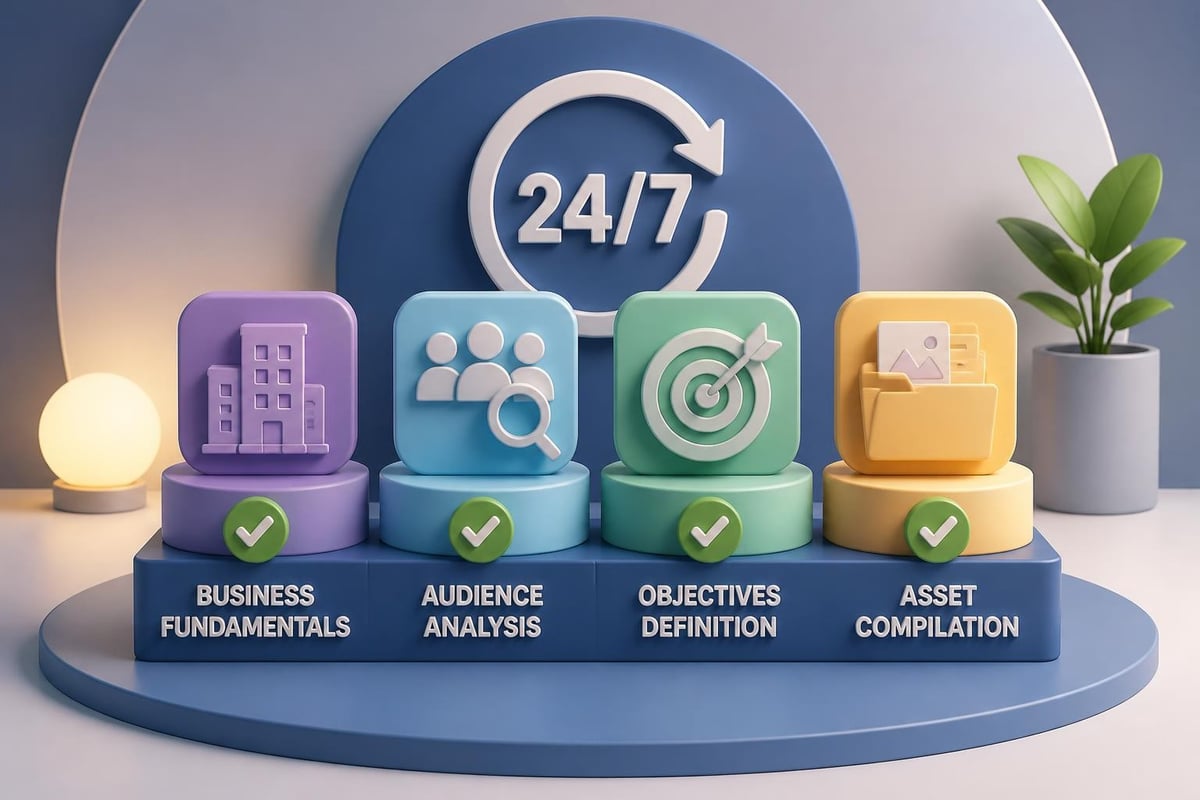
Structured intake process for rapid pitch deck development

Parallel Workstreams and Specialized Roles

Rather than sequential handoffs between writers, designers, and strategists, express services deploy parallel workstreams where specialized team members work simultaneously on different deck components.

While one designer develops the visual framework and establishes design systems, a content strategist refines messaging architecture and narrative flow. A data visualization specialist simultaneously transforms financial models and metrics into clear, compelling graphics. This parallel approach compresses timelines dramatically compared to traditional waterfall methods.

The coordination required for this approach demands experienced project managers who orchestrate multiple specialists without creating communication overhead. Agencies offering professional PowerPoint services at this level have refined these orchestration capabilities through hundreds of rapid-turnaround projects.

Essential Elements Delivered Under Tight Deadlines

Even with compressed timelines, comprehensive pitch decks must address specific elements that investors expect. Professional 24-hour pitch deck services prioritize these critical components while streamlining secondary elements.

Core Narrative Architecture

Every effective pitch deck tells a coherent story that guides investors through your opportunity logically and compellingly. This narrative structure forms the foundation upon which visual design builds impact.

The standard framework includes problem identification, solution presentation, market opportunity quantification, business model explanation, competitive differentiation, traction demonstration, team introduction, and funding requirements. However, the complete guide to startup pitch decks reveals that specific emphasis and ordering vary significantly based on industry, funding stage, and investor profile.

Express services excel at quickly identifying the optimal narrative sequence for your specific situation rather than applying generic templates uniformly. For fintech companies, leading with regulatory compliance and security infrastructure might precede market opportunity, while consumer tech startups typically foreground user engagement metrics earlier in their narrative.

Visual Hierarchy and Information Design

Poor visual hierarchy forces investors to work harder decoding your message, creating cognitive load that diminishes persuasiveness. Professional designers understand that designing professional pitch decks requires deliberate attention to simplicity, clarity, and visual organization.

Even under time pressure, effective services maintain rigorous standards for:

  • Typography hierarchy - clear distinction between headlines, subheadings, and body text
  • Color consistency - strategic use of brand colors to guide attention and create emphasis
  • White space management - preventing overcrowded slides that overwhelm viewers
  • Data visualization - transforming complex numbers into immediately understandable graphics
  • Icon usage - supporting concepts with consistent, professional iconography

These principles apply whether creating completely custom designs or working with minimal PowerPoint templates as starting frameworks. The discipline lies in resisting the temptation to cram excessive information onto slides despite time constraints encouraging shortcuts.

Strategic Considerations for Different Business Stages

The specific content and emphasis appropriate for pitch decks varies substantially across funding stages, making strategic customization essential even in rapid-turnaround scenarios.

Funding Stage Primary Focus Key Metrics Typical Deck Length
Pre-Seed Problem-solution fit, team User interviews, prototypes 10-12 slides
Seed Market validation, early traction Beta users, engagement rates 12-15 slides
Series A Product-market fit, growth Revenue, CAC, retention 15-18 slides
Series B+ Scalability, unit economics Growth rate, LTV/CAC ratio 18-20 slides

Seed Stage Presentations

Research on what investors look for in seed funding pitch decks emphasizes team credentials and market traction as dominant evaluation criteria. At this stage, investors bet primarily on people and potential rather than proven business models.

Professional 24-hour pitch deck services addressing seed-stage companies dedicate substantial slide real estate to founder backgrounds, relevant domain expertise, previous entrepreneurial successes, and advisory board credentials. Market size receives thorough treatment, but financial projections remain high-level rather than granularly detailed.

Early traction indicators-pilot customers, letters of intent, beta user engagement, or strategic partnerships-receive prominent positioning even if absolute numbers remain modest. The narrative emphasizes trajectory and validation over scale.

Growth Stage Decks

As companies advance toward Series A and beyond, investor focus shifts decisively toward business fundamentals, competitive positioning, and scalability evidence. Understanding what investors actually look at on each slide helps prioritize information hierarchy appropriately.

Growth-stage presentations require more sophisticated financial modeling, detailed competitive analysis, clear explanation of defensible advantages, and evidence of operational excellence. Customer acquisition economics, sales efficiency metrics, and retention cohort analysis become centerpiece elements rather than supporting details.

Professional services experienced with fintech pitch decks or cybersecurity presentations understand sector-specific nuances that distinguish compelling narratives from generic approaches.

Maximizing Effectiveness Within Rapid Timelines

Clients partnering with 24-hour pitch deck services can significantly impact project success through strategic preparation and focused collaboration.

Pre-Engagement Preparation

While express services handle design and presentation development, founders accelerate timelines and improve outcomes by organizing essential inputs before engagement begins.

Preparation activities that streamline rapid development:

  1. Compile existing brand assets (logos, color codes, fonts, previous presentations)
  2. Gather financial data and performance metrics in accessible formats
  3. Draft rough content outlines covering key messages and talking points
  4. Identify specific competitor examples for differentiation discussion
  5. Clarify presentation context (audience, setting, time allocation, follow-up expectations)

This preparation doesn't require design skills or presentation expertise. Simply organizing raw materials and clarifying objectives enables designers to focus their limited time on high-value creative and strategic work rather than information archaeology.

Reviewing sample PowerPoint designs beforehand also helps articulate aesthetic preferences and identify stylistic directions that resonate with your brand identity.

Feedback Efficiency During Development

Traditional design projects accommodate multiple revision rounds occurring over days or weeks. Express timelines compress this feedback cycle into hours, requiring clients to provide focused, actionable input rapidly.

Guidelines for efficient rapid-cycle feedback:

  • Consolidate team input before providing feedback rather than sequential individual comments
  • Prioritize substantive content and strategic issues over minor aesthetic preferences
  • Provide specific direction rather than open-ended questions
  • Accept that some nice-to-have refinements may require post-deadline implementation
  • Trust designer expertise on technical execution details

The most successful rapid collaborations establish clear decision-making authority upfront, preventing delays caused by unclear approval processes or multiple stakeholders with conflicting preferences.

Efficient feedback cycle for compressed pitch deck timelines

Technology and Tools Enabling Speed

Behind every successful 24-hour pitch deck service lies sophisticated technological infrastructure that enables rapid execution without quality compromise.

Design Systems and Component Libraries

Professional agencies maintain extensive libraries of pre-built design components, chart templates, icon sets, and layout frameworks that accelerate initial development while ensuring visual consistency.

These aren't generic PowerPoint templates applied uniformly across clients. Rather, they're modular building blocks that designers customize and combine to create unique presentations aligned with specific brand identities and content requirements. The efficiency gain comes from not recreating common elements-title layouts, section dividers, data chart frameworks-from scratch for each project.

When working on consulting PowerPoint templates or PPT layout design, experienced designers leverage these systems while maintaining creative flexibility for client-specific customization.

Collaboration Platforms and Version Control

Express timelines leave no room for confusion about which file represents the current version or where specific feedback was addressed. Professional services employ sophisticated collaboration platforms that maintain clear version history, track changes, and facilitate real-time feedback.

Cloud-based design tools enable multiple team members to work simultaneously on different deck sections without file conflicts or overwrites. Commenting systems allow stakeholders to provide location-specific feedback that designers can address systematically. Real-time previews let clients review work-in-progress without waiting for formal deliverables.

This technological infrastructure transforms what might otherwise be chaotic under time pressure into organized, trackable workflows that maintain quality standards throughout rapid development cycles.

Quality Assurance Under Time Pressure

Maintaining rigorous quality standards despite compressed timelines separates professional services from rushed amateur efforts. Systematic quality assurance processes ensure nothing critical slips through despite accelerated pace.

Multi-Layer Review Protocols

Even within 24-hour windows, professional agencies implement structured review checkpoints that catch errors, inconsistencies, and strategic misalignments before client delivery.

Typical quality checkpoints include:

  • Content accuracy review - verifying all data, metrics, and factual claims
  • Brand consistency check - ensuring color usage, fonts, and tone align with guidelines
  • Technical review - confirming animations work properly, links function correctly, formatting displays consistently
  • Strategic alignment assessment - validating narrative flow and message hierarchy
  • Proofreading pass - eliminating typos, grammatical errors, and formatting inconsistencies

These reviews happen through parallel processes rather than sequential stages, with different specialists examining various aspects simultaneously. A content strategist validates messaging while a technical designer checks formatting consistency and a brand manager ensures visual identity adherence.

Testing Across Platforms and Contexts

Pitch decks often get presented across different devices, display systems, and software versions. A deck that looks perfect on your MacBook might display incorrectly on a conference room PC running different PowerPoint versions.

Professional services test deliverables across multiple platforms before final delivery, ensuring consistent appearance regardless of presentation context. They also provide guidance on optimal export formats, file sharing methods, and backup presentation strategies for critical meetings.

This attention to technical reliability proves especially valuable for high-stakes presentations where technical glitches can undermine credibility and distract from message impact.

Pricing Models and Value Considerations

Understanding pricing structures for 24-hour pitch deck services helps set realistic budget expectations and evaluate value propositions effectively.

Premium Pricing Justified by Specialized Capabilities

Express services command premium rates compared to standard timeline projects, reflecting several value factors beyond simple design execution.

The premium accounts for opportunity costs of prioritizing urgent work over scheduled projects, specialized expertise required for rapid execution, coordination overhead of compressed timelines, and risk assumption associated with accelerated delivery commitments. Additionally, the business value of having professional materials ready for time-sensitive opportunities often far exceeds incremental service costs.

Typical pricing ranges from $2,500 to $15,000 for comprehensive 24-hour pitch deck services, with variation based on deck complexity, industry specialization requirements, team size involved, and included strategic consulting depth. Fintech and enterprise technology presentations typically fall toward higher ranges given technical complexity and specialized knowledge requirements.

Comparing Cost Against Opportunity Value

When evaluating pricing, consider the context and consequences of your presentation opportunity. A pitch deck supporting a $2 million funding round, strategic partnership worth millions in revenue, or board approval for major initiatives justifies substantial investment in professional execution.

Scenario Opportunity Value Reasonable Deck Investment
Seed funding ($500K-$1M) $500,000-$1,000,000 $3,000-$5,000
Series A ($3M-$10M) $3,000,000-$10,000,000 $5,000-$8,000
Strategic partnership $1M+ annual revenue $4,000-$7,000
Board approval (major initiative) $5M+ project value $5,000-$10,000

The return on investment becomes clear when comparing service costs against potential opportunity value. A professionally executed pitch deck that increases funding success probability by even ten percentage points delivers exponential returns on investment.

Selecting the Right Service Provider

Not all agencies offering rapid turnaround capabilities deliver equivalent expertise, reliability, or results. Strategic selection criteria help identify providers truly capable of meeting your needs.

Evaluating Portfolio Relevance

Request portfolio examples specifically from your industry and funding stage. Generic presentation skills don't translate automatically to effective pitch deck creation for specialized sectors like fintech, blockchain, cybersecurity, or enterprise SaaS.

Review whether portfolio examples demonstrate understanding of investor expectations, appropriate metric emphasis, and compelling narrative structures beyond mere visual polish. Beautiful slides that fail to address investor decision criteria deliver limited value regardless of aesthetic appeal.

Process Transparency and Communication

Reliable providers clearly articulate their workflow, timeline commitments, revision policies, and deliverable specifications upfront. Vague promises about "quick turnaround" without specific process details often signal operational immaturity.

Ask specific questions about team composition, quality assurance procedures, contingency plans if timelines slip, and what happens if results don't meet expectations. Professional agencies with established rapid-delivery capabilities answer these questions confidently based on proven systems.

Strategic Capabilities Beyond Design Execution

The most valuable partners provide strategic guidance alongside design execution. Can they help refine your value proposition, identify narrative weaknesses, suggest stronger data visualization approaches, or advise on slide sequencing for maximum impact?

Agencies offering comprehensive pitch deck services typically employ strategists and consultants alongside designers, enabling them to strengthen content and messaging rather than simply making existing content look attractive.

Common Pitfalls and How to Avoid Them

Even when working with professional services, certain client behaviors can compromise results or create unnecessary complications under tight timelines.

Changing Requirements Mid-Project

The primary risk to successful rapid delivery involves scope changes after work begins. Unlike traditional timelines with buffer for accommodation, 24-hour windows leave minimal flexibility for significant requirement shifts.

Strategies to prevent mid-project disruptions:

  • Invest adequate time in thorough initial briefing despite timeline pressure
  • Gain stakeholder alignment on key messages before engaging designers
  • Resist urge to second-guess strategic decisions once work commences
  • Save nice-to-have additions for post-delivery refinement
  • Trust the process and expertise you're purchasing

Recognize that some uncertainty is natural, but major directional changes destroy the efficiency that enables rapid delivery.

Unrealistic Expectations About Revision Scope

While professional services accommodate feedback and revisions within 24-hour timelines, the scope differs from multi-week projects with unlimited iteration. Understand the realistic boundaries of what's achievable.

Expect one or two focused revision rounds addressing substantive feedback rather than open-ended refinement cycles. Minor word changes, metric updates, and modest layout adjustments fit within scope. Complete redesigns, fundamental narrative restructuring, or extensive new content creation typically don't.

Delayed Information Provision

Designers can't work with information they don't have. Every hour spent waiting for financial data, logo files, competitor names, or content approvals directly reduces available design time.

Treat information requests as urgent priorities requiring immediate response. Delays in providing requested materials compound exponentially under compressed timelines, often forcing designers to make assumptions or proceed with incomplete information that requires later rework.

Preparing for Successful Presentation Delivery

Creating an outstanding deck represents only half the success equation. Effective delivery determines whether brilliant content translates into desired outcomes.

Rehearsal and Narrative Internalization

Even the most beautifully designed pitch deck fails if presenters stumble through delivery, appear unfamiliar with content, or rely on reading slides verbatim. Professional materials deserve professional presentation.

Schedule focused rehearsal time immediately after receiving your completed deck. Practice transitions between slides, refine spoken narrative that complements rather than duplicates visual content, prepare responses to anticipated questions, and develop comfort with pacing and timing.

Record practice sessions to identify verbal tics, unclear explanations, or pacing issues. Solicit feedback from colleagues or advisors who can evaluate both content comprehension and delivery effectiveness.

Technical Preparation and Contingency Planning

Murphy's Law applies especially to high-stakes presentations. Assume something will go wrong technically and prepare accordingly.

Essential technical preparations include:

  • Testing presentation on actual equipment you'll use
  • Bringing backup copies on multiple devices and formats
  • Arriving early to verify display connectivity and resolution
  • Having PDF backup if PowerPoint malfunctions
  • Preparing for scenarios where you present without visual aids

Professional services often provide guidance on optimal file formats, sharing methods, and technical specifications for different presentation contexts, but ultimate responsibility for technical execution rests with presenters.


Professional 24-hour pitch deck services address the critical need for rapid, high-quality presentation development when opportunities emerge faster than traditional timelines accommodate. Success requires selecting experienced providers with deep industry expertise, preparing thoroughly to maximize limited collaboration time, and maintaining realistic expectations about achievable scope within compressed windows. Whether you're facing an unexpected investor meeting or last-minute board presentation, Prznt Perfect combines specialized expertise in financial and tech presentations with proven rapid-delivery workflows to transform your opportunity into compelling visual narratives that resonate with target audiences and drive desired business outcomes.

News & Updates...

Master academic paper presentation with proven strategies for structure, design, and delivery. Expert tips for researchers and academics in 2026.

Master aesthetic PowerPoint design with expert techniques, principles, and trends. Learn how to create visually stunning presentations that captivate.